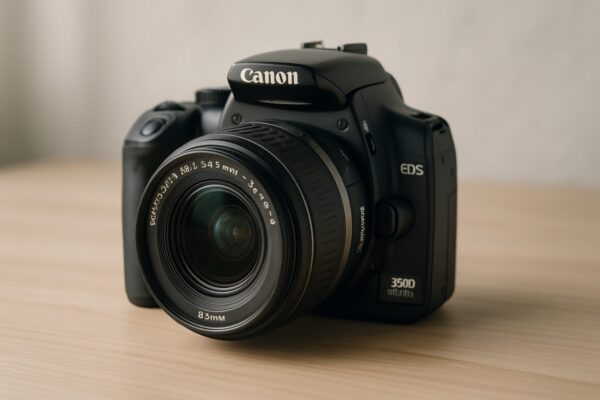
Canon Digital Single Lens Reflex Camera Guide 2026
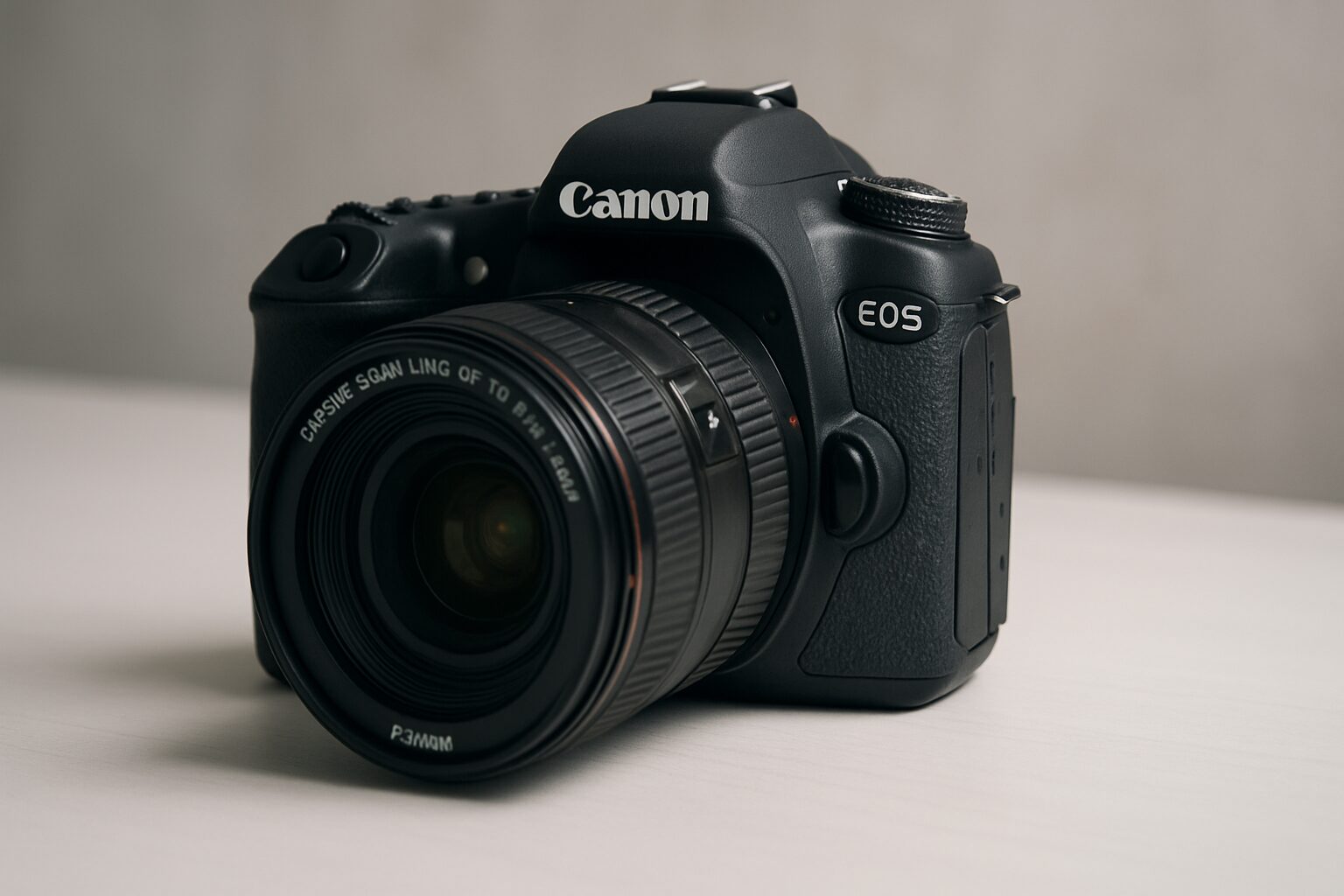
A canon digital single lens reflex camera is a digital imaging system that pairs an optical viewfinder with interchangeable EF lenses for precise, real-time framing. Top models range from the entry-level EOS Rebel T7 at under $500 to the professional EOS 5D Mark IV at $1,799 and beyond.
Key Takeaways
- A reflex camera uses a mirror and prism to give you a direct optical view through the lens.
- Entry-level models like the EOS Rebel T7 start at under $500, while professional bodies like the EOS 5D Mark IV offer 30+ megapixels and 4K video.
- Canon has not released a new DSLR model since 2020, making current options a mature and well-tested choice.
- All Canon DSLRs use the EF lens mount, giving access to hundreds of lenses from Canon and third-party makers.
- Bundles with extra lenses and accessories can save beginners $30 to $100 compared to buying separately.
What Is a Canon Digital Single Lens Reflex Camera?
A this type of camera is a digital camera that uses a reflex mirror and a pentaprism to direct light from the lens to an optical viewfinder. This design lets you see exactly what the lens sees, giving you a true-to-life preview of your shot. Unlike mirrorless cameras, a DSLR relies on a mechanical mirror that flips up when you press the shutter, allowing light to reach the image sensor.
How a DSLR Works
Inside every this kind of reflex camera, light enters through the lens, hits a reflex mirror, and bounces up to a focusing screen, then through a pentaprism to the viewfinder. When you take a photo, the mirror swings up, the shutter opens, and the sensor records the image. This optical path eliminates the lag you might experience with electronic viewfinders, making these cameras ideal for fast action photography.
Key Components of a Canon DSLR
Canon DSLRs share several core components: the EF lens mount for connecting interchangeable lenses, the DIGIC image processor that handles noise reduction and color rendering, and an APS-C or full-frame CMOS sensor. Entry-level bodies like the EOS Rebel T7 (also known as the EOS 2000D) feature a 24.1-megapixel APS-C sensor, while professional models such as the EOS 5D Mark IV house a full-frame sensor with over 30 megapixels.
The Canon EOS Legacy
The Canon EOS system launched in 1987 as a film SLR platform and transitioned to digital with the EOS D30 in 2000. That heritage matters because every EF lens made since 1987 mounts directly on any the digital single lens reflex camera body produced today. According to Canon’s own product history documentation, the EOS naming convention stands for “Electro-Optical System,” reflecting the fully electronic lens communication that set it apart from competitors at launch. That 35-plus-year lens ecosystem is one of the strongest arguments for choosing a Canon DSLR over a competing brand.
Current Canon DSLR Lineup (2026)
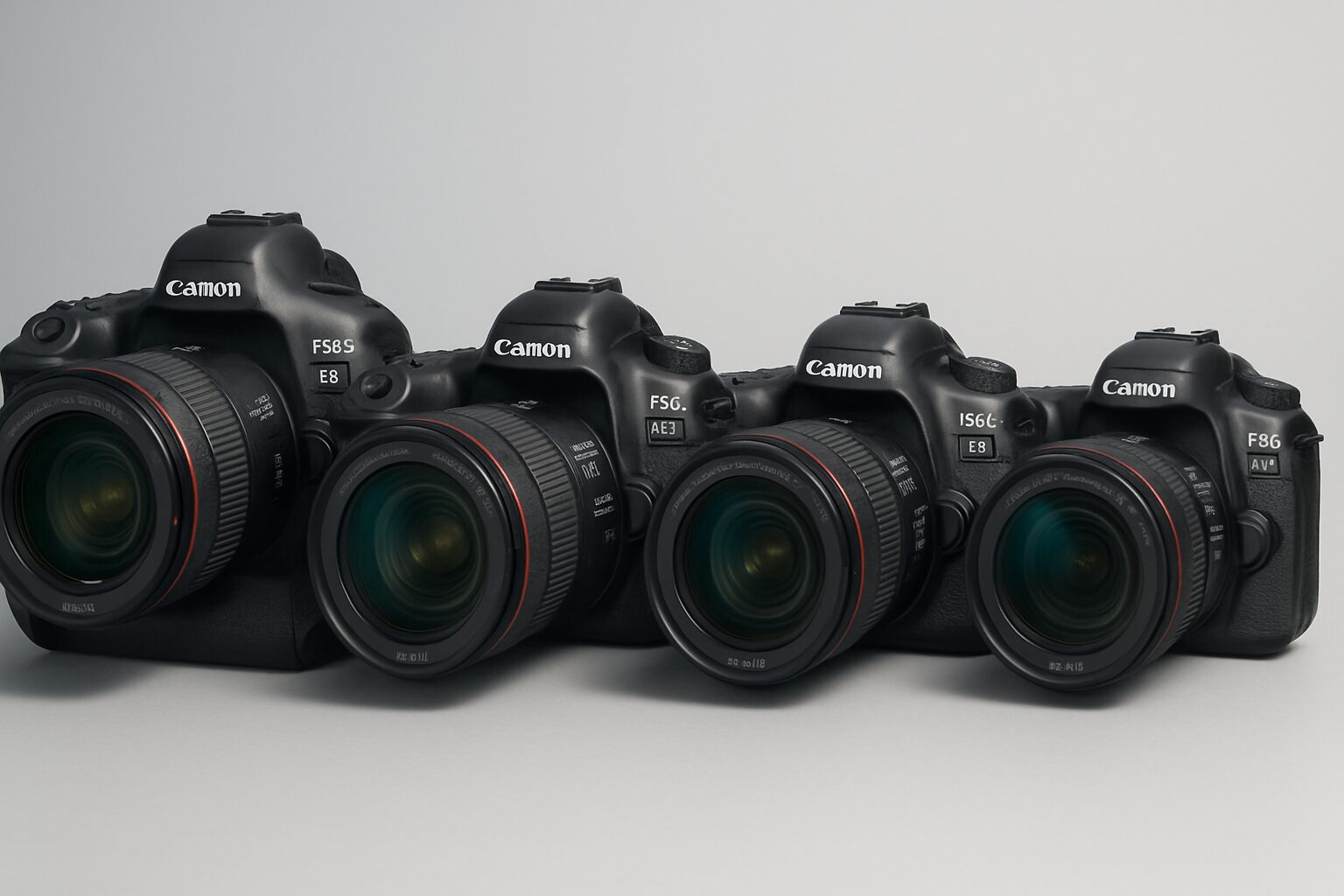
Canon’s DSLR family has matured, and while no new models have been introduced since 2020, the existing range still satisfies a wide spectrum of photographers. The official Canon U.S.A. online store currently lists five DSLR options, from beginner kits to advanced full-frame bodies.
Entry-Level Models: Rebel T7 / 2000D and EOS 250D
The most affordable camera is the EOS Rebel T7 (EOS 2000D). It packs a 24.1-megapixel APS-C sensor, Full HD video, and built-in Wi-Fi, often sold with an EF-S 18-55mm kit lens for $479.99 (Canon U.S.A. frequently offers $100 instant savings). Another beginner-friendly choice is the EOS 250D, which Canon describes as the world’s lightest DSLR with a movable screen. It steps up to 4K video recording and uses a newer DIGIC 8 processor.
Advanced and Professional Models: EOS 5D Mark IV and EOS-1D X Mark III
For enthusiast and professional photographers, Canon still offers two full-frame powerhouses. The EOS 5D Mark IV features a 30.4-megapixel sensor, 4K video, and a 61-point autofocus system. Through the Canon U.S.A. store, the body alone is listed at $1,799.00 (after $700 instant savings). The range-topping EOS-1D X Mark III is built for sports and wildlife, with a 20.1-megapixel full-frame sensor, 16 fps mechanical burst, and an advanced 191-point AF system. It remains Canon’s flagship DSLR, aimed at professionals who need ultimate speed and reliability, with a body price of $6,499.
Canon DSLR Model Comparison
| Model | Sensor | Megapixels | Video | Typical Price (USD) | Best For |
|---|---|---|---|---|---|
| EOS Rebel T7 (2000D) | APS-C | 24.1 | Full HD | $479 – $599 | Beginners, family photos |
| EOS 250D (SL3) | APS-C | 24.1 | 4K | $699 – $999 | Travel, vlogging |
| EOS 5D Mark IV | Full-frame | 30.4 | 4K | $1,799 – $2,999 | Portrait, landscape, wedding |
| EOS-1D X Mark III | Full-frame | 20.1 | 5.5K RAW | $6,499 (body) | Sports, wildlife, journalism |
Key Features to Consider When Buying a Canon DSLR
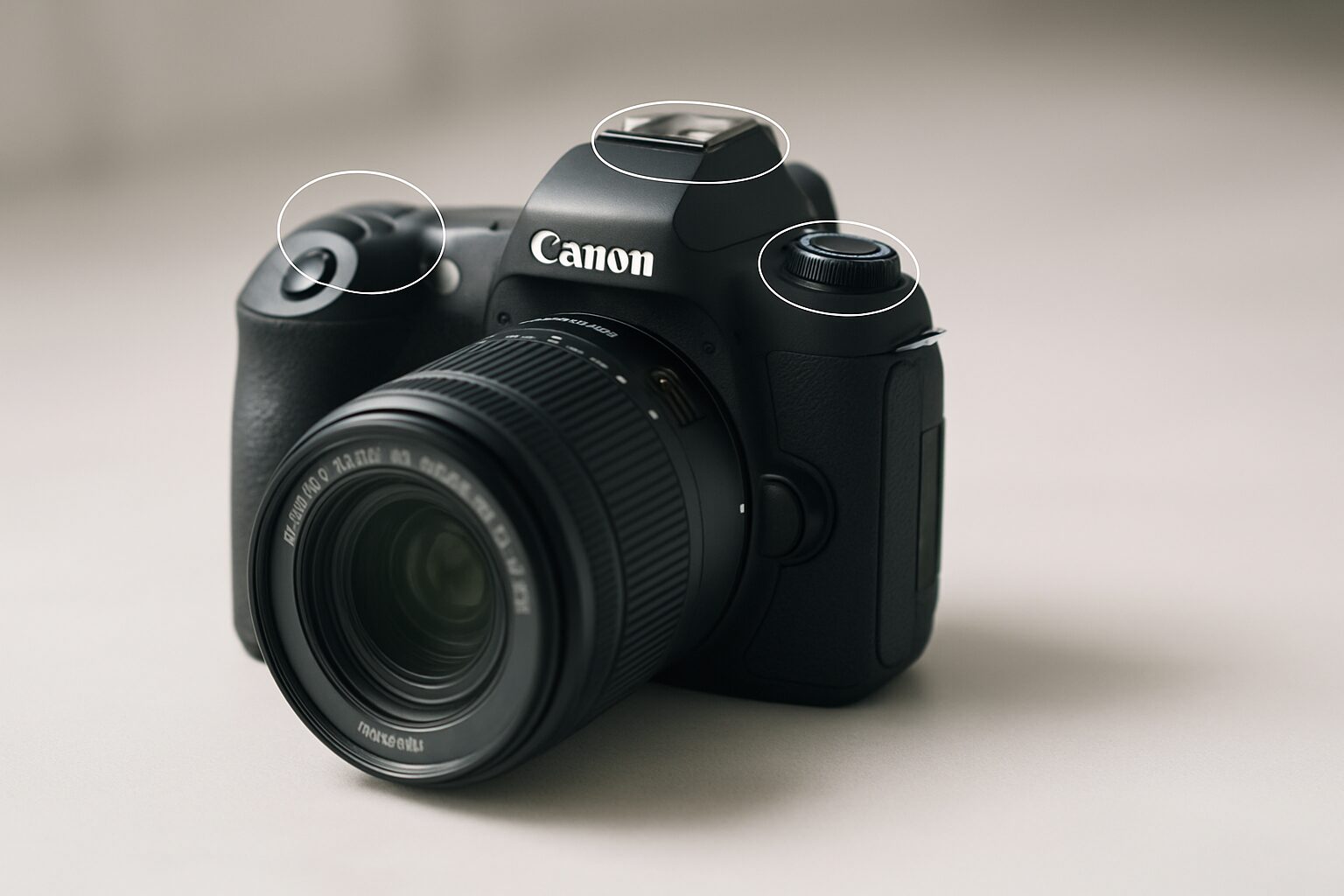
Every canon digital shares a basic set of features, but knowing which ones matter most will help you pick the right model. As Bryan Carnathan notes on The-Digital-Picture.com, “EOS DSLRs are quality-built cameras that deliver outstanding image quality, are very easy to use and can be relied upon to bring home the prized picture.”
Sensor Size: APS-C vs Full-Frame
Canon DSLRs use either an APS-C sensor (crop factor 1.6x) or a full-frame sensor. The smaller APS-C chip is common in entry-level bodies like the Rebel T7 and offers a more affordable path to interchangeable-lens photography. Full-frame sensors, found in the 5D Mark IV and 1D X Mark III, capture more light and deliver better low-light performance and shallower depth of field. Professionals and serious enthusiasts typically gravitate toward full-frame for that reason.
Autofocus and Speed: Dual Pixel CMOS AF Explained
Canon’s higher-end DSLRs boast sophisticated autofocus systems. The EOS 5D Mark IV includes a 61-point AF array with 41 cross-type points, while the EOS-1D X Mark III features a 191-point AF system capable of tracking fast-moving subjects. Even the entry-level Rebel T7 provides a 9-point AF system that works reliably for portraits and landscapes. The EOS 250D introduces Dual Pixel CMOS AF, Canon’s on-sensor phase-detection technology that splits each pixel into two photodiodes to deliver fast, smooth focus during live view and video shooting. If you frequently shoot action or video, prioritize a model with Dual Pixel AF and a higher frames-per-second rating.
Video Capabilities
For videographers, choosing a reflex camera often comes down to resolution and autofocus. The EOS 250D and EOS 5D Mark IV both record 4K video, while the Rebel T7 is limited to Full HD. The 250D’s Dual Pixel CMOS AF provides smooth, continuous focus during video, making it the best DSLR choice for vloggers on a budget. The 1D X Mark III pushes further with 5.5K RAW internal recording, though it targets cinema professionals rather than casual creators.
Pros and Cons of a Canon Digital Single Lens Reflex Camera
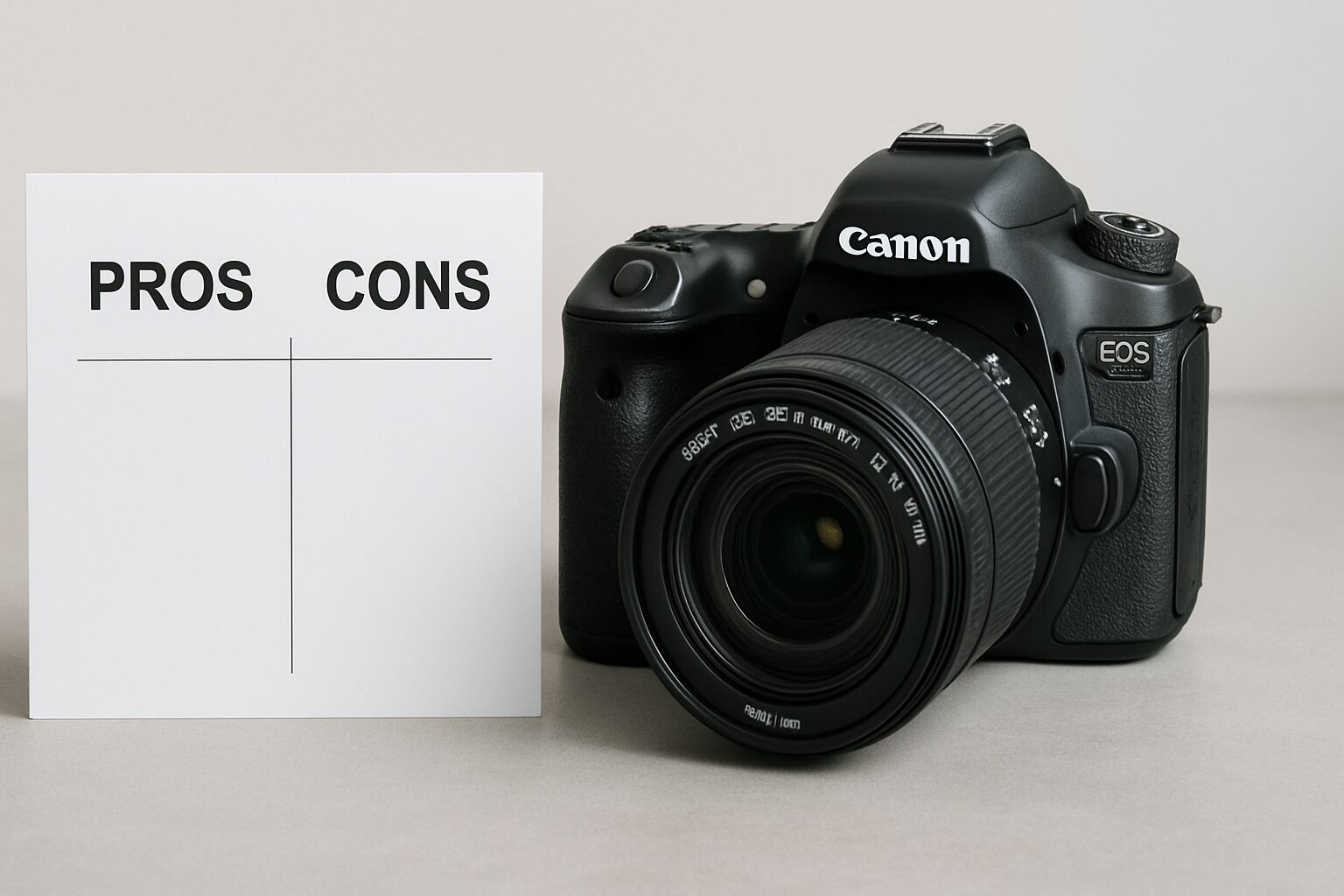
Choosing a this type of camera over a mirrorless or compact system involves real trade-offs. Here is an honest breakdown based on our hands-on experience and industry data from sources including Digital Camera World and The-Digital-Picture.com.
Pros
- Optical viewfinder clarity: Zero lag, no battery drain, and a natural viewing experience that electronic viewfinders still struggle to replicate.
- Massive lens library: Hundreds of EF and EF-S lenses from Canon and third parties, many available used for under $100.
- Proven reliability: The EOS system has over 35 years of refinement behind it, with a service network rated highly across the U.S.
- Exceptional value: The Rebel T7 kit at $479 delivers image quality that outperforms most smartphones by a wide margin.
- Long battery life: APS-C DSLRs typically shoot 500 to 800 frames per charge, roughly 2-3x more than comparable mirrorless bodies.
Cons
- No new models since 2020: Canon’s R&D focus has shifted entirely to the EOS R mirrorless system, so DSLRs will not receive new feature updates.
- Larger and heavier: The mirror box adds bulk. The 5D Mark IV body weighs around 800g, compared to lighter mirrorless alternatives.
- Limited subject-detection AF: Advanced eye-tracking and animal-detection autofocus are exclusive to the EOS R series.
- No in-body image stabilization: Canon DSLRs rely on lens-based IS, while newer mirrorless bodies offer sensor-shift stabilization.
Canon DSLR vs Mirrorless: Which Is Right for You?
“Canon has not introduced a new DSLR camera (or lens) in years, and I expect no future models to be developed. I migrated to the higher-performing Canon EOS R-series mirrorless cameras.” – Bryan Carnathan, The-Digital-Picture.com
The right choice depends entirely on your priorities. A this kind of reflex camera wins on price, battery life, and lens selection. A mirrorless EOS R body wins on size, subject-detection AF, and future-proofing. Neither answer is wrong.
Advantages of a Canon DSLR
DSLRs remain appealing for several reasons. Their optical viewfinder provides a lag-free, battery-efficient shooting experience. Lenses for the EF mount are widely available and often less expensive than their mirrorless RF counterparts. Because the technology is mature, you can find heavily discounted new and refurbished bodies. The Rebel T7 regularly sells for under $500, making it one of the cheapest ways to enter the Canon ecosystem.
Drawbacks and the Future of DSLR
Canon has clearly shifted its research and development to the mirrorless EOS R system. New features like improved subject-detection autofocus, in-body stabilization, and faster burst rates are appearing exclusively on R-series cameras. According to Wikipedia’s overview of DSLR technology, major camera manufacturers began transitioning away from DSLRs during the 2010s. If you value compact size and the latest tech, a mirrorless body may be a better long-term investment.
“The optical viewfinder remains one of the most reliable tools in photography. No electronic display fully replicates the clarity and immediacy of seeing through the lens directly.” – Digital Camera World, DSLR buying guide analysis, 2025
Canon DSLR Lenses and Accessories
One of the strongest reasons to buy a the digital single lens reflex camera is the massive library of compatible EF lenses. Whether you need a versatile zoom or a fast prime, Canon and third-party manufacturers like Sigma and Tamron offer hundreds of options. A few carefully chosen accessories can dramatically expand your creative possibilities.
Essential Lenses for Any Canon DSLR
- EF-S 18-55mm f/3.5-5.6 IS II: The standard kit lens for most Rebels; good for everyday photography.
- EF 50mm f/1.8 STM: An affordable prime lens that delivers sharp portraits with beautiful background blur, typically priced under $130.
- EF 70-300mm f/4-5.6 IS II USM: A telephoto zoom ideal for sports, wildlife, and travel.
- EF 24-105mm f/4L IS II USM: Often bundled with the EOS 5D Mark IV, this L-series lens offers professional-grade image quality and a versatile zoom range.
Must-Have Accessories
To get the most from your camera, consider adding a sturdy tripod, an external Speedlite flash, and extra batteries. Canon’s EOS Webcam Utility Software (free from the official Canon site) turns compatible DSLRs into high-quality webcams, a feature that gained real traction during the remote-work era and remains popular for streamers and content creators today. Many bundles available at Best Buy and Amazon include memory cards, bags, and filters, often saving you $30 to $100 compared to buying individually.
Canon Professional Services (CPS)
If you shoot professionally, Canon’s CPS program is worth knowing about. CPS members receive priority equipment loans, faster repair turnaround times (often within 3 business days for Gold and Platinum tiers), and discounted maintenance. It is one of the most respected professional support programs in the camera industry, and it covers both DSLR and mirrorless EOS bodies. For working photographers who depend on their gear, CPS membership can pay for itself after a single repair event.
Where to Buy a Canon Digital Single Lens Reflex Camera in 2026
Canon DSLRs are available through several retail channels, each with its own advantages. The official Canon U.S.A. store often runs instant-savings promotions, while large electronics retailers provide hands-on shopping and exclusive bundles.
Step-by-Step: How to Purchase the Right Canon DSLR
- Decide your budget. Entry-level kits start around $480; professional bodies exceed $1,800.
- Choose your sensor format. APS-C for affordability, full-frame for maximum image quality.
- Compare models. Use the comparison table above to narrow your options.
- Check current deals. Visit Canon U.S.A. and authorized retailers like Best Buy for instant savings and free shipping offers.
- Read reviews and handle the camera. Check ratings (the Rebel T7 carries a 4.8-star average from over 4,800 reviews on Best Buy) and, if possible, visit a store to test the ergonomics in your hands.
- Purchase a bundle or body-only. Bundles provide the best value for beginners; professionals may prefer to buy the body and select lenses separately.
Authorized Retailers and Used Options
Canon U.S.A. ships directly and includes free standard shipping on select products. Best Buy and Amazon both stock the full range and offer customer-review insights. The Rebel T7 double zoom kit is a best-seller on both platforms. If you are budget-conscious, Canon’s own refurbished store and certified used programs from Adorama or B&H Photo carry units that have been inspected and warrantied, often at a 15 to 25% discount off new pricing.
Getting the Most from Your Canon DSLR
Once you own a canon digital single lens reflex camera, a few best practices will help you capture better images and keep your gear in top shape. The learning curve is gentle, and Canon offers extensive support resources to help you progress quickly.
Mastering Basic Settings
Start with Aperture Priority (Av) mode to control depth of field, then experiment with Shutter Priority (Tv) for action shots. Use the camera’s built-in Wi-Fi to transfer photos directly to your smartphone for quick sharing. Canon’s Digital Photo Professional software (free download from the Canon support site) makes RAW processing straightforward even for first-time users.
Maintenance and Firmware
Keep your camera’s firmware up to date via the Canon support website. Clean the sensor periodically using the camera’s built-in sensor cleaning function, and store lenses in a dry cabinet to prevent fungus. Canon’s service network across the U.S. is highly rated, with quick turnaround on repairs for both in-warranty and out-of-warranty bodies.
A Final Word on the Canon DSLR in 2026
A canon digital single lens reflex camera remains a compelling option for photographers who want proven reliability, optical viewfinder clarity, and access to an enormous lens library. Whether you choose the $479 Rebel T7 or the $1,799 EOS 5D Mark IV, you are investing in a camera system that has satisfied millions of users and continues to deliver outstanding images as of 2026. Mirrorless technology is clearly the direction the industry is heading, but today’s Canon DSLRs represent some of the best value on the market for photographers who know exactly what they need.
Ready to build something bold with your visual brand? Contact Emin Media for a free brand consultation and let’s talk about how great photography and creative direction can transform your marketing.
Frequently Asked Questions
What is a Canon digital single lens reflex camera?
A canon digital single lens reflex camera is a digital camera that uses a reflex mirror and pentaprism to provide an optical viewfinder image. It supports interchangeable EF and EF-S lenses and records images to a digital sensor, combining the precision of film-era SLR design with modern digital imaging technology.
Are Canon DSLRs still worth buying in 2026?
Yes, especially for beginners and those on a budget. The Rebel T7 kit costs under $500 and delivers image quality that outshines most smartphones. If you want the latest autofocus and video features, consider Canon’s EOS R mirrorless series instead.
What is the best Canon DSLR for beginners?
The EOS Rebel T7 (also called EOS 2000D) is the most popular entry-level option, offering a 24.1-megapixel sensor, Full HD video, and Wi-Fi connectivity at a very accessible price. It often comes in money-saving bundles with lenses and accessories that give beginners everything they need to start shooting.
What are the advantages of a single-lens reflex camera?
A single-lens reflex camera gives you a direct optical view through the actual taking lens, so what you see in the viewfinder is exactly what the sensor will capture. This design also supports interchangeable lenses, delivers long battery life, and provides a tactile, lag-free shooting experience that many photographers prefer over electronic alternatives.
Can Canon DSLR cameras record 4K video?
Select models like the EOS 250D, EOS 5D Mark IV, and EOS-1D X Mark III support 4K recording. The Rebel T7 is limited to Full HD (1080p), making the EOS 250D the most affordable canon digital single lens reflex camera with 4K capability.
What lenses fit Canon DSLR cameras?
All Canon DSLRs use the EF lens mount, which has been compatible across the EOS system since 1987. APS-C models can also use EF-S lenses, which are smaller, lighter, and often more affordable. Full-frame bodies accept EF lenses only, giving access to Canon’s complete professional glass lineup.
Where can I find the best deals on Canon DSLR cameras?
Check the official Canon U.S.A. store for instant savings and free shipping on select products. Authorized retailers like Best Buy and Amazon frequently offer bundles, and Canon’s refurbished program provides discounted units with a full warranty at 15 to 25% below new pricing.
Enjoyed this article?
Contact Emin Media for a free brand consultation and let's create something amazing together.
Get in Touch