Best Camera Mini Digital: Every Budget Covered
Camera mini digital is a compact, pocket-sized imaging device that captures photos and video digitally, small enough to clip to a keychain or slide into a tight jeans pocket. These tiny shooters are surging as people seek creative alternatives to bulky DSLRs and phone-first distractions.
Key Takeaways
- mini digital options span a huge range: keychain cameras, screen-free models, and ultra-compact point-and-shoots priced from $14 to over $1,900.
- Sensor size matters more than megapixels for real-world image quality, especially in low light.
- Screen-free cameras like the Camp Snap encourage mindful photography, while keychain models like the Kodak Charmera ensure you always have a camera on hand.
- Budget-friendly options from brands like GEMS, Saneen, and Vivitar deliver surprising quality for casual and social media use.
- Always check battery life and storage: most mini digitals use microSD cards and USB-C charging, but built-in memory limits vary widely across models.
- Kids, creators, and nostalgia seekers each have dedicated these digital options designed for their specific needs.
What Sets a Camera Mini Digital Apart from Full-Size Models?
Media” class=”wp-image-9788″ loading=”lazy” width=”1792″ height=”1024″ />Ultra-Compact Form Factor
A such digital earns its name by slipping into a jeans pocket or hanging from a keychain without adding noticeable weight to your day. Unlike traditional DSLRs that tip the scales at over a pound, many of these devices measure less than 3 inches in width and height. The Kodak Charmera, for instance, doubles as a charm and a camera, connecting directly to your bag or keys via a sturdy loop. At the lower end of the price spectrum, the GEMS Mini Digital Camera retails for just $14 at Target, proving that imaging can be both affordable and hyper-portable.
Designed for Spontaneity
Because they’re always within reach, a camera mini excels at capturing unscripted moments. The Saneen Mini Pocket 4K from Walmart packs 4K video and 64MP stills into a body small enough to fit in the palm of your hand, making it ideal for street photography or travel vlogs. Most models also feature simplified controls, often just a shutter button and a mode dial, so you can power on and shoot in seconds without fumbling through menus.
Feature Trade-offs
To achieve their diminutive size, most mini digital models sacrifice large sensors and interchangeable lenses. Sensors are typically 1/2.3-inch or smaller, which limits low-light performance compared to larger formats. For daylight snapshots and social media sharing, though, the image quality is more than sufficient. Some models, like the Camp Snap, even remove the screen entirely, trading instant previews for a more deliberate shooting experience.
Key Features to Look for in a Camera Mini Digital
Sensor and Megapixel Count
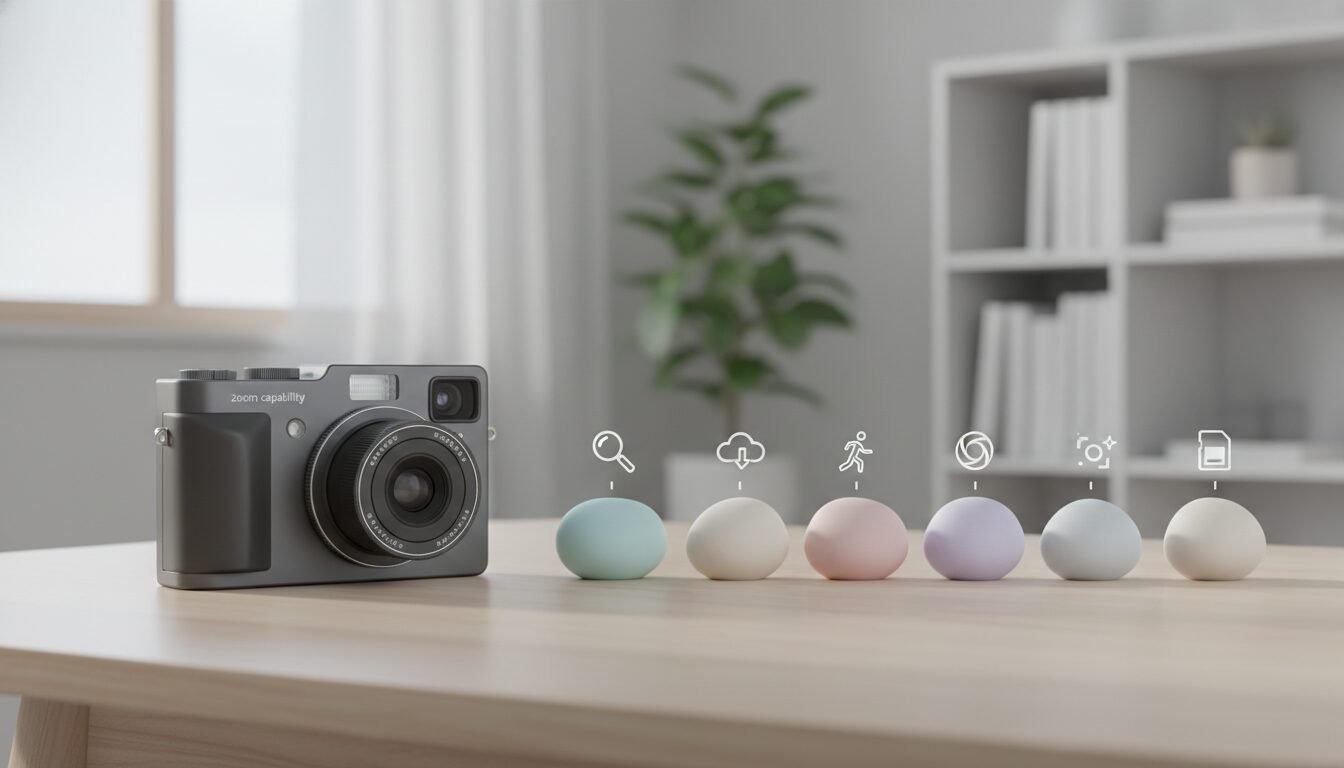
Megapixels determine how much you can crop or enlarge an image, but sensor size determines actual quality. Entry-level keychain cameras often use 5MP to 14MP sensors. The Vivitar Retro Keychain Digital Camera shoots at 14MP, for example. Step up to the Saneen Mini Pocket 4K and you’ll find 64MP resolution, though the physical sensor remains small. A real advantage comes from cameras with larger 1/2.3-inch sensors, such as the Kodak PIXPRO FZ45 at 16.4 megapixels, which deliver cleaner images across varied lighting conditions.
CCD vs CMOS: What the Sensor Type Actually Means
The sensor type inside a these digital shapes the look of your photos as much as the megapixel count does. CCD sensors, found in cameras like the Sheawasy Retro keychain model, produce colors with a slightly warm, analog character that many creators actively seek out for social media. CMOS sensors, used in most modern compacts including the Kodak PIXPRO line, offer better low-light performance, faster readout speeds, and lower power consumption. For casual shooters, CMOS is the practical choice. For creators chasing a lo-fi, film-adjacent aesthetic, a CCD-based such digital is worth the trade-off in battery efficiency.
Zoom Capabilities
Not all camera mini options offer optical zoom, but when they do, the range can be impressive. The Kodak PIXPRO AZ405 boasts a 40X optical zoom lens, while the AZ425 pushes that to 42X with 20 megapixels. For everyday use, digital zoom is the norm on smaller keychain cameras, but it degrades quality quickly. If zoom matters to you, look for a compact like the Canon PowerShot ELPH 360 HS at $379.99, which offers a versatile 12X optical zoom in a still-portable body.
Video Resolution and Frame Rates
Video capability varies dramatically across the mini digital category. Entry-level keychain models typically record at 1080p at 30 frames per second, which is perfectly usable for social clips. Mid-range options like the Saneen Mini Pocket 4K step up to 4K resolution, though at smaller sensor sizes the actual dynamic range is limited. The Fujifilm X100VI at the premium end records 4K video with significantly better color depth and dynamic range than any sub-$100 option. If smooth motion matters, look for models that specify 60fps at 1080p, a spec that separates capable compacts from basic keychain shooters.
Connectivity and Battery Life
Modern mini digitals increasingly adopt USB-C charging, as seen in the Vivitar Retro Keychain and Saneen Mini Pocket 4K. Battery life varies widely: simple keychain cameras can last for days on standby, while more advanced compacts may need a recharge after 200 to 300 shots. Built-in memory is common on ultra-budget models, but most serious shooters will rely on microSD cards. The Kodak PIXPRO FZ55 accepts cards up to 512GB, giving you plenty of room for long outings without worrying about running out of space.
Pros and Cons of Camera Mini Digital Options
Pros
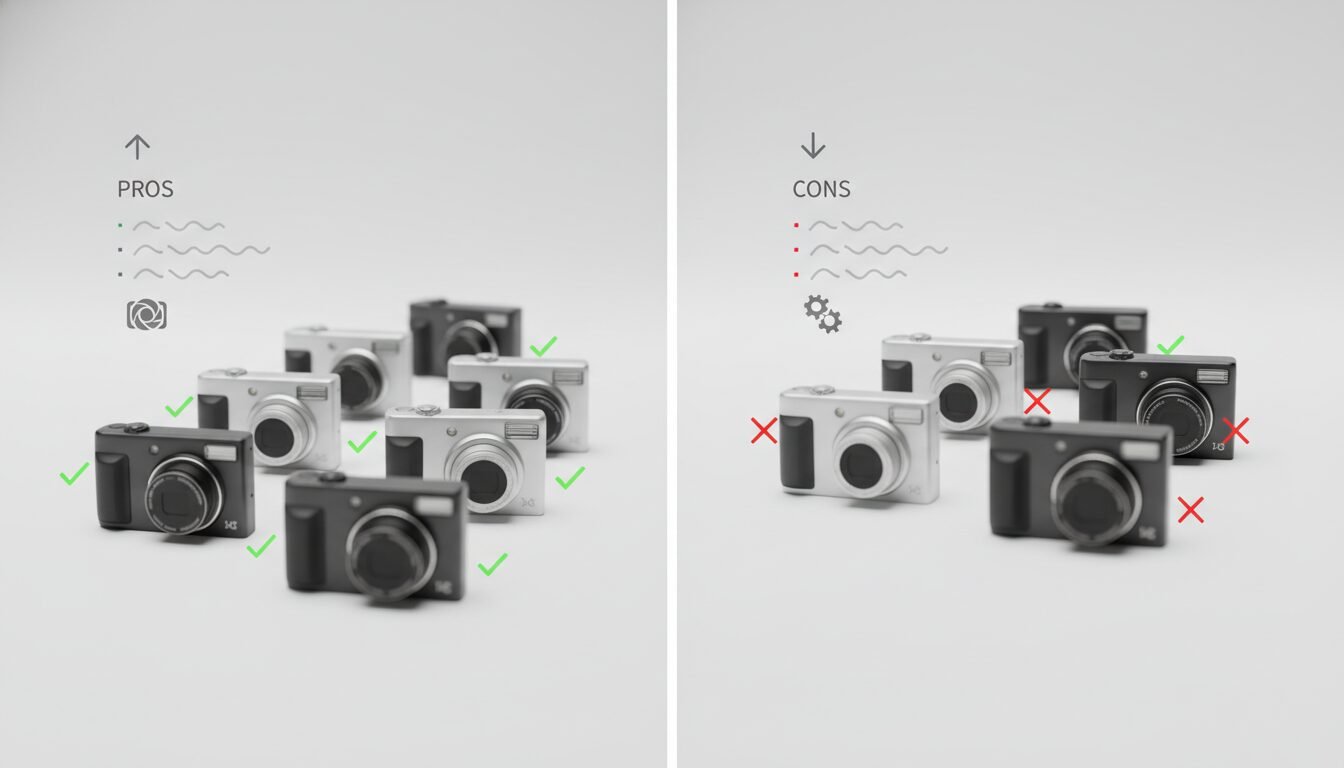
- Extreme portability: Most these digital models fit in a pocket or on a keychain, making them genuinely always-available tools.
- Affordable entry points: You can own a capable such digital for as little as $14, lowering the barrier to creative photography significantly.
- Distraction-free shooting: Unlike smartphones, a dedicated camera mini has no notifications, apps, or social feeds competing for your attention.
- Unique aesthetics: CCD sensors and retro designs produce looks that computational smartphone photography can’t easily replicate.
- Kid-friendly options: Durable, simplified mini digital models designed for children foster creativity without screen dependency.
Cons
- Small sensors limit low-light quality: Most camera mini digital models use 1/2.3-inch or smaller sensors, which struggle in dim environments.
- Limited zoom on keychain models: Digital zoom degrades image quality quickly, and optical zoom is rare below the $150 price point.
- Built-in memory fills fast: Many ultra-budget models store only 100 to 200 photos internally before requiring a computer transfer.
- Audio quality is basic: Built-in microphones on compact and keychain cameras are adequate for casual clips but fall short for serious vlogging.
- Fewer software features: No computational photography, no portrait mode, no AI scene detection compared to modern smartphones.
The Rise of Screen-Free and Keychain Mini Digital Cameras
“Screen-free cameras like the Camp Snap are flying off our shelves as people look to disconnect from their phones while still capturing moments,” notes a spokesperson from Glazer’s Camera.
Screen-Free Photography: Embracing the Unknown
A growing segment of camera mini digital users is turning to screen-free devices to combat smartphone fatigue. The Camp Snap Screen-Free Digital Camera, available in colors like Forest Green and Crimson Red for $70, deliberately omits an LCD viewfinder. This forces you to compose with intention and wait to see your photos later, much like a film camera but with the convenience of digital storage. The trend aligns with a broader digital detox movement, where limiting instant feedback actually boosts creative output.
Keychain Cameras: Always Within Reach
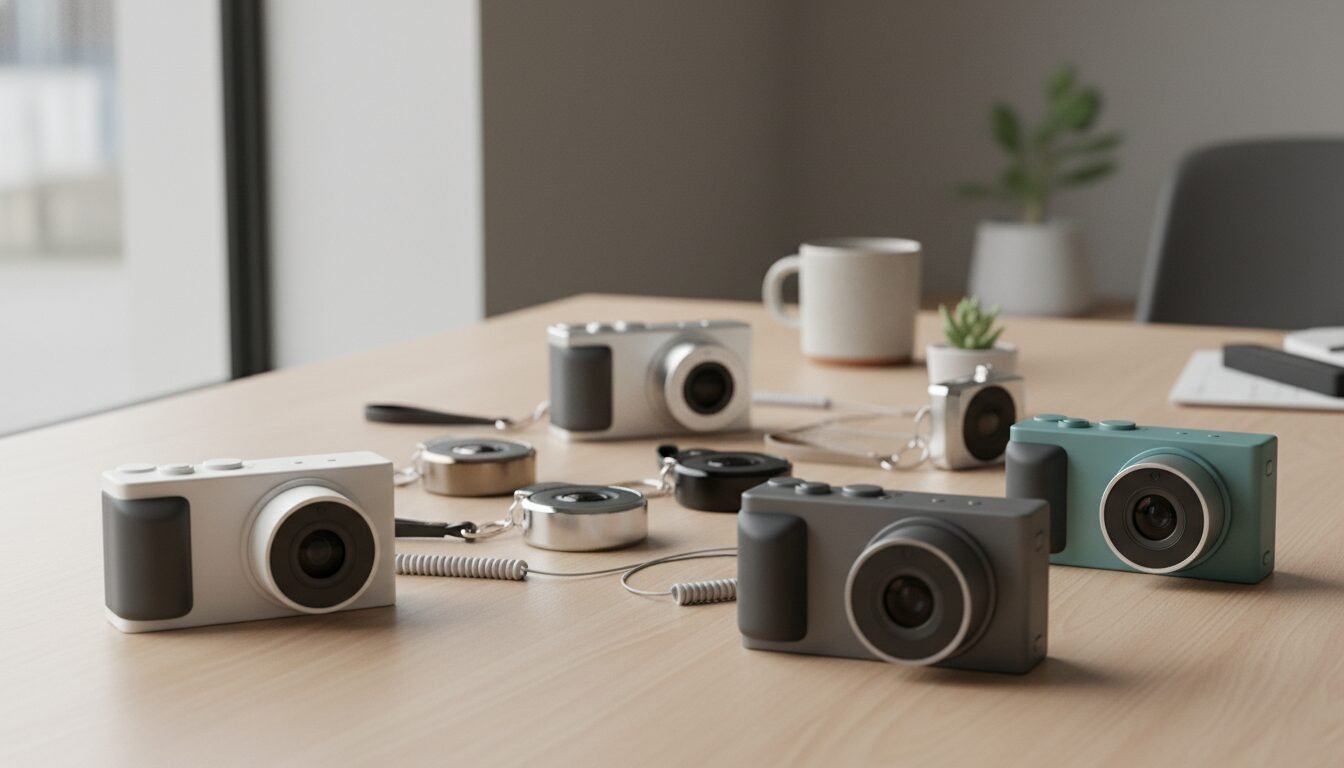
Keychain camera mini digital models are the ultimate everyday carry. The Kodak Charmera at $34.95 is both a charm and a camera, snapping party highlights or street scenes on the go. Similarly, the Sheawasy “Retro” Mini Digital Camera reviewed by OSReviews clips to your keys and captures a lo-fi, vintage aesthetic that’s perfect for social media. These cameras typically house a tiny 0.96-inch or 1.44-inch preview screen, just enough to frame a shot, and internal memory for up to 100 photos, as found on the Vivitar model.
Popular Models to Compare
| Model | Price | Screen | Key Feature |
|---|---|---|---|
| Camp Snap | $70 | None (Screen-Free) | Distraction-free, retro charm |
| Kodak Charmera | $34.95 | Tiny color preview | Keychain design, charm factor |
| Saneen Mini Pocket 4K | $33.99 | 1.54-inch LCD | 4K video, 64MP stills |
| GEMS Mini Digital Camera | $14.00 | Small LCD | Ultra-affordable, colorful prints |
Top Camera Mini Digital Models for Every Budget
Under $50: Fun and Functional
The sub-$50 bracket is packed with surprises for anyone exploring a camera mini digital without a big investment. The GEMS Mini Digital Camera at Target costs only $14 and comes in playful prints like Red Bandana and Blue Stripes. For a few dollars more, the Saneen Mini Pocket 4K ($33.99) adds 4K video and a 64MP sensor, remarkable specs at this price point. The Kidamento Model A Mini Digital Camera for Kids ($49.99) is designed for little hands with durable shells and licensed characters like Hello Kitty and Mickey Mouse.
$50 to $150: Step Up in Quality
Moving up to the Kodak PIXPRO FZ55 ($139.99 at Best Buy) nets you a rechargeable lithium-ion battery and a 5X optical zoom in a slim body. The Kodak PIXPRO C1 ($99.99) blends vintage styling with modern tech, while the Camp Snap ($70) remains a cult favorite for its screen-free philosophy. In this range, you’ll also find the myFirst Camera 10 ($39.90 at Walmart), a 5MP kids’ camera that proves durability doesn’t have to break the bank.
Over $150: Premium Compacts
When photography performance takes priority, advanced camera mini digital options deliver larger sensors and superior optics. The Canon PowerShot ELPH 360 HS ($379.99) packs a 12X optical zoom and Canon’s renowned image processing into a body that still fits in a small bag. On the higher end, the Fujifilm X100VI ($1,799.95 at Glazer’s Camera) offers an APS-C sensor and a hybrid viewfinder, blurring the line between compact and professional. Even Leica enters the space with the D-Lux 8 at $1,915, proving that compact doesn’t mean compromise.
How to Choose the Right Camera Mini Digital for Your Needs
“When buying a mini digital camera, always check if the battery is user-replaceable or rechargeable via USB-C. Nothing’s worse than a dead camera on a trip,” advises a gear expert from Kodak.
Step 1: Define Your Primary Use Case
Start by asking how you’ll actually use your camera mini digital. Will it live on your keychain for unexpected moments? If so, opt for something ultra-light like the Kodak Charmera. Planning to document a child’s birthday or a vacation? A higher-resolution model with zoom, like the Canon ELPH 360 HS, will serve you better. For social media creators, the lo-fi look of a Sheawasy Retro or a screen-free Camp Snap can set your content apart from the sea of smartphone footage.
Step 2: Set a Realistic Budget
Camera mini digital prices range from $14 to over $1,900. Setting a budget early prevents feature creep. Around $35, you get capable keychain cameras. At $70 to $100, you gain better batteries and build quality. Above $300, you enter compact-camera territory with zoom lenses and larger sensors. Keep in mind that additional costs, including a microSD card and a protective case, can add $10 to $20 to your total.
Step 3: Compare Key Specifications
Don’t be swayed by megapixels alone. Check the sensor type (CCD vs CMOS), video resolution (1080p vs 4K), and connectivity (USB-C or proprietary cable). The Saneen Mini Pocket 4K shoots 4K video but uses a tiny sensor, while the Kodak PIXPRO FZ45 records at 1080p with a larger 1/2.3-inch sensor. That trade-off impacts image quality significantly in low-light conditions. Also verify storage: built-in memory is limited, so a microSD slot is a must for any serious camera mini digital user.
Step 4: Check Reviews and Sample Images
Before buying, watch review videos like the ones from OSReviews or FoxTailWhipz to see real-world output. Sample photos reveal actual color science and sharpness, which spec sheets often gloss over. User reviews on sites like Best Buy and Walmart also highlight common annoyances, such as slow autofocus or flimsy battery doors, that you’d never catch from a product listing alone.
Kids and Mini Digital Cameras: A Perfect Pairing
Durable Designs for Little Hands
Children benefit enormously from a dedicated camera mini digital. It keeps them off screens while fostering genuine creativity. The Kidamento Model K Digital Camera for Kids ($79.99) features a tough, drop-resistant body with themed shells like Spider-Man and Sloth. The myFirst Camera 10 ($39.90) offers 5MP and a soft silicone exterior that survives bumps and tumbles. Both come with a tripod screw and microSD slot, so kids can even experiment with stop-motion animation.
Encouraging Creativity Offline
In a world where children are glued to tablets, a camera mini digital gives them a tool to explore the real world on their own terms. The screen-free Camp Snap concept works brilliantly for kids: without a preview, they focus on the subject rather than the result. Because the camera is dedicated to photos with no games or notifications, it becomes a pure creative instrument. For younger kids, the Kidamento Model A at $49.99 is a perfect starter, offering simple buttons and a built-in flash.
Top Picks for Children
- Kidamento Model A ($49.99): Sanrio characters, 5MP, durable shell.
- myFirst Camera 10 ($39.90): Soft silicone design, 1080p video, tripod-ready.
- Vivitar SnapShot Duo ($34.99 at Target): Dual cameras for selfies, easy controls.
- Camp Snap ($70): Screen-free, fosters patience and creative focus.
Vintage Aesthetics and Retro Camera Mini Digital Trends
The Appeal of Retro Design
Retro-styled camera mini digital models are having a moment, driven by nostalgia and social media culture. The Kodak PIXPRO C1 ($99.99) channels the look of classic film cameras with leatherette accents, while the Mini Vintage Digital Camera available at Walmart for $21.89 mimics a twin-lens reflex design right down to the dual “lenses.” TikTok creators like @mikeeest have fueled demand by comparing these viral cameras, showing that old-school aesthetics don’t require old-school film or old-school prices.
Key Features of Vintage-Style Models
Don’t let the retro shell fool you. These cameras house modern digital components. The Walmart vintage twin-lens camera captures 12MP photos and 1080p video with autofocus and dual filters. Similarly, the Sheawasy Retro keychain camera offers a CCD sensor that renders colors with a distinct, slightly analog feel. Many also include built-in memory for up to 100 photos and USB-C charging, blending nostalgic design with today’s convenience.
Where to Find Retro Mini Digital Cameras
Major retailers like Target, Walmart, and Glazer’s Camera stock a variety of retro mini digicams. The Fujifilm Instax Mini Evo hybrid camera ($234.99 at Best Buy) even produces real instant prints, bridging the gap between digital shooting and physical keepsakes. For true novelty, the Kodak Charmera charm-like appearance belies a fully functioning camera mini digital that fits on a keychain.
Accessories and Care Tips for Your Mini Digital Camera
Must-Have Accessories
To get the most out of your camera mini digital, invest in a few essentials. A fast microSD card rated Class 10 or higher ensures smooth video recording. Many mini cameras support cards up to 64GB or 128GB, and top-tier models like the Kodak PIXPRO FZ55 accept up to 512GB. A portable USB-C charger is invaluable since these cameras often lack removable batteries. A wrist strap or keychain tether prevents drops, and a soft pouch protects the lens and screen from scratches during pocket carry.
Proper Storage and Handling
Because they’re so small, mini digital cameras are prone to being tossed carelessly into bags. Always store them in a dedicated case when not in use. Avoid extreme temperatures: leaving a keychain camera in a hot car can damage the battery and warp the plastic body. If your camera has a USB-C port, use a dust plug to prevent lint buildup in the connector. For waterproof models like the Kodak PIXPRO WPZ2, rated to 15 meters, rinse it with fresh water after saltwater use and dry it thoroughly before opening the battery door.
Common Issues and Fixes
- Freezing or slow performance: Format the memory card in-camera regularly and keep firmware updated.
- Battery draining fast: Disable Wi-Fi when not in use and store the camera at room temperature.
- Blurry images: Check that the lens is clean and autofocus is enabled. In low light, use the flash or a mini tripod.
- Cannot delete photos: Some keychain cameras, like early Sheawasy units, lack a delete button. Connect to a computer via USB to manage files directly.
Ready to Find Your Perfect Camera Mini Digital?
Whether you’re after a $14 pocket shooter for spontaneous moments or a $1,900 premium compact that rivals professional gear, there’s a camera mini digital built for exactly how you shoot. The category has never been more diverse or more exciting. As of 2026, brands from Kodak to Fujifilm to indie darlings like Camp Snap are pushing the boundaries of what a tiny camera can do.
At Emin Media, we help brands and creators find the right tools and visual strategies to tell stories that actually land. Contact Emin Media for a free brand consultation and let’s build something bold together.
Frequently Asked Questions
What is a camera mini digital?
A camera mini digital is a compact, pocket-sized imaging device that records photos and videos digitally, often small enough to attach to a keychain or slip into a tight pocket. These devices range from $14 keychain models to $1,900 premium compacts with professional-grade sensors.
Are mini digital cameras better than smartphone cameras?
They offer a distraction-free experience and often a unique aesthetic, particularly CCD-sensor models with a warm, analog color character. Smartphone cameras typically have larger sensors and advanced computational photography, but a camera mini digital shines in specific niches like screen-free creativity, nostalgia, and dedicated creative tools for kids.
Can I use a mini digital camera for vlogging?
Yes. Models like the Saneen Mini Pocket 4K record 4K video and suit casual vlogging well, though audio quality may require an external microphone for polished results. Premium compacts like the Fujifilm X100VI deliver broadcast-quality footage in a still-compact body.
How do I transfer photos from a keychain camera?
Most connect to a computer via USB-C or micro USB cable and appear as a mass storage device, making file transfer straightforward. Some also support microSD cards that you can remove and insert directly into a card reader for faster transfers.
What’s the best camera mini digital for kids?
The Kidamento Model A ($49.99) and myFirst Camera 10 ($39.90) are both excellent choices, offering durable builds, simple controls, and fun designs that appeal to children aged 3 to 10. The Camp Snap ($70) is also worth considering for older kids who benefit from the screen-free, mindful photography experience.
Do mini digital cameras have zoom?
Many keychain cameras only offer digital zoom, which degrades image quality as you push it further. Compact models like the Kodak PIXPRO AZ405 include 40X optical zoom, and the Canon ELPH 360 HS provides 12X optical zoom in a slim, portable body.
Enjoyed this article?
Contact Emin Media for a free brand consultation and let's create something amazing together.
Get in Touch