Brand Extension Strategy: Types, Examples & How to Win
Key Takeaways
- A brand extension strategy uses existing brand equity to introduce new products without starting from scratch.
- There are three primary types: line extensions, category extensions, and horizontal extensions.
- Successful brand extensions can enhance market presence and deepen customer loyalty.
- Risks include brand dilution and consumer confusion if the extension strays too far from core values.
- Effective communication and alignment with brand values are essential for any brand extension strategy to succeed.
- As of 2026, brands are extending into digital services, wellness, and experience-based categories at a faster pace than ever before.
What Is Brand Extension Strategy?
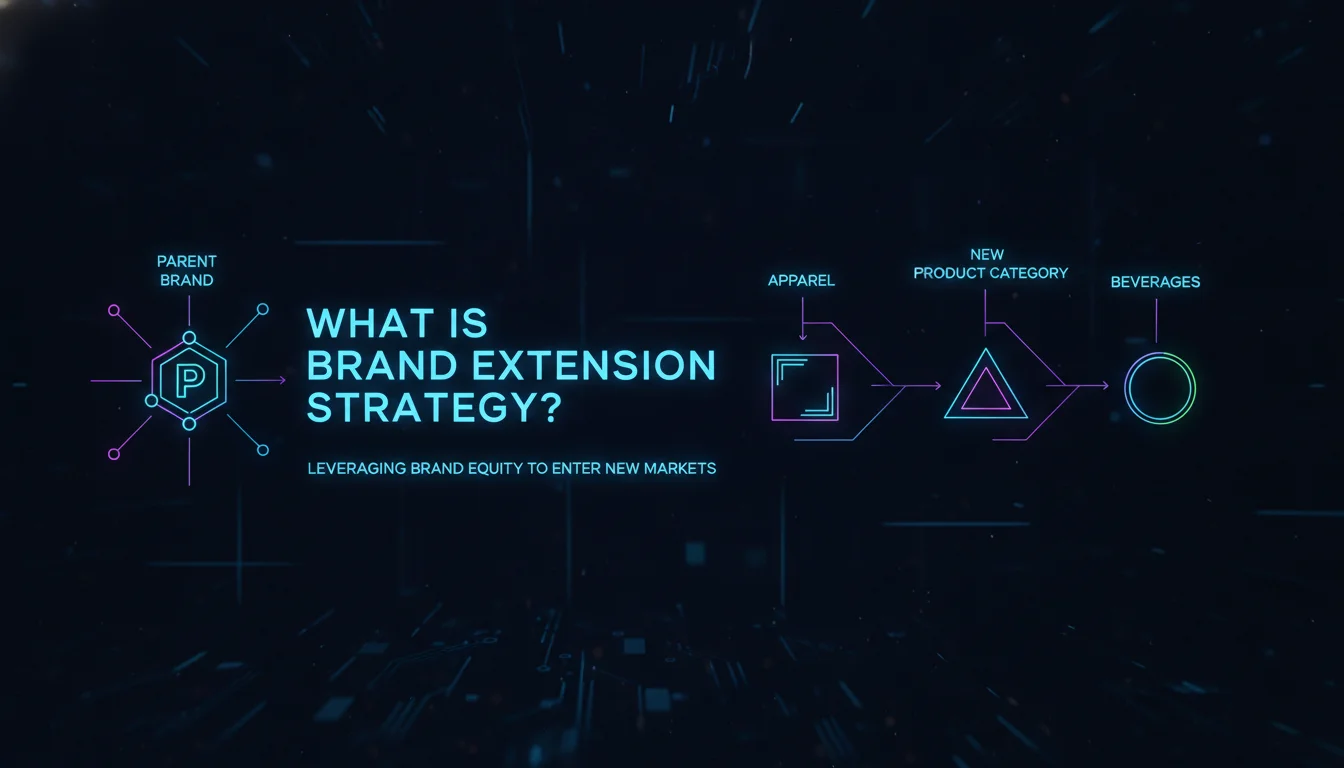
A brand extension strategy is a marketing approach where a company uses its established brand name to introduce new products or services in different categories or target markets. Companies use this approach to capitalize on existing brand equity, letting customer trust and recognition do the heavy lifting for new offerings.
Definition of Brand Extension
Brand extension is the process of using an existing brand name to launch new products that may or may not be related to the original product line. According to Harvard Business School Professor Jill Avery, “Transferring the meaning of an existing brand to a new product can also bring instant brand awareness and brand knowledge to the new product.” This technique helps companies reduce the financial risks tied to new product development by relying on the established reputation of the parent brand.
Importance of Brand Extension
The significance of a extension strategy lies in its ability to enhance market presence, increase sales, and diversify product offerings. By introducing new products under a familiar brand name, companies attract new customers while retaining existing ones, driving both growth and profitability. According to Wikipedia’s documented marketing history, in the 1990s, 81 percent of new products used brand extension to introduce new brands and create sales – a figure that underscores just how central this approach has been to modern product development.
How Brand Extension Works
Brand extension works by transferring the positive associations and credibility of the parent brand to the new product. That transfer creates immediate brand awareness and consumer acceptance. Customers are far more likely to try something new when it carries a name they already trust. As Professor Avery explains, for a this type of strategy to succeed, “the parent brand’s associations should provide meaningful differentiation in the extension category, be favorably received in the extension context, and be salient to consumers.”
Types of Brand Extension Strategies
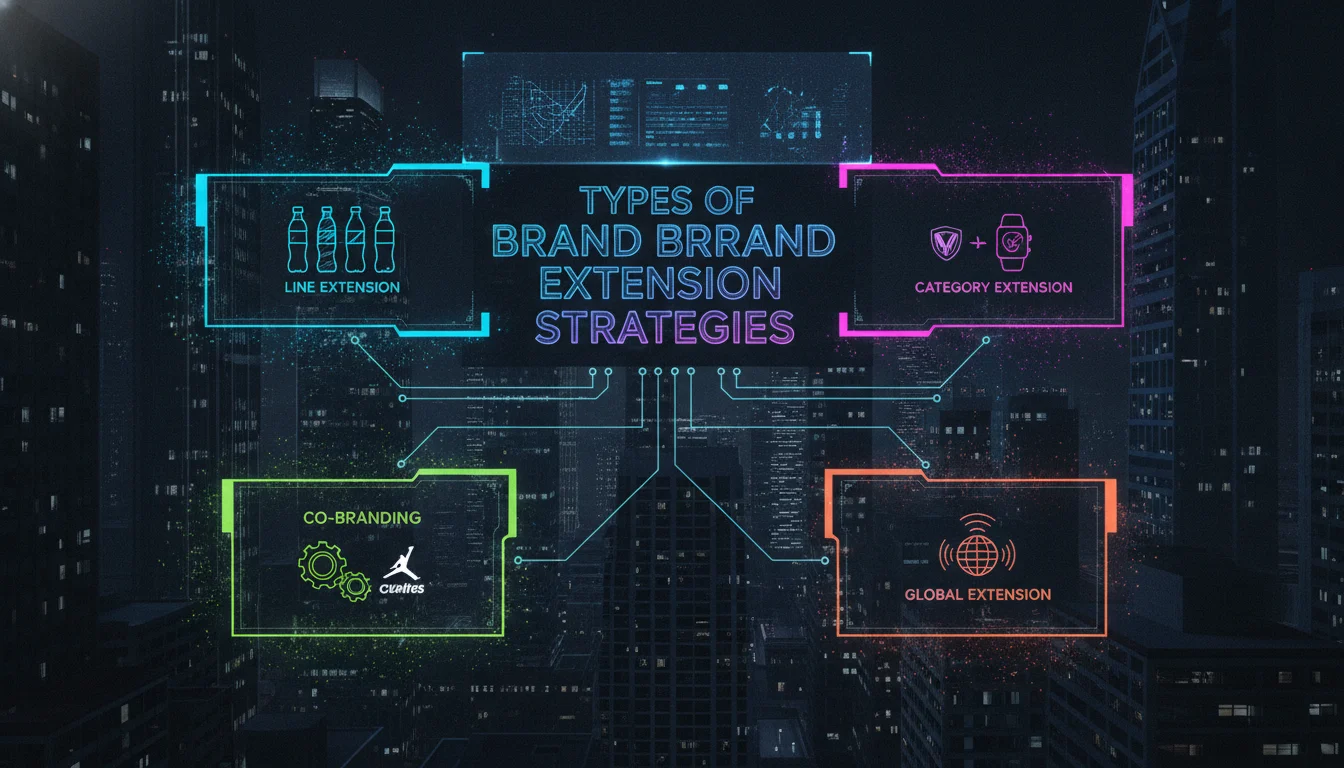
There are three main types of brand extension strategies: line extensions, category extensions, and horizontal extensions. Each type carries its own strategic goals and risk profile.
Line Extensions
Line extensions involve introducing new products within the same category as the existing brand. A beverage company launching new flavors or sizes of its existing drinks is a classic example. Oreo launching Oreo Thins as a lighter take on the original cookie is another. As Professor Avery notes, “Line extensions are generally a low-risk strategy, as the meaning of the brand transfers naturally to similar products.” This approach lets brands grow without venturing into unfamiliar territory.
Category Extensions
Category extensions stretch a brand into an entirely new product area that still connects to the parent brand’s identity. A company known for athletic footwear expanding into sports apparel is a textbook move here. Arm & Hammer’s expansion from baking soda into laundry detergent, cat litter, and oral care is one of the most cited examples in brand strategy literature. The risk: customers may struggle to connect the brand with unfamiliar offerings, and as Professor Avery warns, “This can cause consumer confusion as the brand’s meaning becomes blurred, increasing the risk of brand dilution.”
Horizontal Extensions
Horizontal extensions involve launching products that are largely unrelated to the original brand. A technology company moving into food and beverage would qualify. This is the riskiest form of this kind of strategy because it relies almost entirely on the strength of the brand name rather than any logical product connection. Success here depends on the brand’s ability to maintain its reputation across very different markets.
Pros and Cons of Brand Extension Strategy
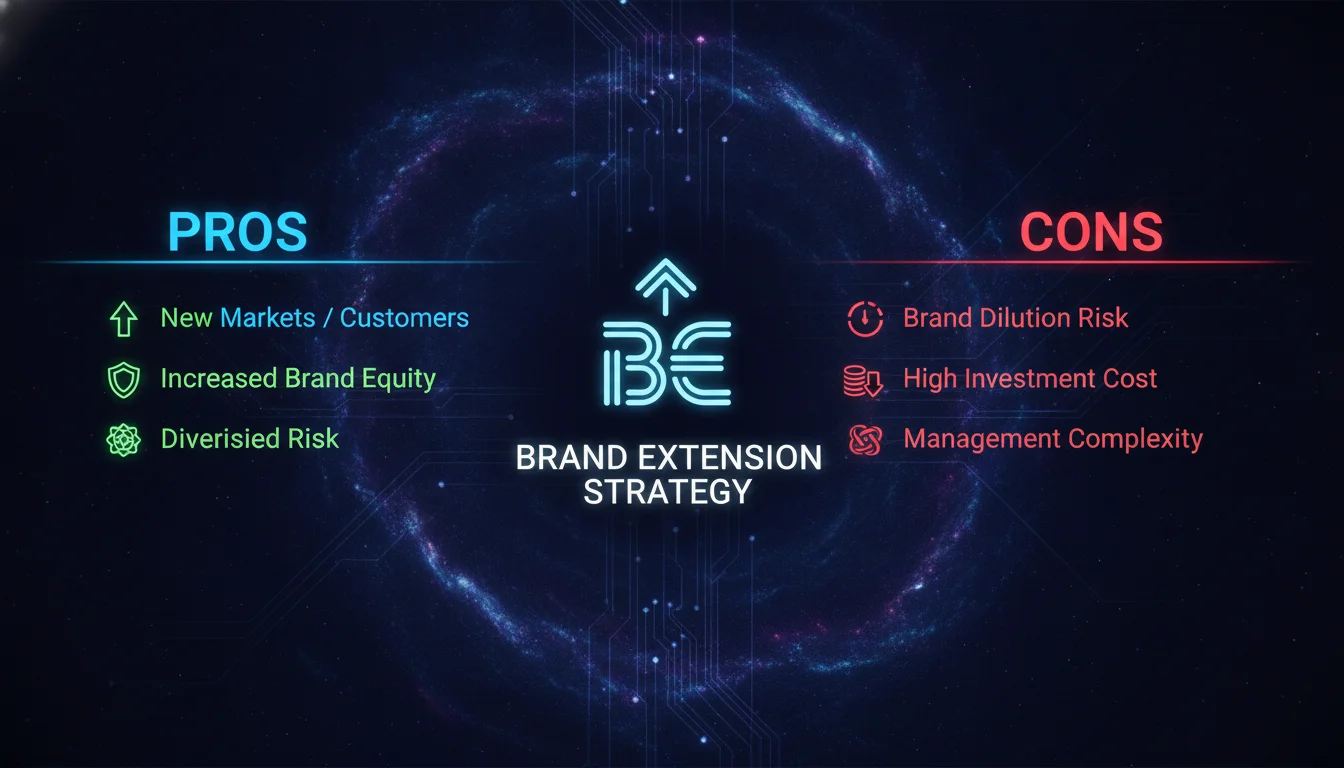
A brand extension offers real upside, but it also carries genuine risk. Here’s an honest look at both sides before you commit to a direction.
Pros
- Lower launch costs: Marketing budgets stretch further when you’re building on existing brand recognition rather than creating awareness from zero.
- Faster consumer adoption: Customers are more willing to try a new product when it carries a brand name they already trust.
- Increased market reach: Extensions open doors to new customer segments and demographics without abandoning your core audience.
- Stronger brand portfolio: A well-managed extension adds depth to your brand, making it more resilient across economic cycles.
- Reduced perceived risk for consumers: Familiar branding lowers the psychological barrier to trying something new.
Cons
- Brand dilution risk: Extending too far from core offerings can weaken the parent brand’s identity and confuse what it stands for.
- Consumer confusion: If the connection between the parent brand and the new product isn’t clear, customers may reject both.
- Cannibalization: New products can compete with existing ones, splitting sales rather than growing total revenue.
- Reputational spillover: If the extension fails publicly, the damage can travel back to the parent brand.
- Execution complexity: Managing a broader product portfolio requires more operational bandwidth, supply chain coordination, and marketing resources.
How Brand Extension Strategy Works: The Mechanics
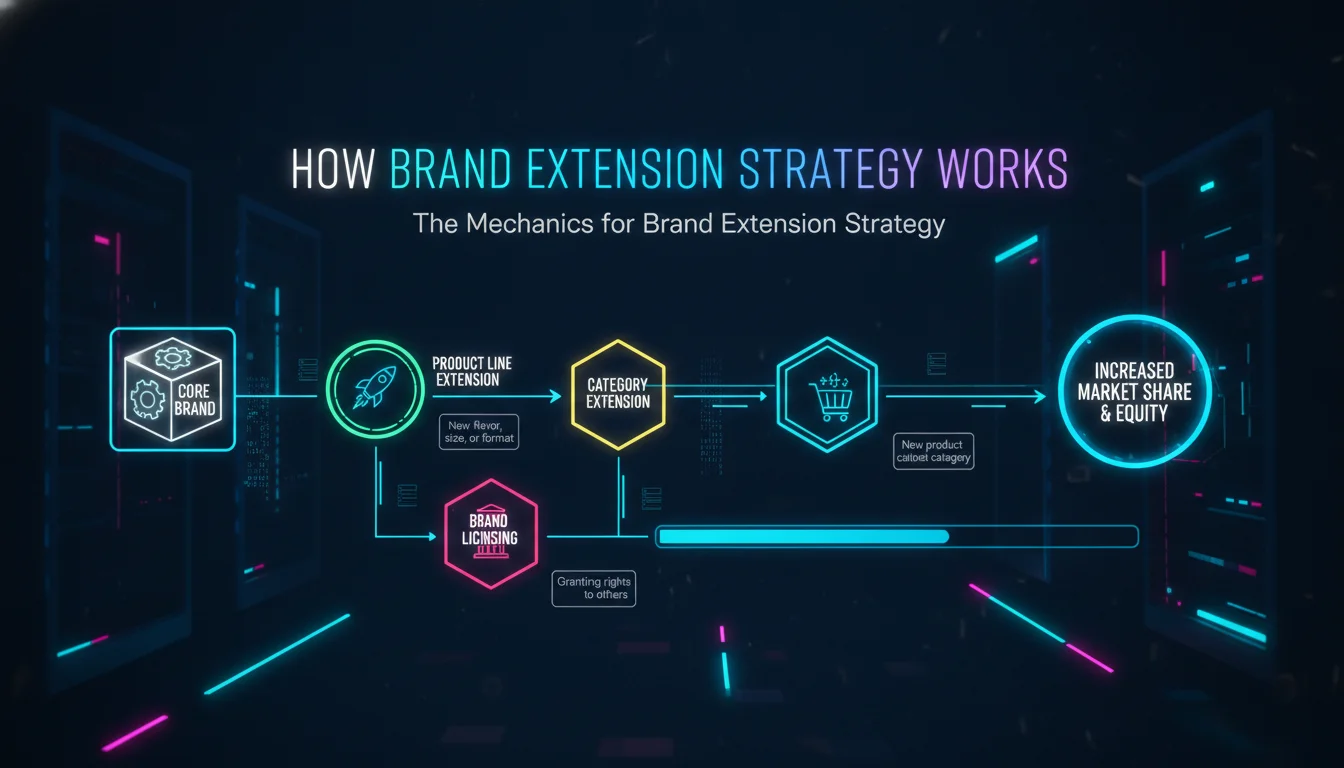
Understanding the mechanics of a extension strategy means looking at what actually happens beneath the surface when a brand moves into new territory.
At its core, brand extension is an act of meaning transfer. When a consumer sees a new product carrying a brand name they recognize, their brain immediately pulls up every association they have with that brand: quality signals, emotional connections, past experiences, and cultural positioning. The new product inherits all of that, for better or worse.
This is why brand alignment isn’t just a nice-to-have. It’s the actual mechanism that makes the strategy work. If your brand stands for precision engineering and you launch a line of artisan candles, the meaning transfer breaks down. Consumers can’t connect the dots, and the extension fails to borrow any equity from the parent.
Three forces drive successful brand extension mechanics:
- Brand fit: The perceived logical or emotional connection between the parent brand and the new product category. Higher fit means smoother transfer of trust.
- Brand strength: The depth of equity in the parent brand. Stronger brands can stretch further without losing coherence.
- Category familiarity: How well consumers understand the new product category. Entering a familiar category reduces the cognitive load on the customer.
According to branding research, consumers evaluate brand extensions by asking two unconscious questions: “Does this make sense coming from this brand?” and “Do I trust this brand enough to try something new from them?” Your this type of strategy needs to answer both with a confident yes.
“For a brand extension to be successful, the parent brand’s associations should provide meaningful differentiation in the extension category, be favorably received in the extension context, and be salient to consumers.” – Professor Jill Avery, Harvard Business School, Creating Brand Value
How to Apply a Brand Extension Strategy: Step-by-Step
Applying a this kind of strategy successfully requires a structured process, not just a good idea and a new SKU. Here’s how we approach it with clients at Emin Media.
Step 1: Audit Your Brand Equity
Before extending anywhere, you need a clear picture of what your brand actually means to consumers today. Conduct brand perception research: surveys, focus groups, social listening, and customer interviews. Map out the core associations people hold. These associations are your raw material. You can only transfer what you actually have.
Step 2: Conduct Market Research
Identify where genuine opportunity exists. Look for gaps in the market that align with your brand’s existing strengths. Assess the competitive landscape in the target category. Understand the customer segments you’d be reaching and whether they overlap with or complement your current audience.
Step 3: Test Brand Fit Before You Build
Run concept testing with real consumers before investing in product development. Show them the proposed extension and measure their reaction: Does it feel right coming from your brand? Does it make them more or less confident in the parent brand? This step alone can save enormous resources by catching misaligned extensions early.
Step 4: Ensure Brand Alignment
New products must align with the core values and identity of the parent brand. This isn’t about making everything look the same visually. It’s about ensuring the new product delivers on the same brand promise, just in a new context. Dove’s extension into deodorant and body wash worked because the brand’s promise of real beauty and self-care translated perfectly across categories.
Step 5: Develop a Clear Communication Strategy
Consumers need to understand the connection between the new product and the brand they already know. Your marketing should make that bridge explicit. Don’t assume people will connect the dots on their own. Highlight shared values, design cues, and quality signals that link the extension back to the parent brand.
Step 6: Launch with a Phased Rollout
Start in a controlled market or with a limited audience before going wide. A phased rollout lets you gather real performance data, catch execution problems early, and refine your messaging before full-scale investment. Treat the initial launch as a live test, not a final answer.
Step 7: Monitor and Measure
Track both the extension’s performance and the parent brand’s health metrics. Watch for signs of brand dilution: shifts in brand perception scores, drops in core product loyalty, or consumer feedback that suggests confusion. Campaign performance data should inform ongoing decisions about whether to expand, adjust, or pull back.
Brand Extension Strategy Comparison Table
Not all brand extension strategies carry the same risk or reward profile. This table breaks down the three primary approaches so you can evaluate which fits your brand’s current position.
| Extension Type | Definition | Risk Level | Brand Fit Required | Example | Best For |
|---|---|---|---|---|---|
| Line Extension | New products within the same category | Low | High (natural fit) | Oreo Thins | Brands wanting to grow within their existing market |
| Category Extension | New product category related to the brand | Medium | Medium (logical connection needed) | Arm & Hammer into oral care | Brands with strong equity and a clear brand promise |
| Horizontal Extension | Unrelated product category | High | Low (relies on brand strength alone) | Tech brand into food & beverage | Brands with exceptional recognition and cultural authority |
Common Mistakes to Avoid in Brand Extension Strategy
Most brand extension failures share the same root causes. Knowing them in advance is the difference between a smart expansion and an expensive lesson.
Stretching Too Far, Too Fast
The biggest mistake brands make is moving into categories that have no logical or emotional connection to the parent brand. The further you stretch, the more you rely on brand name alone, and brand name alone rarely closes the sale in an unfamiliar category. Branding Strategy Insider notes that brand diversification requires extending with caution, especially when the new category puts the brand in direct competition with established leaders.
Skipping Consumer Research
Assuming you know how consumers will receive an extension is a costly shortcut. Internal enthusiasm for a new product idea is not a market signal. Real consumer testing before launch is non-negotiable. Many extensions that seemed brilliant in the boardroom landed flat in the market because no one asked actual customers first.
Inconsistent Quality Signals
If the new product delivers a noticeably lower quality experience than the parent brand, the damage travels both ways. Consumers revise their opinion of the parent brand downward. Maintaining quality parity across extensions isn’t optional. It’s what protects the equity you’re trying to borrow.
Weak Communication of the Brand Connection
Launching a new product without clearly communicating its relationship to the parent brand leaves consumers to make their own assumptions. Those assumptions are often wrong. Your brand extension needs a communication plan that explicitly bridges the old and the new, using shared visual language, messaging, and brand values.
Ignoring Cannibalization Risk
Line extensions in particular carry the risk of pulling sales from existing products rather than growing the total pie. If your new flavor or format simply replaces purchases of the original, you’ve added operational complexity without adding revenue. Model the cannibalization scenario before launch and decide whether the net result still makes strategic sense.
Real-World Examples of Successful Brand Extension Strategy
The best extension strategy examples share a common thread: the extension felt inevitable in hindsight, even if it was bold at the time.
Dove: From Soap to Self-Care Empire
Dove is the most cited example of a this type of strategy done right. Originally known for its soap, Dove expanded into deodorants, body washes, and hair care. The brand’s “Campaign for Real Beauty” built an emotional foundation around self-esteem and authentic beauty that translated across every new category. As Professor Avery notes, Dove “established a meaning that could apply to and extend across the entire range of products.” The extension felt natural because the brand promise never changed, only the product form did.
Apple: Design-Led Expansion Across Categories
Apple began as a computer company and extended its brand into smartphones, tablets, wearables, streaming services, and financial products. Each extension carried Apple’s core identity: premium design, intuitive user experience, and ecosystem integration. The this kind of strategy worked because Apple never compromised on those signals, regardless of the category. Consumers trusted that an Apple product, whatever it was, would meet a consistent standard.
Arm & Hammer: Cleaning Power as a Brand Platform
Arm & Hammer built its entire brand extension around a single functional truth: baking soda cleans and deodorizes. That simple, credible association became the platform for expanding into laundry detergents, toothpaste, cat litter, and more. Each extension borrowed the same core equity, cleaning power, and applied it to a new context. The brand fit was clear, and consumers accepted it.
A Worked Example: How a Fitness Brand Might Execute This Strategy
Imagine a mid-size fitness equipment brand, well-known for its home gym gear, considering a extension strategy into nutrition products. Here’s how that might play out using the framework above.
Brand audit: Consumer research reveals the brand is associated with performance, discipline, and results. Those are strong, transferable values.
Market research: The nutrition supplement space is crowded, but there’s a gap for a brand that speaks to serious home gym users rather than competitive athletes or casual wellness seekers.
Fit testing: Concept tests show that existing customers respond positively to the idea of a protein supplement line from this brand. The logic is clear: same customer, same goal, different product.
Brand alignment: The nutrition line is designed with the same visual language as the equipment: clean, functional, no-nonsense. The packaging reinforces the performance positioning.
Communication strategy: Launch campaign messaging focuses on “same commitment, new fuel” – explicitly connecting the new product to the brand’s existing promise.
Phased rollout: The brand launches with three SKUs to its existing email list before retail distribution. Early feedback shapes final formulations.
Measurement: The brand tracks both supplement sales and core equipment sales to watch for any cannibalization or brand perception shifts.
This is what a disciplined this type of strategy looks like in practice. Not a leap of faith, but a structured expansion built on real consumer insight.
Brand Extension vs. Line Extension
These two approaches are often confused, but they represent meaningfully different strategic choices.
| Factor | this kind of strategy | Line Extension |
|---|---|---|
| Scope | New product category | Same product category |
| Risk Level | Medium to High | Low |
| Consumer Familiarity | Lower in new category | High (same category) |
| Brand Fit Required | Critical | Naturally present |
| Investment Required | Higher (new category entry) | Lower (existing infrastructure) |
| Growth Potential | Higher ceiling | More incremental |
A brand extension strategy reaches into new territory and carries higher stakes. A line extension builds on what you already have with lower risk and more predictable returns. Neither is inherently better. The right choice depends on your brand’s current equity, your growth ambitions, and how much risk your business can absorb.
Brand Extension Strategy in 2026: What’s Changing
As of 2026, the conditions for brand extension have shifted in ways that matter for how you plan and execute.
Digital-first brands are extending into physical products. Direct-to-consumer brands built on software or content are launching physical goods, using their community trust as the bridge. This year, we’re seeing wellness, creator economy, and AI-native brands all testing physical extensions with varying degrees of success.
Experience-based extensions are gaining traction. Brands are extending not just into new products but into events, memberships, and services. This reflects a broader shift in how consumers relate to brands: less transactional, more relational. A brand extension strategy that includes experiential touchpoints builds loyalty in ways that product launches alone cannot.
Speed of extension has increased. Social media and direct-to-consumer infrastructure mean brands can test extensions faster and cheaper than ever. The barrier to launching a limited-edition extension has dropped significantly. But speed without strategy still produces the same old failures, just faster.
“Well-managed brand extensions strengthen brands. The risk isn’t in extending – it’s in extending without discipline.” – Larry Light, Branding Strategy Insider
Advantages of Brand Extension Strategy
Implementing a brand extension strategy offers several advantages that can significantly benefit a company’s growth trajectory.
Leveraging Brand Equity
One of the primary advantages is the ability to use existing brand equity as a launch platform. Companies can promote new products by borrowing the reputation they’ve already built, reducing the costs of creating brand awareness from scratch.
Increased Market Reach
Brand extensions allow businesses to reach new customer segments and markets. By introducing new products, companies attract different demographics and increase their overall market share without abandoning their core audience.
Enhanced Customer Loyalty
When customers have positive experiences with a brand, they’re more likely to try new products under the same name. This deepens customer loyalty and drives repeat purchases, as consumers feel a sense of familiarity and trust that carries across categories.
Challenges and Risks of Brand Extension Strategy
Despite the advantages, a brand extension strategy also carries challenges that companies must address carefully before committing.
Brand Dilution
Brand dilution occurs when a brand extends too far beyond its core offerings, weakening its identity. If consumers perceive the new products as inconsistent with the original brand values, the overall brand equity suffers. As branding research consistently shows, poor choices for brand extension can dilute and deteriorate the core brand.
Consumer Confusion
Products that are too different from the original can confuse consumers. If customers can’t understand the connection between the parent brand and the new offerings, they lose trust in both. Clear communication is the primary defense against this outcome.
Market Saturation
In some cases, brand extensions lead to market saturation, where the category becomes flooded with similar products. This can result in cannibalization, where new products compete with existing ones, ultimately hurting total sales rather than growing them.
Frequently Asked Questions
What is a brand extension example?
Dove is one of the most cited examples of a brand extension strategy done right. Originally known for soap, Dove expanded into deodorants, body washes, and hair care by leveraging its established brand equity in personal care and its “Campaign for Real Beauty” messaging.
What is the difference between brand extension and line extension?
A brand extension strategy moves into an entirely new product category, while a line extension introduces new variations within the same category. Line extensions carry lower risk because the brand fit is already established. Brand extensions carry higher potential reward but require more careful planning and consumer research.
What are the main risks of a brand extension strategy?
The primary risks are brand dilution, consumer confusion, and cannibalization of existing products. Brand dilution happens when extensions stretch too far from core values, weakening what the parent brand stands for. Consumer confusion arises when the connection between the parent brand and the new product isn’t clear or credible.
What is the 3-7-27 rule in branding?
The 3-7-27 rule suggests that consumers need to encounter a brand message at least three times, across seven different formats, over 27 days to retain it effectively. This principle is relevant to brand extension launches, where building awareness of the new product’s connection to the parent brand requires consistent, multi-channel communication.
What are the 5 pillars of brand strategy?
The five pillars of brand strategy are brand purpose, brand vision, brand values, brand positioning, and brand personality. These pillars collectively guide brand development and communication, and they serve as the alignment framework any brand extension strategy must respect to avoid dilution.
What are the 5 C’s of branding?
The 5 C’s of branding are Company, Customers, Competitors, Collaborators, and Context. These five dimensions help businesses analyze their branding environment and make informed decisions about where and how to extend. A brand extension strategy that ignores any of these five factors is operating with incomplete information.
Ready to build something bold? Contact Emin Media for a free brand consultation and let’s map out a brand extension strategy that actually fits your brand’s DNA. You can also explore our full range of branding and marketing services to see how we help brands grow with intention.
Enjoyed this article?
Contact Emin Media for a free brand consultation and let's create something amazing together.
Get in Touch