Best Social Media Analytics Tools 2026: Full Guide
Social media analytics tools 2026 are software platforms that collect, analyze, and report on social data across channels, using AI to surface trends, sentiment, and revenue impact. The market has split cleanly into two camps: enterprise command centers and lean SMB solutions.
Key Takeaways
- tools 2026 have shifted from vanity metrics to AI-powered platforms that predict trends and tie social performance to revenue.
- Enterprise tools like Sprinklr and Brandwatch monitor 100M+ sources, while SMB-friendly options like Buffer offer free basic analytics.
- AI assistants such as Hootsuite’s Blue Silk AI and Sprout Social’s Trellis can significantly reduce manual analysis time, with vendor case studies citing reductions of 60–80%.
- Total cost of ownership often exceeds list prices due to onboarding fees ($3K–$8K), API overages, and seat expansion. Expect 2–3× the base subscription in year one.
- Native platform analytics (Instagram Insights, TikTok Studio) remain viable for creators under 10K followers with no paid ad spend.
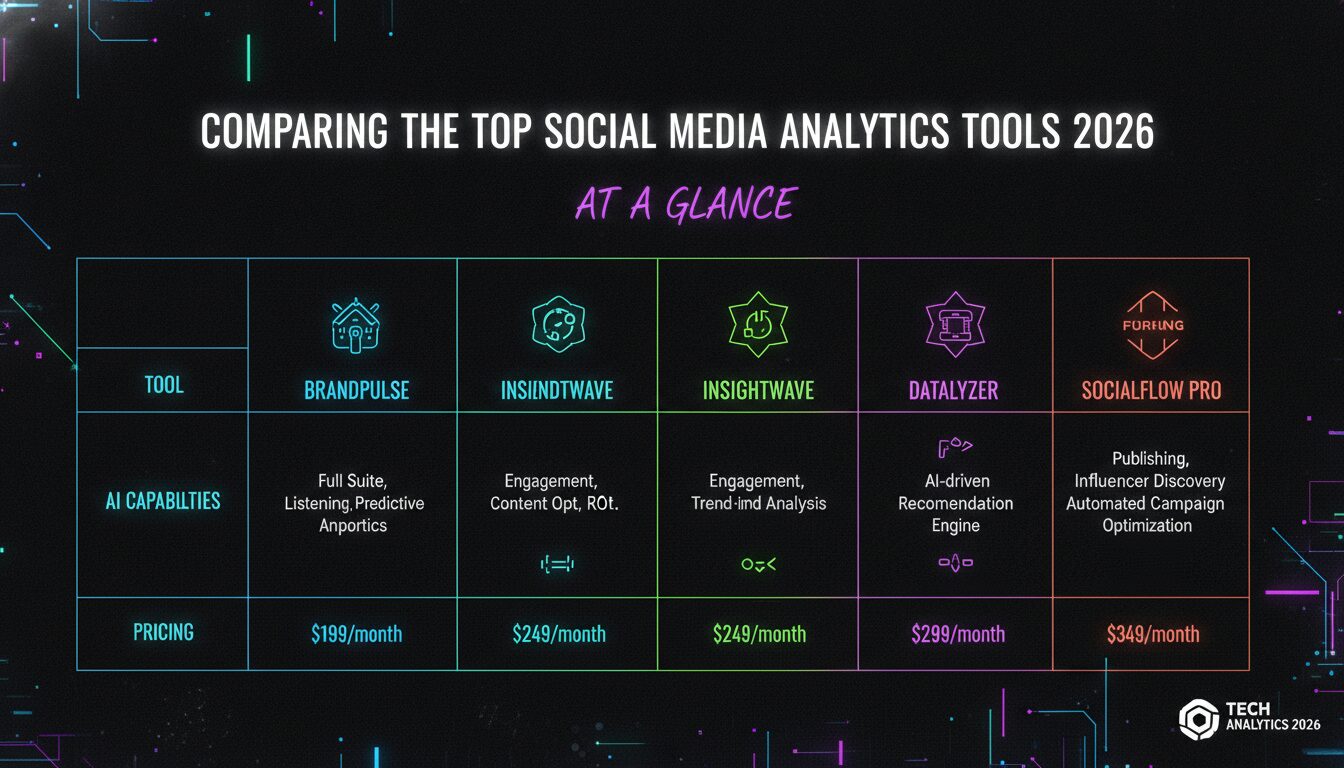
Comparing the Top Social Media Analytics Tools 2026 at a Glance
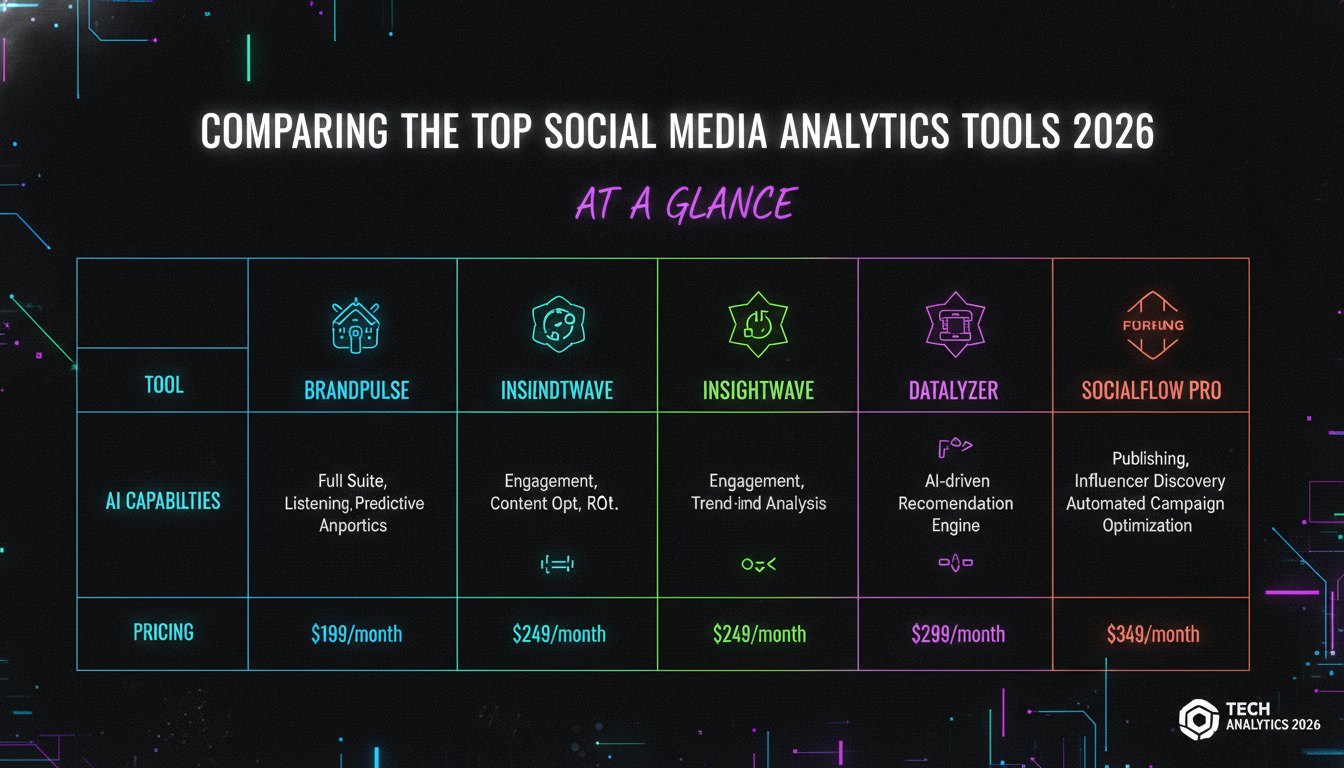
| Tool | Best For | Starting Price (Monthly) | Free Plan | AI Features |
|---|---|---|---|---|
| Sprout Social | Mid-size to enterprise teams | $199 per seat | 30-day trial | Trellis AI for trend detection and automated responses |
| Hootsuite | Multi-network publishing & monitoring | $99 per user | 30-day trial | Blue Silk AI for post optimization and insights |
| Buffer | Creators & small teams | Free / $6 per channel | Yes | AI caption generation |
| Whatagraph | Marketing agencies | $229 (billed annually) | Yes (5 sources) | Whatagraph IQ for automated reporting |
| Brandwatch | Social listening & consumer intelligence | Custom | No | Iris AI for sentiment analysis and crisis alerts |
| Rival IQ | Competitive benchmarking | $169 | 14-day trial | AI-driven competitive insights |
| Improvado | Cross-platform data aggregation | Custom | No | Customizable AI dashboards |
What Are Social Media Analytics Tools in 2026?
The Shift from Reactive to Predictive Analytics
The best this type of 2026 have evolved far beyond simple like-and-follower counts. They now serve as command centers that unify data from dozens of channels, apply machine learning to surface trends, and forecast future performance. Modern platforms embrace all four analytical approaches: descriptive (what happened), diagnostic (why it happened), predictive (what will happen), and prescriptive (what to do about it). Tools like Sprout Social and Hootsuite now use AI to automatically detect posting anomalies and recommend corrective actions, moving teams from reactive firefighting to proactive strategy.
“73% of marketers say social media analytics directly influence their overall strategy.” – Sprout Social 2024 Index
Why Native Platform Analytics Fall Short
Instagram Insights and TikTok Studio offer basic engagement data, but they remain walled gardens. Native analytics typically limit historical data to 90 days, lack cross-channel comparisons, and provide no competitive context. A brand managing three Instagram accounts, a TikTok profile, and a LinkedIn page would need to manually stitch together metrics from five separate dashboards. That process eats up hours every week. Third-party this kind of tools 2026 solve this by aggregating everything into a single view, often with two or more years of data retention and automated reporting.
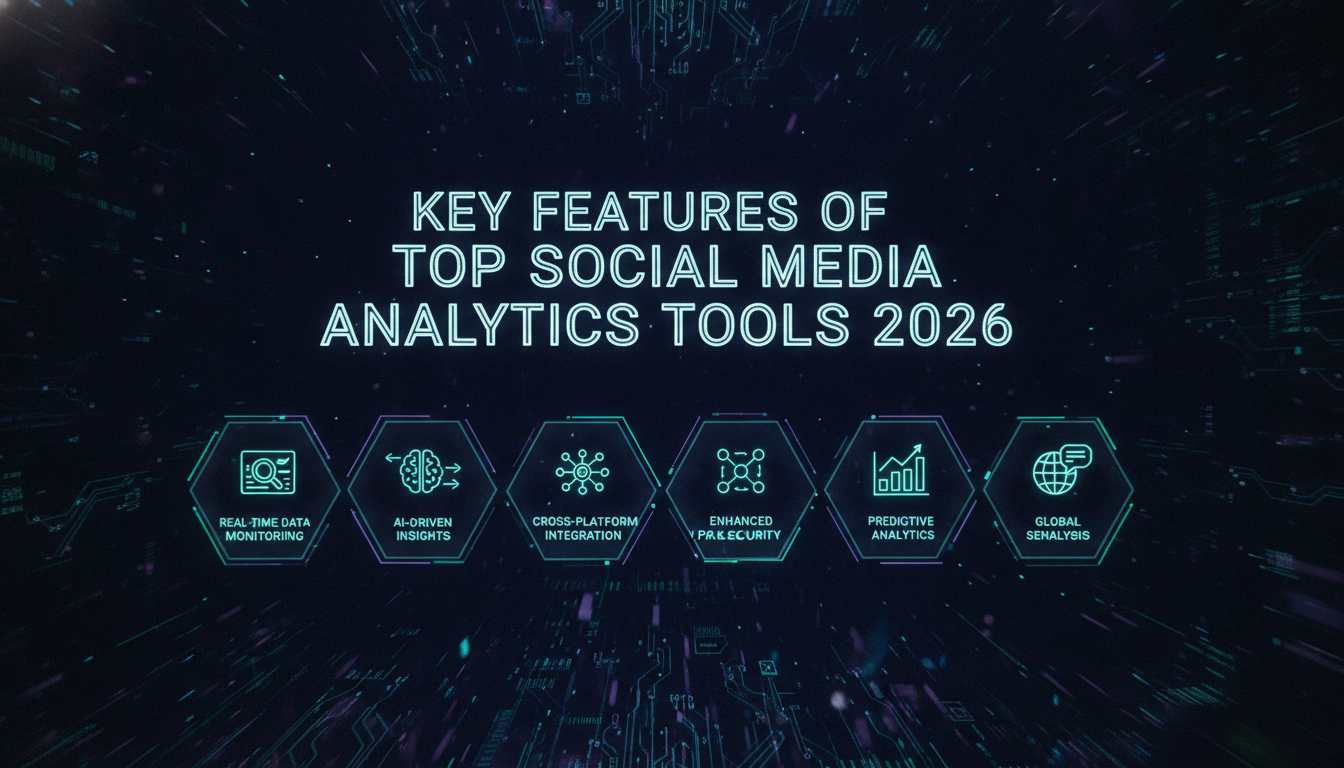
Key Features of Top Social Media Analytics Tools 2026
Unified Cross-Channel Dashboards
The core promise of any analytics tool is consolidation. Leading solutions like Whatagraph and Improvado connect 100+ data sources, from Facebook to Salesforce, so teams can see paid, owned, and earned metrics side by side. A unified dashboard eliminates the “swivel chair” problem, where marketers toggle between tabs, and ensures data consistency through standardized APIs and data cleansing.
AI-Powered Insights and Automation
Artificial intelligence is now table stakes. Hootsuite’s Blue Silk AI analyzes past posting patterns to recommend optimal send times and content formats. Sprout Social’s Trellis assistant generates plain-language summaries of complex data sets. According to multiple vendor case studies cited by Improvado, these capabilities reduce manual analysis time by 60–80%. AI-powered social listening tools from Brandwatch scan millions of news articles, blogs, and social posts to detect sentiment shifts and emerging crises in real time.
Real-Time Monitoring and Alerts
For enterprise brands, speed matters. Sprinklr and Brandwatch monitor over 100 million sources globally, including niche forums and review sites, and trigger instant alerts when brand mentions spike or sentiment turns negative. This real-time pulse lets companies respond to a growing PR crisis within minutes, not hours.
Influencer Analytics
Influencer measurement has become a first-class feature in the best the media analytics tools 2026. Platforms like Keyhole and Brandwatch let you track influencer reach, engagement quality, and audience overlap before you commit budget. Post-campaign, you can measure attributed traffic, sentiment lift, and share-of-voice changes. For brands running creator programs at scale, this layer of data separates genuine ROI from vanity reach numbers.
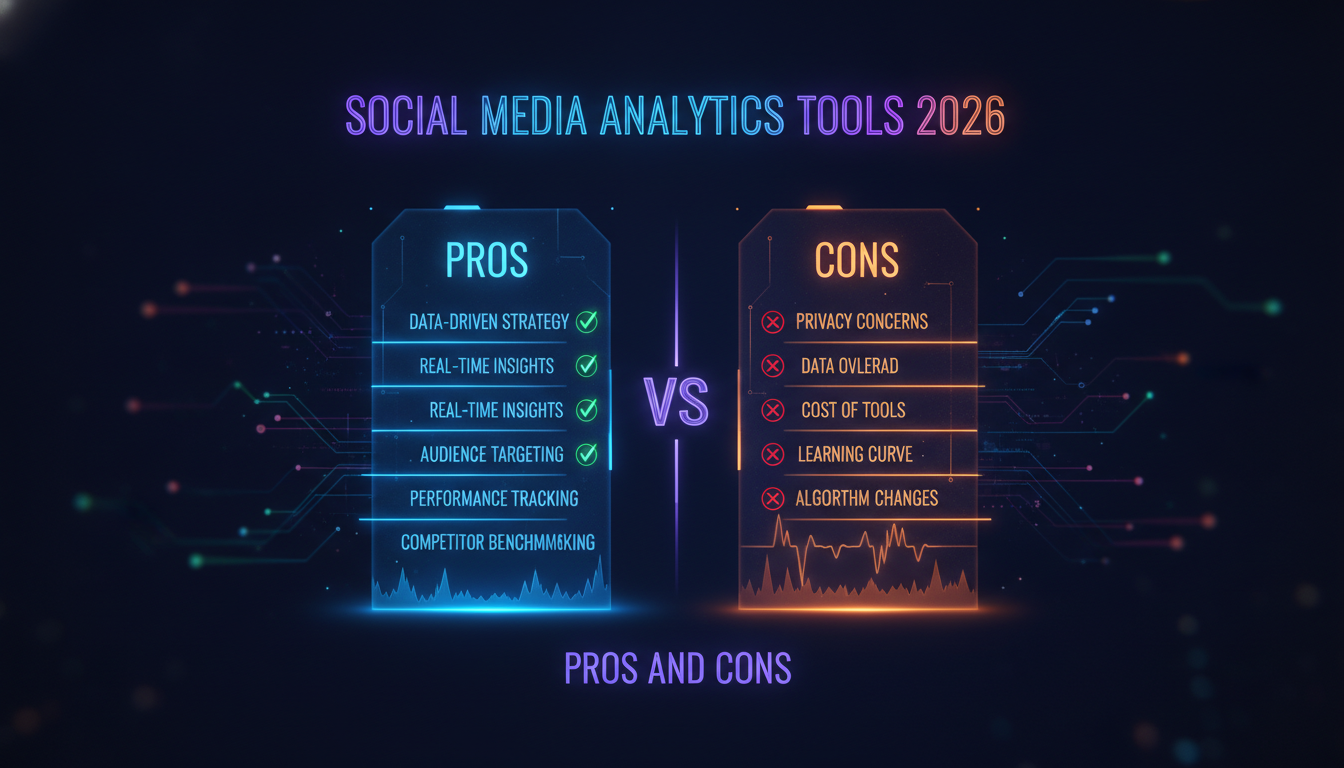
Pros and Cons of Using Social Media Analytics Tools 2026
Pros
- Unified data view: Pull metrics from every channel into one dashboard instead of logging into five native apps.
- AI-driven efficiency: Automated insights and trend detection free your team to focus on strategy rather than spreadsheets.
- Competitive intelligence: Tools like Rival IQ benchmark your performance against competitors, something native analytics never offer.
- Historical depth: Most third-party platforms retain two or more years of data, versus the 90-day cap on native dashboards.
- Revenue attribution: Premium tiers connect social activity to pipeline and sales, making it easier to justify budget to leadership.
Cons
- Real cost vs. list price: Onboarding fees, seat expansion, and API overages can push year-one spend to 2–3× the advertised subscription.
- Learning curve: Enterprise platforms like Sprinklr require 40–80 hours of setup time for a full stack deployment.
- Feature bloat: Many tools bundle capabilities you’ll never use, making the interface feel heavy for smaller teams.
- Data accuracy gaps: Third-party tools occasionally lag behind native APIs, especially after platform algorithm updates.
How to Choose the Right Social Media Analytics Tools 2026
Step 1: Assess Your Team Size and Budget
Start by mapping your team structure and monthly budget to the tiered model used by industry analysts:
- Free/Basic (1–3 people, $0–$50/mo): Stick with native analytics plus a free scheduler like Buffer. Ideal for creators under 10K followers with no ad spend.
- SMB (5–20 people, $50–$300/mo): Look at Iconosquare ($49/mo) or Keyhole for multi-platform reporting and influencer tracking.
- Mid-Market (20–100 people, $500–$2,500/mo): Adopt Sprout Social ($199/user) or Hootsuite, complemented by Rival IQ for competitive benchmarking.
- Enterprise (100+ people, $5,000–$50,000+/mo): Deploy Sprinklr or Brandwatch for global listening, and layer in Improvado for multi-touch attribution across 1,000+ marketing sources.
Step 2: Identify Must-Have Integrations
Your analytics tool must speak to your existing tech stack. If social media is just one touchpoint in a complex customer journey, you need tools like Improvado that feed data into CRM systems (Salesforce, HubSpot), business intelligence platforms (Tableau, Looker), and Google Analytics 4. Confirm API availability and the cost of custom connectors before signing.
Step 3: Evaluate Analytics Depth (From Descriptive to Prescriptive)
Not all tools offer the same level of analysis. If your goal is simply to report monthly engagement, a basic tool may suffice. But if you need to attribute revenue to specific TikTok posts or predict which influencer will drive the most sales, demand prescriptive analytics. That feature is still limited to premium tiers from Sprout Social and Brandwatch.
Step 4: Check Data Governance and Compliance
As of 2026, GDPR and regional data privacy regulations affect how analytics platforms store and process audience data. Before committing to any tool, confirm where data is hosted, how long it’s retained, and whether the vendor provides a Data Processing Agreement. Enterprise buyers should also ask about SOC 2 compliance and role-based access controls. These aren’t just legal checkboxes. They protect your brand and your clients.
Enterprise-Grade Social Media Analytics Tools 2026
Sprinklr and Brandwatch: 100M+ Source Monitoring
These platforms dominate the enterprise space by ingesting data from an exceptional breadth of sources: social networks, news sites, blogs, forums, and even TV and radio transcripts. Both use advanced natural language processing to gauge sentiment, identify key opinion leaders, and provide share-of-voice analysis across markets. For a global brand, the ability to detect a product defect rumor circulating in a niche forum within hours isn’t a nice-to-have. It’s a requirement.
Improvado: Unifying 1,000+ Data Sources
Improvado tackles a different problem: data fragmentation. It connects 1,000+ marketing platforms, from Meta Ads to Salesforce, into a single warehouse or BI tool, giving marketing operations teams a complete view of performance. This makes multi-touch attribution possible, linking a viral LinkedIn post to actual pipeline revenue.
When Enterprise Tools Are Overkill
For single-account creators or small businesses with no paid ad spend, native analytics suffice. The steep learning curve, long implementation times (40–80 hours for a full enterprise stack), and high minimum commits make enterprise tools impractical for smaller teams. Per Improvado’s own analysis, the decision to go enterprise should be driven by genuine cross-channel attribution needs, not by feature envy.
“If you need to prove social’s revenue impact, basic engagement metrics won’t suffice. Look for tools with attribution modeling or integrate with Google Analytics and your CRM.” – Improvado, 2026 Analytics Guide
Best Social Media Analytics Tools 2026 for SMBs and Agencies
Sprout Social: Advanced Engagement for Mid-Market
Sprout Social balances depth with usability. Its ViralPost technology schedules content for maximum reach, while its reporting suite lets agencies white-label dashboards for clients. At $199 per seat per month, it’s a favorite among growing marketing teams that need more than a scheduler but can’t yet justify a large-scale analytics budget.
Hootsuite: All-in-One Management with AI
Hootsuite’s acquisition of Talkwalker bolsters its analytics credentials. Users now get AI-driven sentiment analysis, competitive benchmarking, and the Yeti AI assistant for content optimization, all within the same interface used for publishing and engagement. Plans start at $99 per user per month, undercutting many pure-play analytics vendors.
Whatagraph: Reporting Built for Agencies
Whatagraph focuses on transforming raw social numbers into client-ready reports. Its drag-and-drop report builder supports 90+ integrations, and automated delivery means stakeholders receive fresh data on a set schedule. The platform starts at $229 per month (billed annually) and includes a free tier for up to five data sources, making it an easy entry point for small agencies.
Free and Low-Cost Social Media Analytics Tools 2026
Buffer: Simple Analytics for Creators
Buffer’s free plan offers basic post analytics, including impressions and engagement rate, for up to three channels. It doesn’t provide competitive insights or historical comparisons, but for a solo creator tracking growth, it often replaces the need to log into each native app. Paid plans start at $6 per channel per month, unlocking additional metrics and reporting.
Metricool and Social Blade: Free Multi-Platform Tracking
Metricool offers a generous free tier that monitors Twitter, Instagram, YouTube, Twitch, and more, displaying cross-channel data in a clean dashboard. Social Blade focuses on follower growth and viewership trends, particularly popular among YouTube and Twitch creators. Both are solid starting points when budget is the primary constraint.
Native Analytics: Instagram, TikTok, LinkedIn
Don’t overlook the built-in tools. Instagram Insights provides reach, profile visits, and audience demographics. TikTok Studio delivers video-specific completion rates and traffic source breakdowns. LinkedIn Analytics tracks post impressions and article views. For a solopreneur with a clear, single-channel focus, these are often enough.
Hidden Costs and Pricing Pitfalls
Onboarding Fees and Seat Expansion
Many vendors charge a one-time onboarding fee of $3,000–$8,000 for enterprise plans. While a plan may advertise “up to 5 users,” adding a sixth can double the monthly bill. Always model total cost for your expected team size across the first 12 months before signing anything.
API Overage and Data Retention Limits
Some tools cap the number of tracked profiles or API calls per month. Exceed those limits and overage fees apply. Data retention may also be capped unless you pay for a premium tier. These fine-print details can inflate your actual spend well beyond the base subscription.
Total Cost of Ownership: Why List Price Isn’t Everything
A tool listed at $500/month might actually cost $1,200/month once you factor in seat licenses, API add-ons, and training. Industry analysis from Improvado shows that an SMB’s first-year analytics investment is often 2–3× the advertised price. Always request a detailed quote that includes all potential add-ons before committing.
Future-Proof Your Social Strategy with the Right Analytics
The Rise of AI-Driven Predictive Analytics
2026 are only going to get smarter. As generative AI matures, expect features like automatic content creation based on predicted trends, real-time translation of social conversations into product ideas, and closed-loop attribution that ties every post to a dollar earned. Early adopters who build these capabilities into their workflows now will create a real competitive advantage.
Building a Unified Analytics Ecosystem
Isolated metrics no longer cut it. The future belongs to brands that integrate social data with CRM, web analytics, and customer support platforms, creating a single source of truth for the entire customer journey. Tools like Improvado and Sprinklr are already making this possible, but it requires organizational commitment to data governance and cross-department collaboration.
Final Recommendations
If you’re a creator or small business, start with free tools like Buffer or Metricool and only upgrade when you hit a reporting wall. Mid-market teams should test Sprout Social or Hootsuite, using their trial periods to assess AI features in real conditions. Enterprises need a powerful stack: Brandwatch or Sprinklr paired with a data warehouse connector like Improvado. Whatever your size, the best social media are the ones that turn data into decisions, and decisions into growth.
Ready to build a smarter social strategy? Contact Emin Media for a free brand consultation and let’s find the right analytics stack for your team.
Frequently Asked Questions
What are social media analytics tools 2026?
Social media analytics tools 2026 are software platforms that collect, analyze, and report on data from social channels, using AI to reveal trends, sentiment, and ROI. Unlike native apps, they unify multiple channels and provide historical context well beyond the 90-day cap on most built-in dashboards.
Which tool is best for a small business?
For small businesses, Buffer’s free plan or Metricool’s free tier offer solid basic analytics without any upfront cost. If you need scheduling with deeper insights, Hootsuite at $99/user or Sprout Social at $199/seat are popular mid-range choices that include AI features and multi-channel reporting.
Can I track social media analytics for free in 2026?
Yes. Platforms including Buffer, Metricool, and Social Blade provide free tiers that track engagement, follower growth, and basic demographics. Native analytics tools like Instagram Insights and TikTok Studio are also free and sufficient for single-channel creators.
How do enterprise social media analytics tools differ?
Enterprise tools such as Sprinklr and Brandwatch monitor 100M+ sources, offer real-time crisis alerts, AI sentiment analysis, and integrate with BI systems like Tableau. They also provide dedicated support and service-level agreements, but at significantly higher cost and with longer implementation timelines.
What hidden costs should I watch for?
Common hidden costs include onboarding fees ($3K–$8K), seat expansion charges, API overage fees, and limited data retention on base tiers. Always ask for a detailed total cost of ownership estimate that covers the full first 12 months before you sign.
Is AI important in social media analytics?
Absolutely. AI now drives automated insights, predictive trend spotting, and content optimization across the leading platforms. Tools like Hootsuite’s Blue Silk AI and Sprout Social’s Trellis are designed to cut manual analysis time significantly, making them essential for any team trying to scale social efforts without scaling headcount.
Enjoyed this article?
Contact Emin Media for a free brand consultation and let's create something amazing together.
Get in Touch