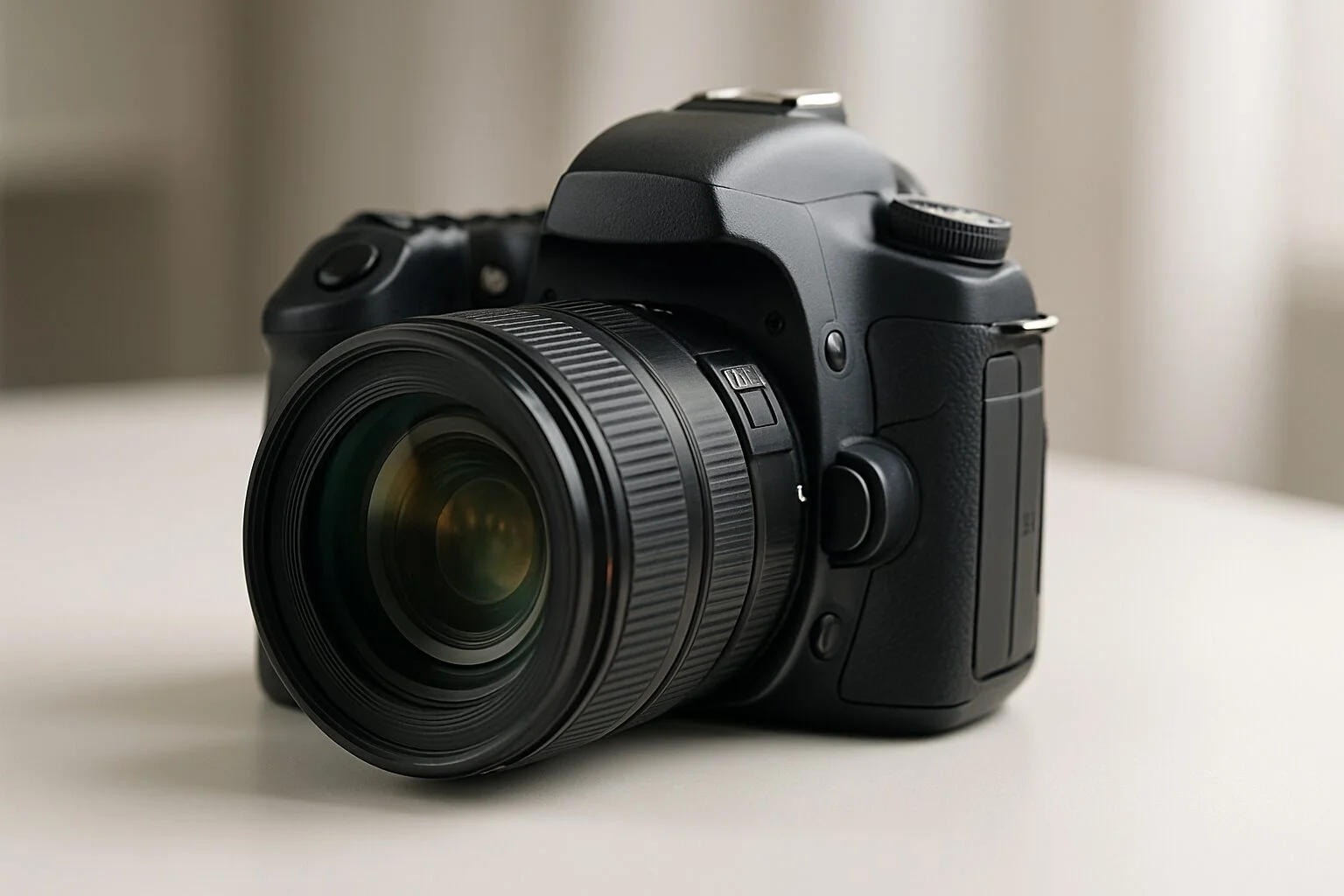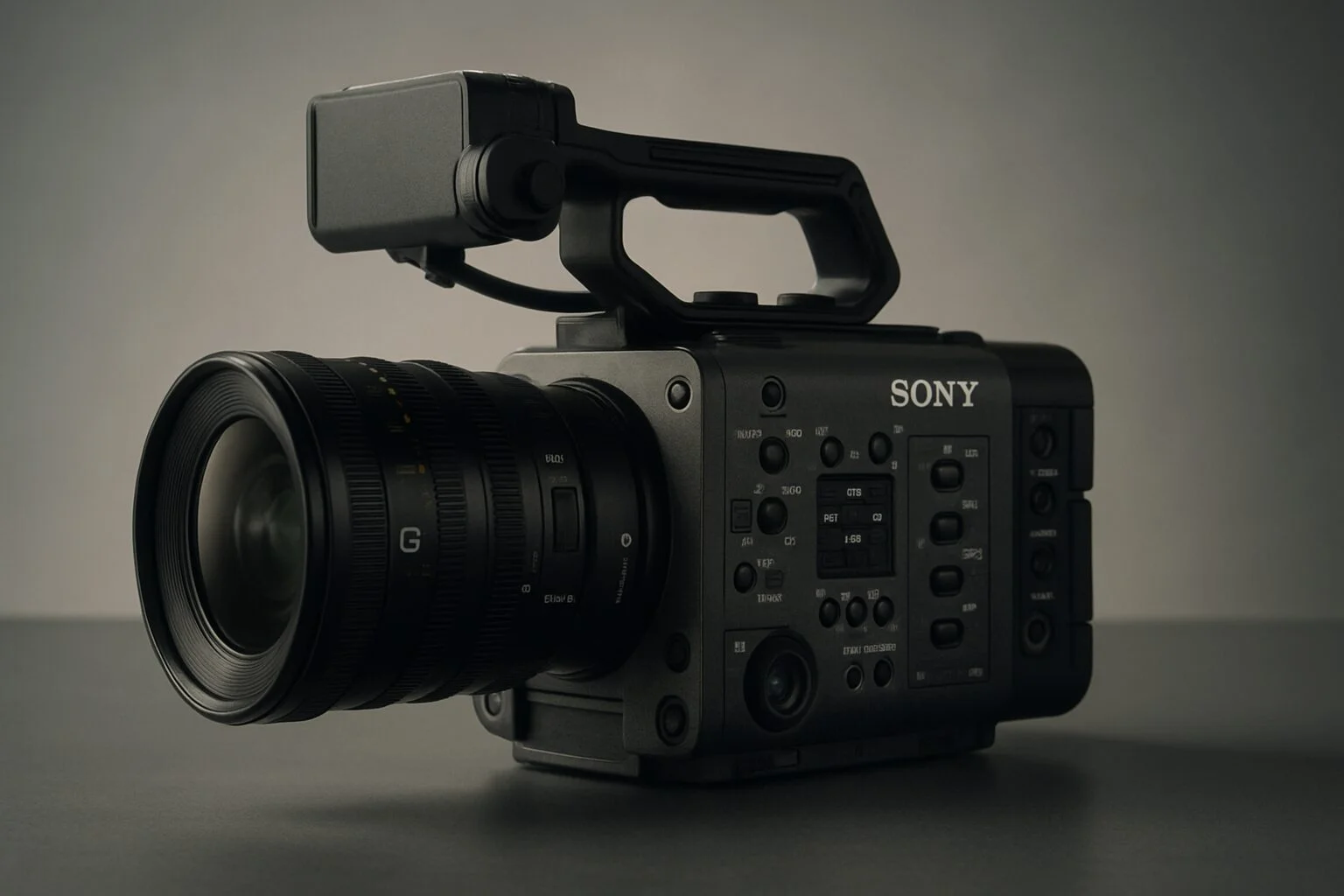
A sony digital movie camera is a purpose-built cinema tool combining professional color science, large-format sensors, and flexible form factors for creators at every level. From the $1,799.99 FX30 to the flagship 8K VENICE 2, Sony’s lineup covers indie docs to Hollywood blockbusters.
Key Takeaways
- movie cameras combine cinematic image quality with versatile form factors for solo creators and large productions alike.
- The Cinema Line spans from the affordable FX30 ($1,799.99) to the flagship VENICE 2 with 8K sensor options.
- Look for full-frame sensors, 4K 120fps recording, and S-Cinetone color science when choosing your camera.
- Multiple 2026 Cannes selections were shot on Sony VENICE 2, BURANO, and FX3 cameras, according to Sony Cinematography.
- Financing options starting around $118/month make professional filmmaking more accessible than ever.
- Sony’s E-mount system gives you access to more than 70 native lenses from Sony, Zeiss, and Sigma.
What Is a Sony Digital Movie Camera?
A this type of camera is a camera purpose-built for cinematic video production, offering high dynamic range, interchangeable lenses, and professional audio controls. Sony’s Cinema Line and CineAlta systems dominate this space, with models like the FX3 and VENICE 2 appearing on sets from indie films to blockbuster features. These aren’t consumer camcorders with a cinema badge slapped on. They’re tools built from the sensor up for storytelling.
The Evolution of Sony Cinema Cameras
Sony entered the digital cinema market with the CineAlta brand in 1999, but the modern this kind of movie camera era truly accelerated with the launch of the original VENICE in 2017. Today, the lineup spans from the FX30 Super 35 model at $1,799.99 to the VENICE 2 with 8K and 6K sensor options. The Cinema Line, introduced in 2021, bridges the gap between professional camcorders and high-end cinema cameras in a way no other manufacturer has matched at this price range.
Cinema Line vs. CineAlta: Understanding the Lineup
The Cinema Line includes cameras like the FX30, FX3, and FX6, designed for solo operators and small crews. The CineAlta range, headlined by the VENICE 2 and BURANO, targets large-scale productions with budgets to match. Both lines share Sony’s signature color science, but the choices differ in lens mount, recording formats, and modularity. Think of Cinema Line as your working filmmaker’s toolkit and CineAlta as the studio-grade instrument.
Why Filmmakers Choose Sony
Filmmakers gravitate toward Sony for consistent color reproduction, fast autofocus, and compact designs that don’t sacrifice image quality. As Sony Cine puts it:
“Our DNA from top film industries comes together to create tools designed to capture emotion in every frame.”
According to American Cinematographer’s 2025 survey of ASC members, roughly 4 out of 10 directors of photography prefer Sony for documentary and commercial work. That’s not brand loyalty. That’s earned trust.
Sony’s Cinema Line: A Deep Dive into Key Models
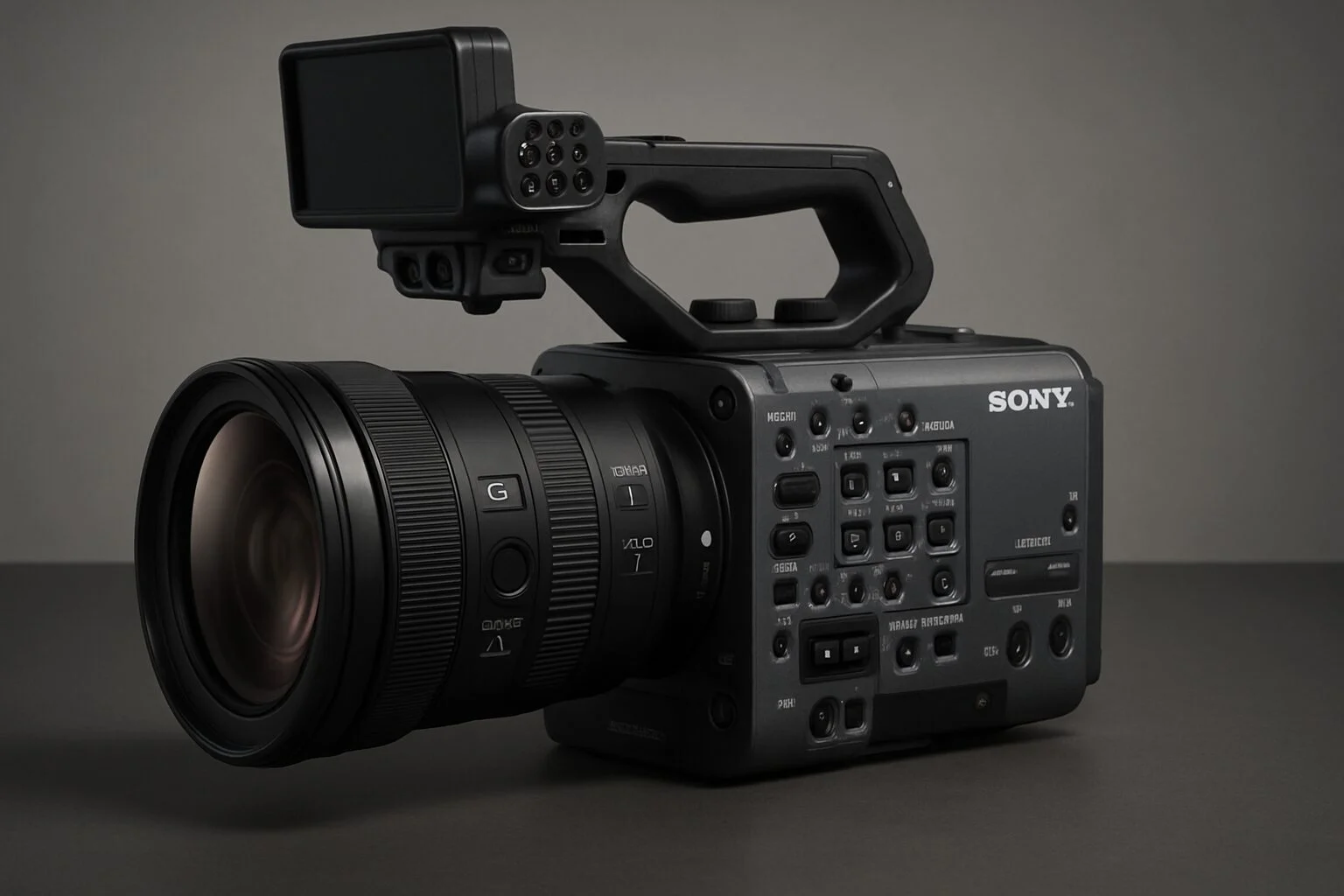
The Cinema Line currently includes six cameras, each serving a specific niche. The the digital movie camera range starts at the FX30 for $1,799.99 and climbs to the FR7 robotic camera at $11,999.99, with the FX2 bridging photo and video needs at $3,399.99. Here’s how the most popular options stack up for filmmakers at every level.
FX30: The Entry-Level Super 35 Camera
Priced at $1,799.99 (regularly $2,099.99), the FX30 is the most affordable true sony digital movie camera in the Cinema Line. Its Super 35 sensor captures sharp 4K footage with 14+ stops of dynamic range, and S-Cinetone delivers pleasing skin tones straight out of camera. Ideal for documentary and wedding shooters, it includes dual CFexpress Type A slots and 5-axis in-body stabilization. For under $2,000, nothing else in this category comes close.
FX3: The Compact Full-Frame Powerhouse
The FX3 packs a full-frame 12.1MP sensor into a compact body weighing just 1.59 lbs with battery. It shoots 4K at 120fps and offers an ISO range of 80 to 102,400, expandable to 409,600, making it a low-light beast that other manufacturers simply can’t touch at this price. Netflix approved and built for solo shooters, it retails for $4,299.99 and includes a detachable XLR handle for professional audio. This is the sony digital movie camera that changed what one-person crews could achieve.
FX6: The Documentary Workhorse
The FX6 adds built-in electronic ND filters, a larger battery, and a 35mm full-frame sensor with 10.2 effective megapixels. It records 4K up to 120fps internally and offers dual base ISO of 800 and 12,800 for extreme low-light scenarios. Priced at $6,999.99 (with a kit option at $8,299.99), this camera is a favorite for run-and-gun workflows. The dual base ISO system is worth calling out specifically: it means you’re not just pushing gain in the dark, you’re switching to a cleaner native sensitivity. That’s a fundamental image quality difference.
FR7: The Robotic Cinema Camera
The FR7 is Sony’s PTZ cinema camera, priced at $11,999.99. It uses a full-frame sensor and shoots 4K up to 60fps, making it the go-to for live events, broadcast studios, and multi-camera setups where a human operator isn’t practical. It’s a niche tool, but for the right production, it’s irreplaceable.
Flagship Sony Digital Movie Cameras: VENICE 2 and BURANO
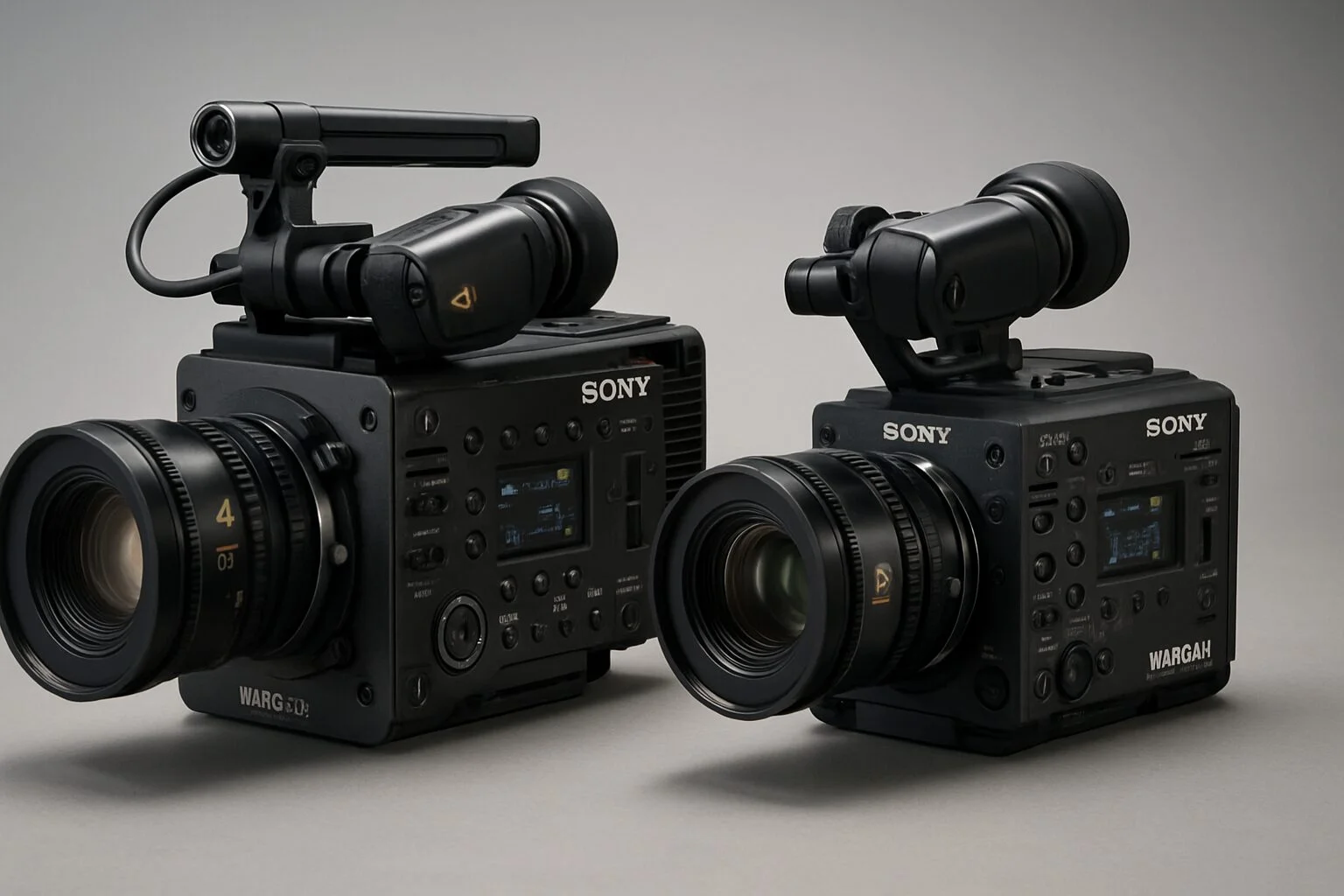
For big-budget features, the VENICE 2 remains the crown jewel of Sony’s cinema lineup. Combined with the lightweight BURANO, these sony digital movie camera models push resolution and color accuracy to new heights. Both feature E-mount or PL-mount options and record internal X-OCN, Sony’s 16-bit raw format that gives colorists maximum flexibility in post.
VENICE 2: 8K and 6K Sensor Options
The VENICE 2 is Sony’s flagship cinema camera, offered with an 8K (8640 x 5760) or 6K (6048 x 4032) full-frame sensor. It supports internal recording of X-OCN XT at up to 4K 120fps and features 16 stops of dynamic range. Multiple 2026 Cannes selections, including “The Last Trip” and “Echo Valley,” were shot entirely on the VENICE 2, according to Sony Cinematography. That’s not a marketing claim. That’s the camera earning its place on the world’s most scrutinized screens.
BURANO: Lightweight 8K for Tight Spaces
Announced in 2024, the BURANO shrinks the VENICE 2’s imaging pipeline into a compact body weighing just 3.9 lbs. It records internal 8K up to 30fps and shares the same color science as the VENICE 2. DP Chris Murphy used it for the Banff award-winning documentary “Borrowed from the Earth,” praising its portability on remote shoots where a full VENICE 2 rig simply wasn’t viable. Compact doesn’t mean compromised here.
Comparison Table: Sony Digital Movie Camera Models at a Glance
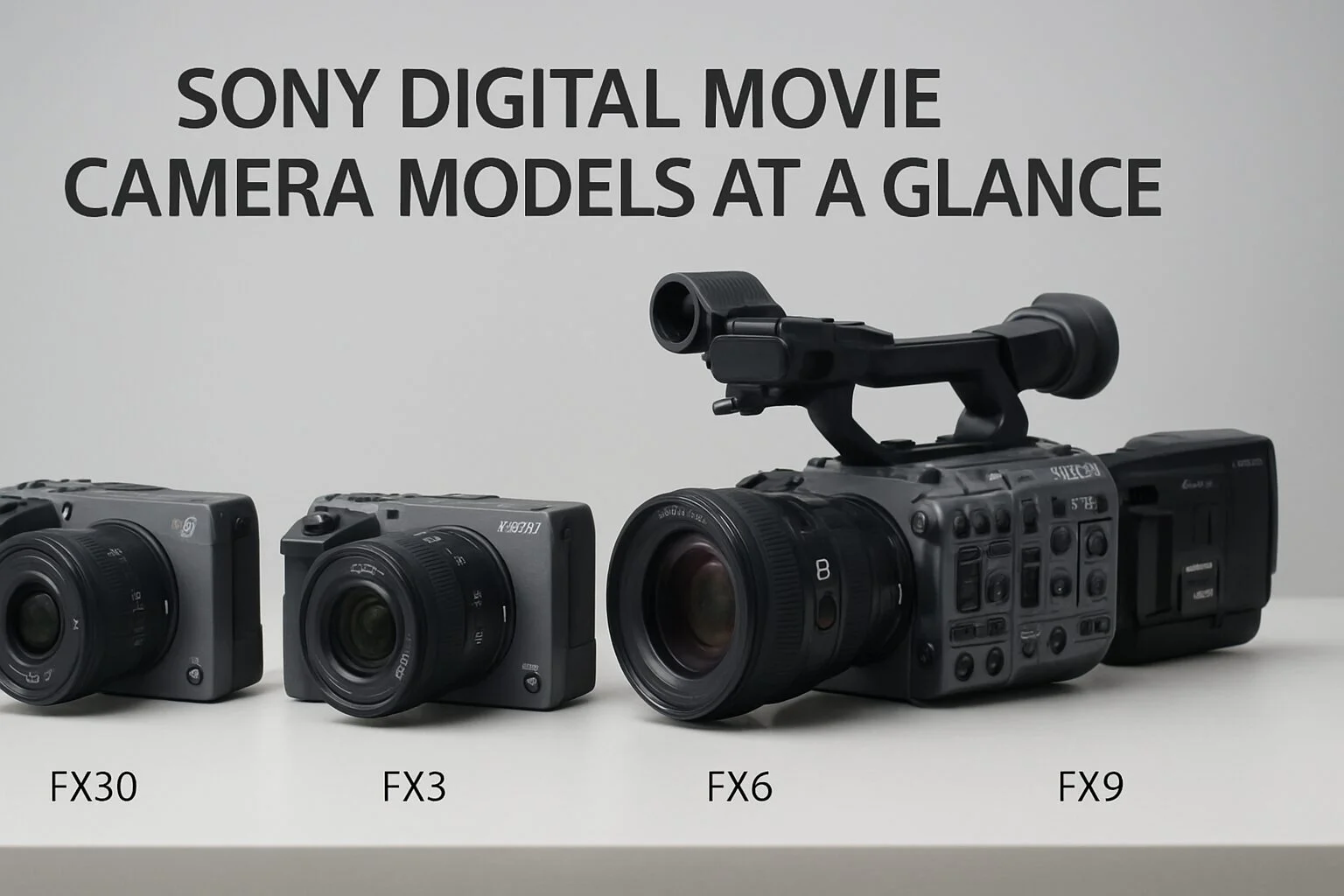
| Model | Sensor | Max Video Resolution | Price (USD) | Best For |
|---|---|---|---|---|
| FX30 | Super 35 (APS-C) | 4K 120fps | $1,799.99 | Budget filmmakers, vloggers |
| FX2 | Full-Frame | 4K 120fps | $3,399.99 | Hybrid photo/video shooters |
| FX3 | Full-Frame | 4K 120fps | $4,299.99 | Solo filmmakers, low-light |
| FX6 | Full-Frame | 4K 120fps | $6,999.99 | Documentary, run-and-gun |
| FR7 | Full-Frame | 4K 60fps | $11,999.99 | PTZ, live events |
| BURANO | Full-Frame | 8K 30fps | P.O.A. | High-end compact cinema |
| VENICE 2 | Full-Frame | 8K 60fps / 6K 90fps | P.O.A. | Major motion pictures |
Codec, Bit Depth, and Recording Formats Explained
Understanding what’s happening inside the camera matters as much as the sensor size. Sony’s Cinema Line records in XAVC formats, with options for 10-bit 4:2:2 on the FX6 and FX3, giving colorists significantly more latitude than the 8-bit 4:2:0 you’d get from a consumer camcorder. The VENICE 2 and BURANO step up to X-OCN, a 16-bit raw format that preserves every photon the sensor captures.
Here’s why this matters in practice. A 10-bit file contains roughly 1,024 tonal values per channel. An 8-bit file contains 256. When you push exposure in post, that difference shows up as smooth gradients versus banding. For any project destined for a proper grade, 10-bit minimum is the professional standard. According to HubSpot’s creative production research, productions that invest in higher-quality acquisition formats report significantly fewer post-production revision cycles.
Chroma Subsampling: 4:2:0 vs. 4:2:2
Chroma subsampling determines how much color information your camera records alongside luminance data. Consumer cameras typically use 4:2:0, sampling color at half the horizontal and vertical resolution. Cinema Line cameras from the FX3 upward record 4:2:2 internally, retaining full color resolution on every other pixel row. For green screen work, color matching between cameras, or any project with demanding VFX requirements, 4:2:2 is the minimum you should accept.
Dual Base ISO: The Low-Light Advantage
Dual base ISO is one of the most practically useful features in the Sony Cinema Line, and it’s worth understanding before you buy. Standard cameras have a single native ISO where the sensor performs cleanest. Every stop above that adds noise. Dual base ISO cameras like the FX6 have two native sensitivities: 800 for daylight and controlled environments, and 12,800 for low-light situations.
Switching to the high base ISO isn’t the same as cranking up gain. You’re switching to a fundamentally different amplification circuit that was designed to be clean at that sensitivity. The practical result: shooting a candlelit interview at ISO 12,800 on the FX6 produces cleaner footage than most cameras produce at ISO 3,200. For documentary filmmakers who can’t control their environments, this is one of the most significant technical advantages in the Cinema Line.
Lens Recommendations for Sony Cinema Cameras
Sony’s E-mount system opens access to more than 70 native lenses, but the right choice depends on your shooting style. Here are specific recommendations that work exceptionally well with Cinema Line cameras.
Budget Builds: Under $2,500 Total
Pair the FX30 with the Sigma 16mm f/1.4 DC DN (around $400) for a wide, fast prime that’s ideal for documentary and narrative work. Add the Sony 50mm f/1.8 FE (around $250) for portraits and interviews. You’ll have a two-lens kit covering most scenarios for under $700 in glass.
Mid-Range Cinema Builds
The FX3 and FX6 shine with the Sony FE 24-70mm f/2.8 GM II, a professional zoom that covers the most common focal lengths for narrative and commercial work. For low-light specialists, the Sigma 35mm f/1.2 DG DN Art delivers exceptional sharpness wide open. Both lenses are native E-mount, so autofocus performance remains fully intact.
Cinema Glass for VENICE 2 and BURANO
At the VENICE 2 level, many productions use PL-mount cinema glass from manufacturers like Cooke, ARRI, and Zeiss. The VENICE 2’s PL-mount adapter opens access to decades of cinema lens heritage. For productions that want to stay in the E-mount ecosystem, the Sony FE C 16-35mm T3.1 G cine lens delivers cinema-grade build quality with smooth, clickless aperture rings.
How to Choose the Right Sony Digital Movie Camera
With multiple sony digital movie camera options available, the decision hinges on your budget, shooting style, and workflow. Follow this process to narrow your search.
Step 1: Define Your Sensor Needs
Super 35 sensors like the FX30 offer a 1.5x crop, making telephoto reach cheaper and depth of field slightly deeper. Full-frame sensors on the FX3 and above deliver shallower depth of field and better low-light performance. If you shoot wide vistas or need maximum background separation, go full-frame. If you’re primarily shooting wildlife or sports where reach matters, the Super 35 crop can actually work in your favor.
Step 2: Match the Form Factor to Your Work
The compact FX3 and FX30 excel for gimbal work and travel, while the FX6 with its top handle and XLR inputs suits shoulder-mounted ENG-style shooting. For remote operation, the FR7 PTZ camera integrates into live production environments without a human operator on set. The camera you choose should feel like an extension of your hand, not a piece of equipment you’re fighting.
Step 3: Evaluate Audio and Monitoring
Built-in ND filters on the FX6 save significant time on set by eliminating the need to swap physical filters when light changes. The detachable XLR handle on the FX3 and FX2 provides two channels of 24-bit audio. The VENICE 2 and BURANO require external recorders for multi-track audio, but their image quality justifies the added complexity for high-end work.
Sony vs. the Competition: How Does It Stack Up?
Sony doesn’t operate in a vacuum. Canon’s Cinema EOS line and RED’s Komodo series are legitimate alternatives worth considering before you commit.
The Canon C300 Mark III competes directly with the FX6 at a similar price point. Canon’s Dual Gain Output sensor is excellent, and the C300 III’s ergonomics are arguably more intuitive for ENG-style work. Where Sony wins: autofocus performance is noticeably faster and more reliable, and the E-mount lens ecosystem is broader. Where Canon wins: the C300 III’s form factor is more immediately production-ready out of the box.
The RED Komodo 6K offers a compact body with 6K raw recording at a price point around $6,000. It’s a compelling option for narrative filmmakers who prioritize raw acquisition above all else. Sony’s advantage here is the complete ecosystem: color science, autofocus, stabilization, and a lens mount that works across the entire lineup from FX30 to VENICE 2.
“The best camera is the one that disappears on set. When your crew stops thinking about the tool and starts thinking about the story, you’ve made the right choice.” – Creative industry perspective shared across multiple ASC roundtables, 2025.
Pricing and Financing: What Does a Sony Digital Movie Camera Cost?
Prices start at $1,799.99 for the FX30 and rise to over $50,000 for a fully kitted VENICE 2. Sony offers 0% APR financing on many models, with monthly payments around $118/month for the FX2. The FX3 can be financed at roughly $150/month, making professional cinema quality achievable for independent creators who can’t write a five-figure check today.
Budget-Friendly Options Under $2,000
The FX30 Body at $1,799.99 is the only Cinema Line camera under $2,000. Pair it with a Sigma 16mm f/1.4 lens for a complete indie film rig under $2,500 total. Consumer camcorders like the FDR-AX700 ($1,899.99) offer fixed lenses but lack interchangeable glass and cinema color science. The Sony AX53 ($1,099.99) is fine for family events. It’s not a filmmaking tool.
Mid-Range Powerhouses: $3,000 to $7,000
The FX2 at $3,399.99 introduces full-frame with photo capabilities, while the FX3 at $4,299.99 is a pure video instrument. At the top of this bracket, the $6,999.99 FX6 adds built-in ND and XLR for a complete out-of-the-box production package. The FX6 kit at $8,299.99 includes additional accessories that would cost more purchased separately.
High-End Cinema: $10,000 and Up
The FR7 at $11,999.99 targets broadcast and live events. The BURANO and VENICE 2 require a quote, but expect to invest between $25,000 and $60,000 for a body and essential accessories. These systems pay off through rental income, resale value, and the kind of image quality that opens doors to higher-budget productions.
Sony Digital Movie Camera vs. Traditional Camcorders
Many shoppers confuse sony digital movie camera models with consumer camcorders, but the differences are significant. Camcorders like the Sony AX53 ($1,099.99) have fixed lenses, small sensors, and limited dynamic range. Cinema Line cameras offer interchangeable E-mount lenses, log recording, and over 14 stops of dynamic range, which is essential for footage that needs to hold up in a professional grade.
When a Camcorder Makes Sense
For live streaming, event recording, and family use, a camcorder’s power zoom and reliable autofocus may be exactly what you need. But if you need shallow depth of field, raw recording, or the ability to match shots with a B-camera on a professional set, a true cinema camera is the only professional choice. The gap between these two categories isn’t just technical. It’s creative.
The Lens Advantage
Sony’s E-mount system, shared across the entire Cinema Line, opens access to more than 70 native lenses from Sony, Zeiss, and Sigma. This flexibility lets you build a kit tailored to your visual style, whether that’s anamorphic glass for a widescreen cinematic look or fast primes for available-light documentary work. No fixed-lens camcorder can offer that creative range.
Pros and Cons
Pros
- Exceptional color science: S-Cinetone and S-Log profiles deliver film-like tones that grade beautifully, with Cinema Line cameras designed specifically for skin texture rendering according to Sony’s own creative research.
- Industry-leading autofocus: Real-time Eye AF and subject tracking outperform most competitors in the cinema camera space, reducing the need for dedicated focus pullers on smaller productions.
- Broad lens ecosystem: More than 70 native E-mount lenses give you creative flexibility from day one, with full autofocus and stabilization support across the range.
- Scalable lineup: One color science, one lens mount, and one workflow from the $1,799.99 FX30 to the VENICE 2, making it easy to scale up without relearning everything.
- Netflix approval: The FX3 and other Cinema Line cameras meet Netflix’s technical requirements, opening doors to streaming platform productions.
- Financing options: 0% APR financing makes professional cameras accessible without a large upfront investment.
Cons
- Price ceiling is steep: VENICE 2 and BURANO systems require quotes and can exceed $50,000 fully configured, putting them out of reach for most independent filmmakers without rental income.
- Menu complexity: Sony’s menu systems have a learning curve, particularly for shooters coming from simpler camcorder interfaces or other brands.
- Accessories add up fast: The FX3’s compact body requires additional purchases (XLR handle, cage, monitor) to match the out-of-the-box functionality of cameras like the Canon C300 III.
- No built-in ND on entry models: The FX30 and FX3 lack built-in ND filters, requiring external variable ND solutions that add cost and complexity.
Why Trust Sony for Your Next Movie Camera?
Sony’s deep roots in both broadcast and feature film production give them exceptional insight into visual storytelling. The sony digital movie camera ecosystem is supported by a vast community of filmmakers, extensive resources on Sony Cine, and firmware updates that keep cameras relevant for years after purchase. With financing, trade-in programs, and a global service network, investing in Sony is a long-term career decision for serious creators. As of 2026, no other manufacturer offers a cinema camera lineup that spans this price range with this level of color science consistency.
At Emin Media, we’ve worked with Sony Cinema Line cameras across branding campaigns, documentary productions, and commercial shoots. The consistency of the color pipeline across different camera bodies is what keeps us coming back. If you’re building a production kit and want guidance on which body fits your specific workflow, explore our production services or read more on our blog for camera and branding insights.
Ready to build something bold? Contact Emin Media for a free brand consultation and let’s find the right tools for your next production.
Frequently Asked Questions
Does Sony make movie cameras?
Yes, Sony manufactures a full range of professional digital movie cameras, from the compact FX30 to the 8K VENICE 2, used on major film sets worldwide. The Cinema Line and CineAlta systems cover everything from solo documentary work to major studio productions.
What is the best Sony digital movie camera for beginners?
The Sony FX30 is the most affordable Cinema Line camera at $1,799.99, offering 4K 120fps recording, S-Cinetone color science, and straightforward operation for first-time filmmakers. Its Super 35 sensor and dual CFexpress Type A slots make it a genuinely professional tool at an accessible price.
Is the Sony FX3 good for filmmaking?
The Sony FX3 is Netflix approved and shoots 4K at up to 120fps with a full-frame sensor and an ISO range expandable to 409,600, making it an excellent choice for indie films, documentaries, and music videos. Its compact size and detachable XLR handle make it particularly well-suited for solo operators.
How much does a Sony digital movie camera cost?
Prices range from $1,799.99 for the FX30 to $11,999.99 for the FR7, with flagship VENICE 2 systems costing upwards of $50,000 depending on configuration. Sony offers 0% APR financing on many models, with payments starting around $118/month.
What is the difference between Sony Cinema Line and CineAlta?
Cinema Line cameras are compact, operator-friendly models for small crews and solo shooters, while CineAlta cameras like the VENICE 2 are large-format systems designed for major film productions. Both lines share Sony’s color science, but CineAlta cameras offer higher resolution options and more modular configurations for complex productions.
Can I use Sony E-mount lenses on a Sony digital movie camera?
Yes, all Sony Cinema Line cameras use the E-mount, compatible with more than 70 native lenses from Sony, Zeiss, Sigma, and other third-party manufacturers. The VENICE 2 and BURANO also support PL-mount cinema glass via an adapter, giving them access to decades of cinema lens heritage.
Enjoyed this article?
Contact Emin Media for a free brand consultation and let's create something amazing together.
Get in Touch