What Are Creative Marketing Trends in 2026?
Creative marketing trends are the sensory, AI-powered, and culturally rooted strategies brands use to build emotional bonds with audiences in 2026. They blend technology and storytelling to cut through crowded feeds.
Key Takeaways
- Creative marketing trends mix technology, storytelling, and data to help brands stand out in saturated markets.
- Adobe’s 2026 Creative Trends Report names four defining trends: All the Feels, Connectioneering, Surreal Silliness, and Local Flavor.
- Generative AI is reshaping creative marketing through personalization at scale, and creative industry data shows a majority of AI assistant users regularly seek recommendations.
- Sensory branding is becoming essential, with brand research from WGSN showing nearly 50% of consumers prefer brands that spark joy.
- Brands like Glow Recipe and Nutter Butter show how creative marketing trends turn into viral, high-engagement campaigns.
- Putting these trends to work takes a disciplined process: audience research, trend validation, and cross-channel execution.
What Are Creative Marketing Trends?
Creative marketing trends are patterns of imaginative, tech-enabled tactics that brands adopt to stand apart from competitors and build emotional resonance. When brands ask what are creative marketing trends, they’re really asking how to redefine engagement for an audience that’s tired of being sold to. Unlike short-lived fads, these trends are rooted in consumer psychology and cultural shifts, which is exactly what makes them sustainable for long-term brand growth.
Defining the Concept
Creative marketing trends are the visible, actionable expressions of bigger cultural and technological shifts happening around us. According to the University of Southampton, creative marketing strategy blends insight, storytelling, design thinking, data, and innovation to shape how brands connect with people. That blend is what separates a passing gimmick from a trend with staying power: it’s disciplined, but it’s still imaginative.
“Our lives are so screen focused that since the Covid shutdown people have had an insatiable desire to have all their senses engaged,” says Brenda Milis, principal of consumer and creative insights at Adobe.
Why This Question Matters Right Now
As of 2026, marketing isn’t about shouting louder. It’s about resonating deeper, and that shift changes everything about how we build campaigns. With AI agents and generative AI reshaping how people shop, the definition of what are creative marketing trends has expanded well beyond visuals and copy. Kantar’s Marketing Trends 2026 report notes that roughly a quarter of AI users already lean on shopping assistants, which shifts marketing from attention-grabbing to intention-serving. Creative marketing trends now have to answer a second question too: will an AI model cite your brand when it matters?
Core Components of Creative Marketing Trends
To really grasp what these trends are, it helps to break down their anatomy. Each one typically combines a few core ingredients:
- Technological Enablement: AI, AR, or automation that personalizes content at scale.
- Emotional Resonance: Tapping into joy, nostalgia, or shared community feeling.
- Cultural Authenticity: Grounding content in local or niche truths people recognize.
- Multi-Sensory Experience: Going beyond visuals with sound, texture, and movement cues.
Why Creative Marketing Trends Matter for Growth in 2026
Creative marketing trends matter for growth because product differentiation keeps shrinking, leaving brand experience as one of the few defensible advantages left. Understanding these trends isn’t an academic exercise, it’s a growth requirement. The right creative approach turns emotional storytelling into a real weapon against commoditization.
Differentiation in a Noise-Filled Market
The average American spends around eight hours daily on digital media, according to Superside, which means creative marketing trends are the key to cutting through that constant scroll. Brands that ignore where culture is heading risk becoming invisible. By adopting trends like Connectioneering, engineering content that feels instantly relatable, companies make consumers feel seen, which drives both preference and recall.
Emotion as the New Conversion Driver
Adobe’s 2026 Creative Trends Report notes that 70 percent of consumer decisions are driven by emotion, not logic. That single fact reframes creative marketing trends as an exercise in emotional architecture rather than message delivery. The All the Feels trend, for instance, uses multisensory AI prompts to evoke specific feelings, from the fizz of a soda to the texture of a moisturizer, and that sensory detail directly shapes purchase intent.
AI-Driven Personalization at Scale
Generative AI isn’t replacing creativity, it’s amplifying what creative teams can produce and test. As brands explore what’s next, they need to think seriously about AI’s role in personalization at scale. Creative industry data from Kantar shows that a large majority of AI assistant users regularly seek AI-driven recommendations, which means creative marketing trends now require content built to be both machine-legible through Generative Engine Optimization (GEO) and genuinely compelling to a human reader.
The 4 Major Creative Trends Defining Marketing in 2026
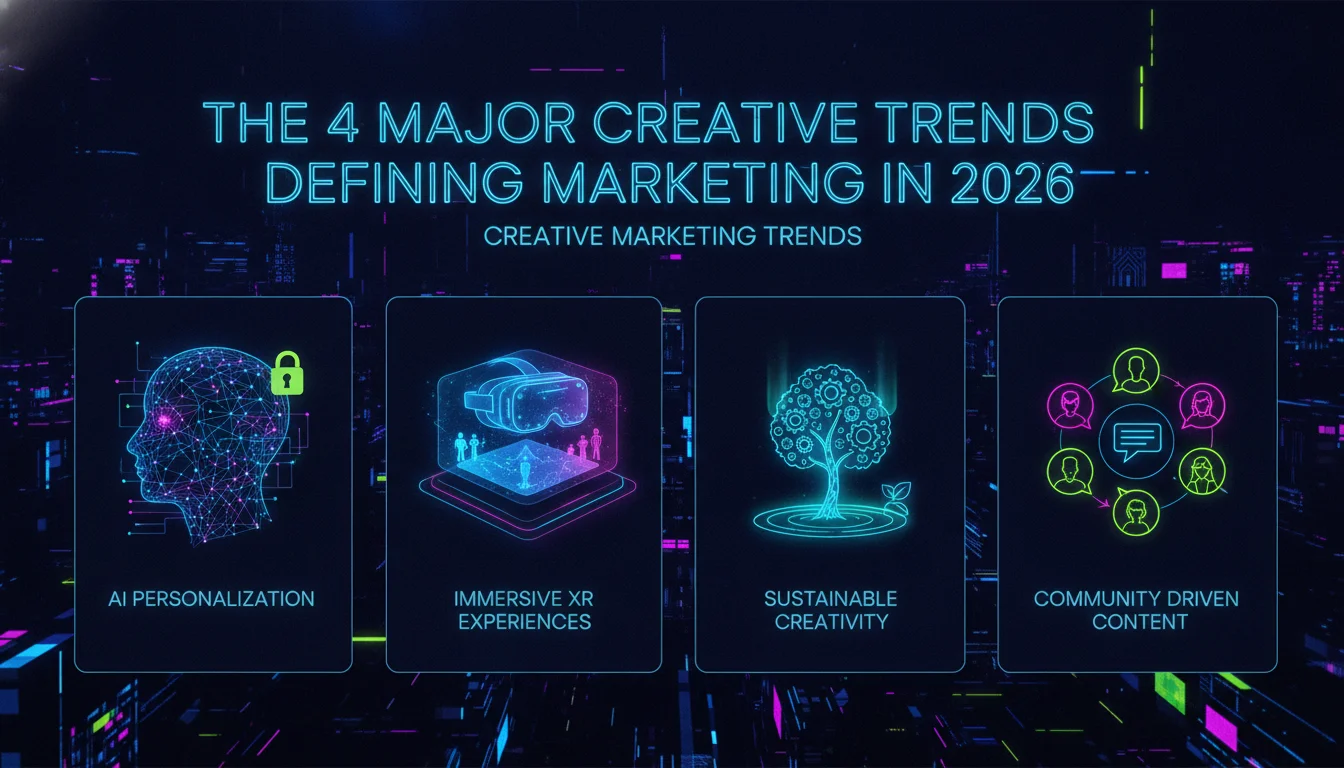
The four major creative trends defining marketing in 2026, according to Adobe’s Creative Trends Report, are All the Feels, Connectioneering, Surreal Silliness, and Local Flavor. Together they form a mood board for brands trying to stay culturally relevant this year.
All the Feels: Sensory Branding That Triggers Emotion
This trend moves past visual polish and engages all five senses at once. Adobe’s report cites brand research from WGSN showing nearly 50% of customers are more likely to buy from brands that make them feel joy. To use this trend well, brands write AI prompts that describe texture, temperature, sound, and movement, not just how something looks. Glow Recipe’s social feed is a great reference point here: a scroll of squeezes, taps, and pumps that let viewers practically feel the product through the screen.
Connectioneering: Forging Relatability Through Shared Moments
Connectioneering is creative that’s engineered to be so relatable it triggers an instant “that’s me” reaction. It’s the community-building answer to what these trends look like in practice. With 70% of decisions running on emotion, this trend leans into shared experiences like office humor, dating mishaps, and new-parent exhaustion. Creators like Corporate Natalie and Corporate Erin nail this by mirroring workplace quirks in branded content that feels painfully accurate.
Surreal Silliness: The Rise of “Brain Rot” Digital Culture
Gen Z’s appetite for absurdity makes Surreal Silliness one of the more unexpected entries on this list. Milis puts it simply: strange, humorous content is outrageously engaging right now. Nutter Butter’s TikTok, a fever dream of anthropomorphic cookies in scenarios that make no sense, won Social Campaign of the Year at the 2025 Ad Age Creativity Awards. This approach works best for lighthearted brands using AI tools like Adobe Firefly or Gemini’s Nano Banana to build visuals that defy physics entirely.
Local Flavor: Authenticity Through Hyper-Local Narratives
Local Flavor is a response to digital fatigue, and it’s rooted in cultural authenticity rather than polish. Gen Z especially craves what feels real and geographically grounded, not another glossy global campaign. Brands are leaning on local references, dialects, and community stories to build trust that feels earned. This trend is proof that creative marketing, even amid all this technology, circles back to plain human connection.
How Generative AI Is Reshaping Creative Marketing
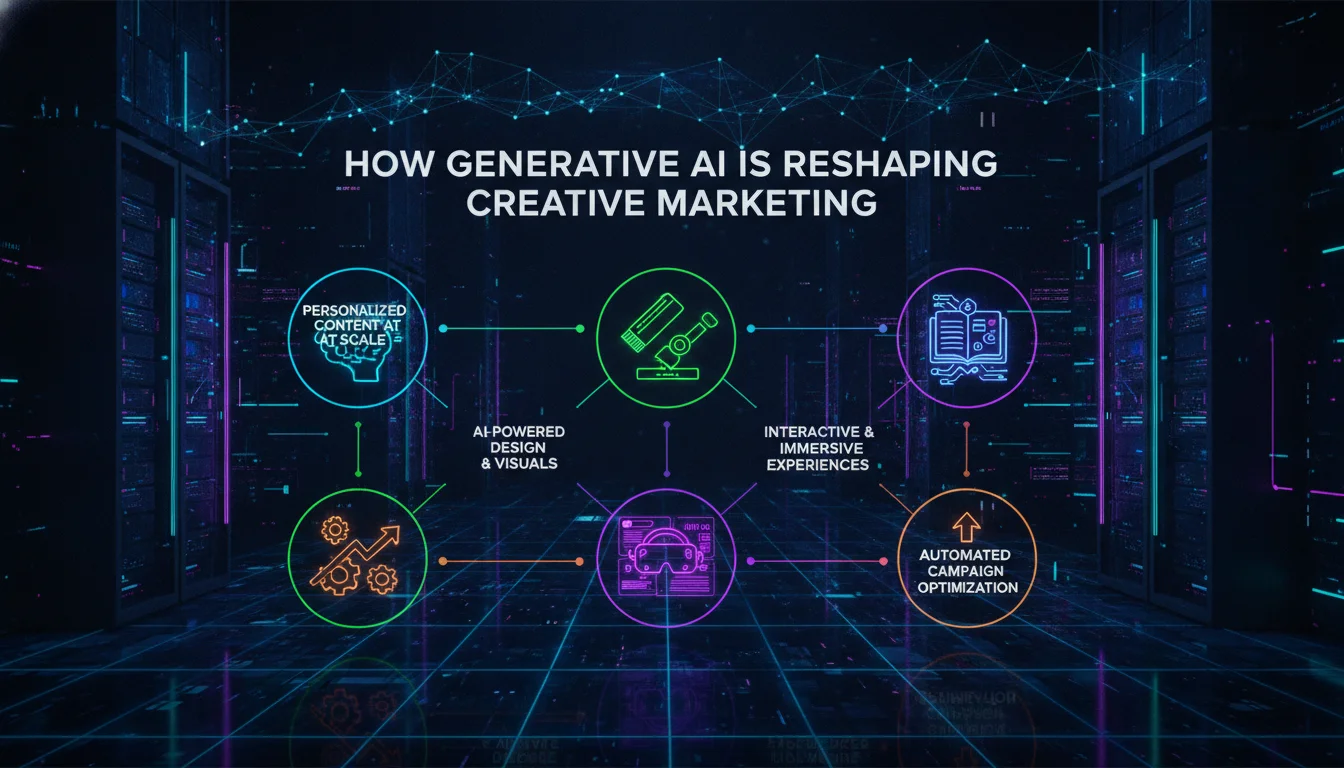
Generative AI is reshaping creative marketing by making content production faster, more personalized, and more testable than ever before. It’s no longer a novelty sitting in the corner of the creative department, it’s the engine behind several of the trends we’ve already covered.
AI-Enabled Content Production at Scale
Superside’s work with Shopify is a strong reference point: their team helped co-produce more than 4,000 native social ads in just 24 hours using generative AI. That kind of scale is central to any conversation about where creative marketing is headed. AI tools now allow near-infinite variations of ad creative, and PointCard reportedly achieved 3.5X higher click-through rates by testing multiple AI-generated ad variations through Superside.
Generative Engine Optimization (GEO) for AI Citations
With AI agents increasingly mediating purchases, creative marketing trends now include a GEO component that didn’t exist a few years ago. Kantar reports that a large share of AI assistant users regularly seek out recommendations before buying. Brands need to structure content so large language models can actually find and cite it, which means writing in a way that’s clear, factual, and genuinely useful, not just keyword-stuffed.
From Efficiency to Emotional Intelligence
AI excels at production, but the human touch is still what makes creative work land emotionally. The most effective creative marketing trends blend AI’s data-crunching with human judgment and instinct. As 87seconds notes, AI frees up time for creative teams to focus on the strategic and emotional aspects of a campaign, where a human remains hard to replace. AI can analyze sentiment data to inform a Connectioneering campaign, but the relatable nuance still comes from a person who’s lived it.
Sustainability and Ethics as a Creative Trend
Sustainability is becoming a creative trend because audiences increasingly expect brands to act on environmental and social issues, not just talk about them. Creative agencies are being asked to build these values into campaigns from the concept stage rather than bolting them on as an afterthought. Brands that treat sustainability as part of their identity, not a marketing checkbox, tend to earn more trust with audiences who are quick to spot performative messaging. This isn’t a replacement for sensory or AI-driven trends, it’s a filter that increasingly runs through all of them.
Sensory Branding and the Move Toward Feeling-Based Marketing
Sensory branding works because it triggers memory and emotion faster than visuals alone, which is exactly why it’s become a defining piece of creative marketing in 2026. This section looks at how brands are making audiences feel something through multi-sensory strategy rather than just showing them something.
The Psychology of Sensory Marketing
Sensory cues bypass a lot of the rational filtering our brains do with straight visual content. The All the Feels trend captures this by encouraging AI prompts loaded with tactile and auditory descriptors instead of just visual ones. When you look at what’s actually driving purchase decisions, sensory marketing stands out because it creates a lasting imprint that a static image often can’t.
Practical Applications Across Industries
Beauty brands use ASMR, or autonomous sensory meridian response, to simulate how a product actually feels on skin. Food brands lean on sound design to highlight crunch or sizzle in a way that makes your mouth water before you’ve even read the caption. This multi-sensory approach isn’t just a creative flourish, it’s a competitive edge, since it raises perceived product quality and builds emotional attachment that’s hard to fake.
Measuring Emotional Engagement
Brands need to quantify emotional impact to justify budget, and that’s pushing new metrics into the mix. Dwell time, social sentiment, and even biometric feedback are becoming legitimate KPIs alongside clicks and conversions. Tools from Kantar help measure emotional resonance so the All the Feels approach can be tied back to actual, measurable growth instead of just vibes.
How to Implement Creative Marketing Trends: A Step-by-Step Guide
You implement creative marketing trends by auditing your current content, validating trends against real audience data, and testing before you scale. This process helps brands turn a trend into a real campaign without losing strategic focus along the way.
Step 1: Audit Your Brand’s Creative Gravity
Assess how your brand currently uses storytelling, technology, and emotional hooks in its existing content. Figure out honestly whether your content leans transactional or relational. This audit answers the foundational question for your specific brand and audience, not just the industry at large.
Step 2: Identify Relevant Trends Through Data and Insight
Don’t chase every trend that crosses your feed. Use social listening, search data, and reports like Adobe’s or Kantar’s to pinpoint which trends actually align with your audience’s values. For B2B, Connectioneering might resonate more; for CPG, All the Feels could be the better fit.
Step 3: Map Trends to Customer Journey Touchpoints
Figure out where each trend can genuinely add value instead of applying it everywhere at once. Surreal Silliness might work great on TikTok for top-of-funnel awareness, while Local Flavor could strengthen community engagement on localized landing pages. This step makes sure whatever you adopt gets deployed with intention.
Step 4: Prototype with AI and Test Rapidly
Use generative AI to build concept mockups and launch small-scale pilots before committing real budget. Superside’s approach of producing multiple ad variations and A/B testing is worth borrowing here. Testing validates whether a trend actually resonates with your audience before you invest further.
Step 5: Scale and Optimize Through Cross-Channel Consistency
Once a trend is validated, scale it across channels while keeping the creative consistent. Make sure the emotional core of whatever trend you’ve chosen stays intact even as formats shift from video to display to email. This is where a lot of good ideas fall apart: the message gets diluted the moment it crosses channels.
Comparing Top Creative Marketing Trends of 2026
The table below compares the major 2026 creative trends across mechanism, best-fit industry, and technology lever, which helps marketers prioritize based on their audience and resources.
| Trend Name | Core Mechanism | Best For | Key Stats/Examples | Technology Lever |
|---|---|---|---|---|
| All the Feels | Multi-sensory, emotion-triggering | Beauty, Food & Beverage, Travel | Nearly 50% buy from joyful brands; Glow Recipe ASMR | AI-generated imagery with sensory prompts |
| Connectioneering | Hyper-relatable shared moments | B2B, Lifestyle, Tech | 70% of decisions are emotion-driven; Corporate Natalie | Data-driven audience insight tools |
| Surreal Silliness | Absurd, “brain rot” humor | Gen Z-focused, Snack Brands | Nutter Butter’s viral TikTok; Ad Age Award 2025 | Adobe Firefly, Gemini Nano Banana |
| Local Flavor | Cultural authenticity, local narratives | Retail, Hospitality, Community Brands | Gen Z craving realness; regional micro-communities | Geo-targeted content, AR local filters |
| AI-Driven Personalization | Personalized content at scale | E-commerce, SaaS | Shopify: 4,000+ ads in 24 hours via Superside | Generative AI, GEO, AI agents |
Pros and Cons of Chasing Creative Marketing Trends
Pros
- Trend-driven content tends to feel fresh, which helps it earn organic reach and shares.
- Sensory and emotional storytelling builds brand recall that outlasts a single campaign cycle.
- AI tools make it possible for smaller teams to test more creative directions without ballooning budgets.
- Trends grounded in culture, like Local Flavor, help brands build genuine community trust.
Cons
- Chasing every trend without validation can dilute brand identity fast.
- Some trends, like Surreal Silliness, aren’t a fit for every brand voice or industry.
- AI-generated content still needs human oversight, or it risks feeling hollow.
- Measuring emotional impact requires new KPIs that many teams aren’t yet set up to track.
According to Kantar’s Marketing Trends 2026 report, brands that accelerate their AI visibility strategy this year will be better placed to drive growth as purchase decisions become increasingly mediated by generative AI and shopping agents.
Frequently Asked Questions
What are the top 3 trends in marketing?
Based on Kantar and Adobe’s 2026 research, the top three trends are AI-driven personalization, sensory branding (All the Feels), and relatable, community-driven content (Connectioneering). Together they represent a shift toward emotion, technology, and cultural relevance.
What are the four creative trends that will define marketing in 2026?
Adobe’s 2026 Creative Trends Report identifies All the Feels (sensory engagement), Connectioneering (shared relatability), Surreal Silliness (absurd humor for Gen Z), and Local Flavor (cultural authenticity). These four trends define what creative marketing looks like for visual culture this year.
What is considered creative marketing?
Creative marketing is a disciplined yet imaginative blend of storytelling, design thinking, data, and innovation used to build brand narratives that resonate emotionally and drive real commercial growth. It goes beyond advertising to touch every brand touchpoint, from packaging to customer service.
What are the 5 marketing trends for 2026?
Beyond Adobe’s four creative trends, Kantar’s report adds the rise of AI shopping agents, which makes AI-native brand visibility a fifth critical trend to watch. Together, these five define what’s happening where technology meets creativity this year.
How do I find relevant creative marketing trends for my brand?
Start by analyzing your audience’s emotional drivers and where they actually spend time online. Cross-reference reports from Adobe, Kantar, and Superside rather than relying on one source. Then prototype ideas using AI tools and test with a small audience segment before you scale anything.
Can small businesses use these creative marketing trends?
Absolutely, and in some ways small businesses are better positioned for trends like Local Flavor since authentic community ties matter more than big production budgets. Simpler AI tools have also lowered the barrier for producing high-quality, trend-aligned content without an agency-sized team.
Understanding what these trends are is the first step toward a strategy built to last past this quarter’s algorithm update. From sensory branding to AI-driven personalization, 2026’s creative trends offer a real blueprint for cutting through the noise. Applying them well takes a disciplined, audience-first approach, curiosity, relentless testing, and creativity anchored in genuine human connection.
Ready to translate these trends into a campaign that actually sounds like your brand? Contact Emin Media for a free brand consultation, and let’s build something bold together.
Enjoyed this article?
Contact Emin Media for a free brand consultation and let's create something amazing together.
Get in Touch