Sony Digital Single Lens Reflex Camera Guide 2026
Key Takeaways
- Sony digital single lens reflex camera models are no longer produced. The last Sony A-mount DSLR line was discontinued around 2015-2016.
- Sony now leads the industry with mirrorless Alpha cameras that deliver faster autofocus, higher burst rates, and superior video compared to traditional DSLRs.
- Top picks like the Alpha 1, Alpha 7 IV, and Alpha 6700 offer resolutions up to 50.1 MP, 30 fps continuous shooting, and 8K video.
- The extensive E-mount lens ecosystem, spanning over 70 native lenses, ensures compatibility across a wide range of shooting styles.
- You can adapt legacy A-mount and third-party DSLR lenses to Sony mirrorless bodies, preserving your glass investment.
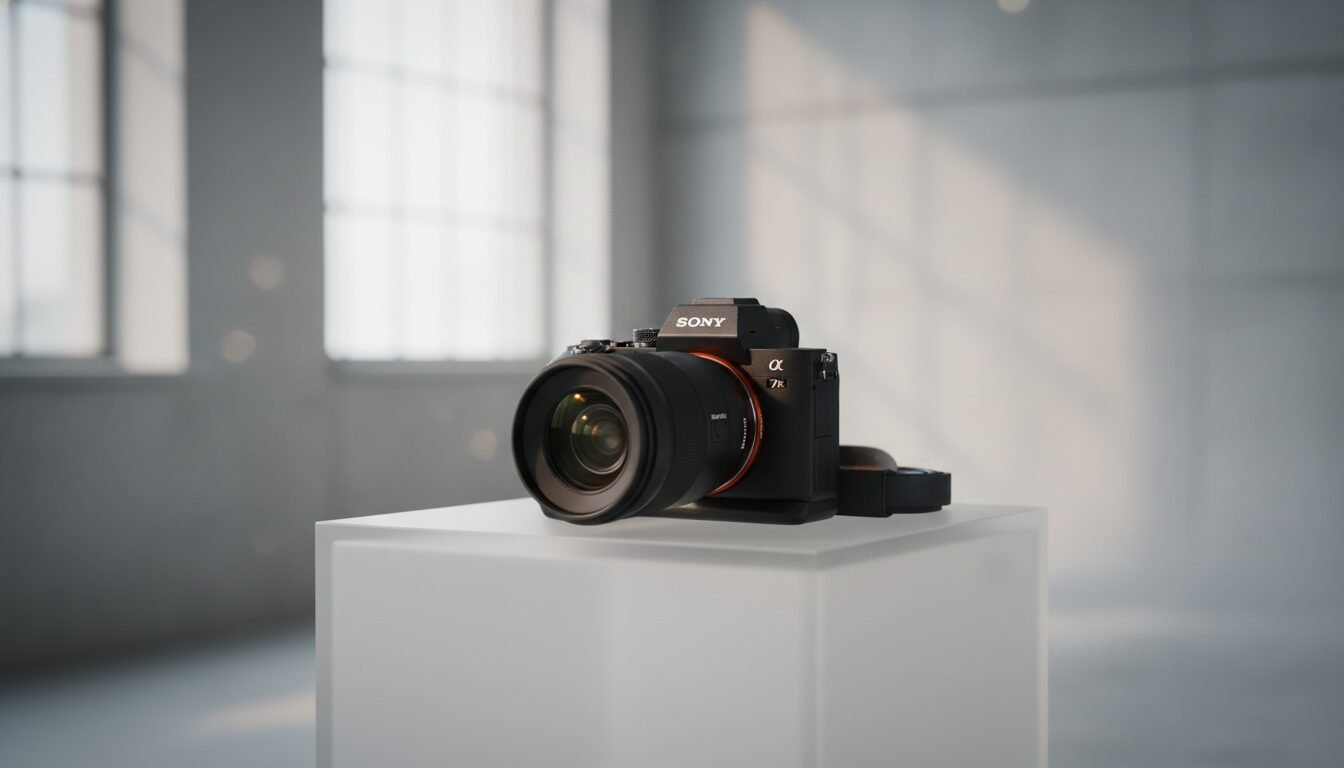
A sony digital single lens reflex camera is no longer part of Sony’s active product lineup. Sony abandoned its A-mount DSLR and SLT cameras years ago, shifting entirely to mirrorless interchangeable-lens cameras in the Alpha series. Buyers seeking that DSLR experience from Sony should explore the Alpha mirrorless range instead.
1. What Is a Sony Digital Single Lens Reflex Camera?
Media” class=”wp-image-9860″ loading=”lazy” width=”1792″ height=”1024″ />A digital single-lens reflex camera is a camera that uses a mirror and pentaprism to show the photographer an optical viewfinder image through the same lens that captures the photo. When the shutter fires, the mirror flips up, allowing light to hit the digital sensor. This design, refined by Canon, Nikon, and Pentax, was also adopted by Sony for its early A-mount models, making the reflex camera a viable choice for professionals and enthusiasts throughout the 2000s.
The Mechanical DSLR Design
According to Wikipedia’s entry on digital single-lens reflex cameras, a DSLR combines the optics of a single-lens reflex camera with a solid-state image sensor, recording images digitally. The mirror mechanism ensures that what you see in the optical viewfinder is virtually identical to the captured frame. Many photographers still prize this lag-free, natural viewing experience, and it remains one of the few genuine advantages a traditional DSLR holds over early mirrorless designs.
Sony’s A-Mount DSLR Era
Sony entered the DSLR market in 2006 after acquiring Konica Minolta’s camera division. Models like the Alpha A200K (10.2 MP) and the Alpha DSLR-A580 (16 MP) were popular this type of camera kits. These cameras used Sony’s A-mount lens system and featured SteadyShot sensor-shift stabilization, a standout advantage over competing DSLRs at the time. Sony also holds a longer imaging history: the company introduced the first Mavica prototype in 1981 and launched the first Cyber-shot digital camera in 1996, establishing decades of sensor and imaging expertise before the DSLR era even began.
The Transition to SLT and Mirrorless
By 2010, Sony began phasing out true DSLRs in favor of Single-Lens Translucent (SLT) cameras, like the A77 II, which retained a fixed semi-transparent mirror but used an electronic viewfinder. This hybrid approach enabled faster burst shooting and phase-detection autofocus during video, but the mirror still added bulk and complexity. The final move came in 2013 when Sony launched the full-frame mirrorless Alpha 7 series, rendering further this kind of reflex camera development obsolete.
“Sony’s decision to abandon the DSLR and fully embrace mirrorless was one of the most disruptive moves in camera history, forcing every competitor to follow suit.” DPReview editorial
2. Why Sony Stopped Making Digital Single Lens Reflex Cameras
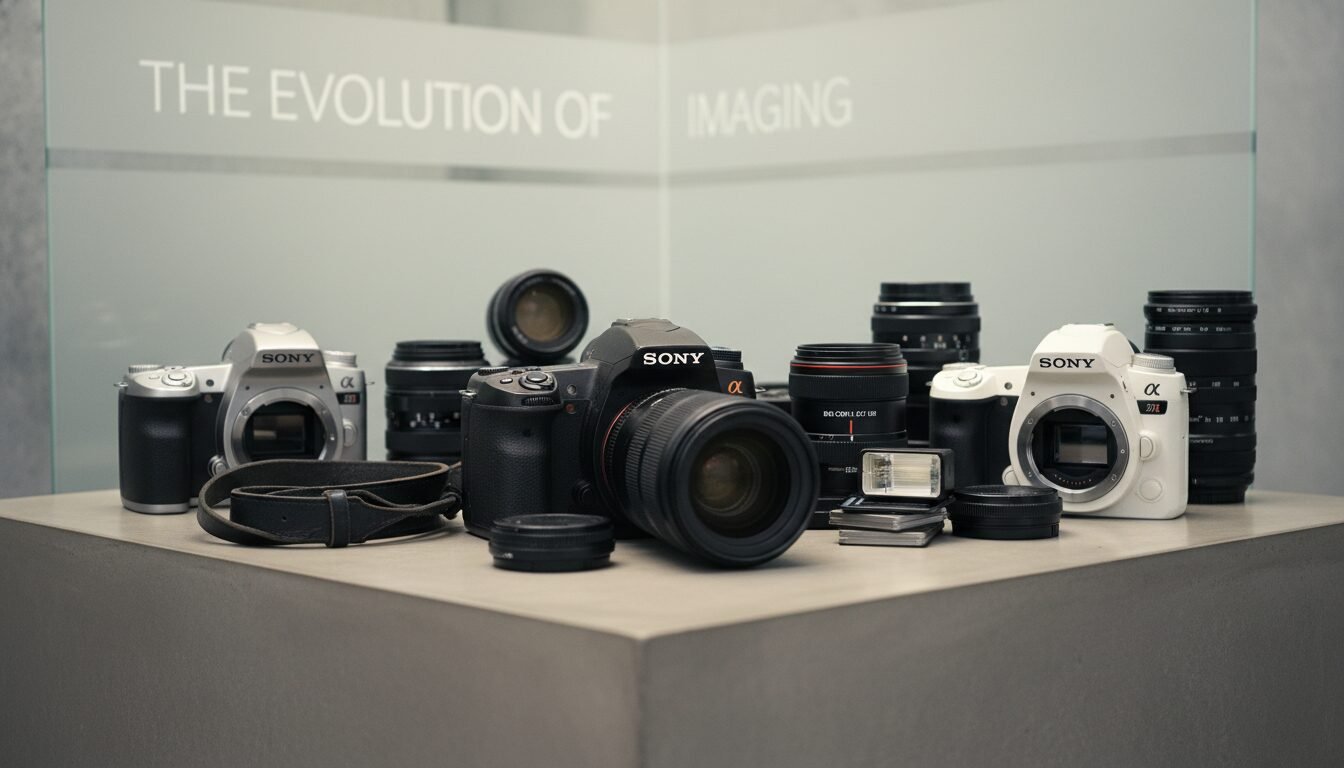
The end of the the digital single lens reflex camera line was driven by physics and market dynamics. Mirrorless technology allowed Sony to pack more performance into smaller, lighter bodies while eliminating the complex, vibration-prone mirror assembly. By investing in no-compromise electronic viewfinders (EVFs), on-sensor phase-detection autofocus, and advanced BIONZ X image processors, Sony’s mirrorless lineup quickly outpaced traditional DSLRs in almost every measurable metric.
Autofocus Speed and Accuracy
Modern Sony mirrorless cameras achieve autofocus lock in as little as 0.02 seconds, a figure measured on the Alpha 6600. Real-time Tracking and Real-time Eye AF, which cover 93% of the frame on select models, are impossible to replicate with a DSLR’s separate AF sensor module. The shift also eliminated the front-focus and back-focus calibration issues that regularly frustrated DSLR users.
Continuous Shooting and Buffer Depth
With no mirror to slap up and down, the Sony Alpha 1 shoots at up to 30 frames per second with full AF/AE tracking, a speed unattainable by any mechanical DSLR. Even the mid-range Alpha 7 IV delivers 10 fps bursts. Combined with large buffers, including the Alpha 1’s ability to capture 155 compressed raw images per burst, this makes mirrorless the clear choice for sports and wildlife photography.
Video and Hybrid Content Creation
DSLRs were originally still-oriented, and video often felt like an afterthought. Sony mirrorless bodies lead the industry with capabilities like 8K/30p recording on the Alpha 1, 4K/60p oversampled from 6K on the Alpha 7 IV, and internal 10-bit 4:2:2 color sampling. This attracts hybrid creators who need one tool for both photo and video work, making the traditional camera approach a relic for multimedia production.
Optical Viewfinder vs. Electronic Viewfinder: The Real Trade-Off
One area where DSLR fans push back is the viewfinder experience. An optical viewfinder shows the world in real time with zero processing lag, which some shooters find more natural for fast action. Sony’s mirrorless EVFs have closed this gap dramatically. The Alpha 1’s 9.44-million-dot OLED EVF refreshes at 240 fps, making it nearly indistinguishable from an optical view in most conditions. The EVF also gains capabilities no optical system can match: live exposure preview, focus peaking, and real-time histogram overlays. For most working photographers, the trade-off now favors the EVF decisively.
Battery Life: The Honest Comparison
This is where DSLRs still hold a statistical edge. A traditional DSLR can often deliver 800-1,000+ shots per charge because the optical viewfinder requires no power. Sony mirrorless bodies typically rate at 500-700 shots per charge using the EVF, though real-world performance with power-saving settings often exceeds CIPA ratings. The practical solution most Sony shooters adopt: carry a second battery (the NP-FZ100 is widely available for under $30) and use the LCD sparingly. Battery grip options like the VG-C4EM also double capacity for all-day shoots.
3. Sony Mirrorless Cameras That Outperform DSLRs
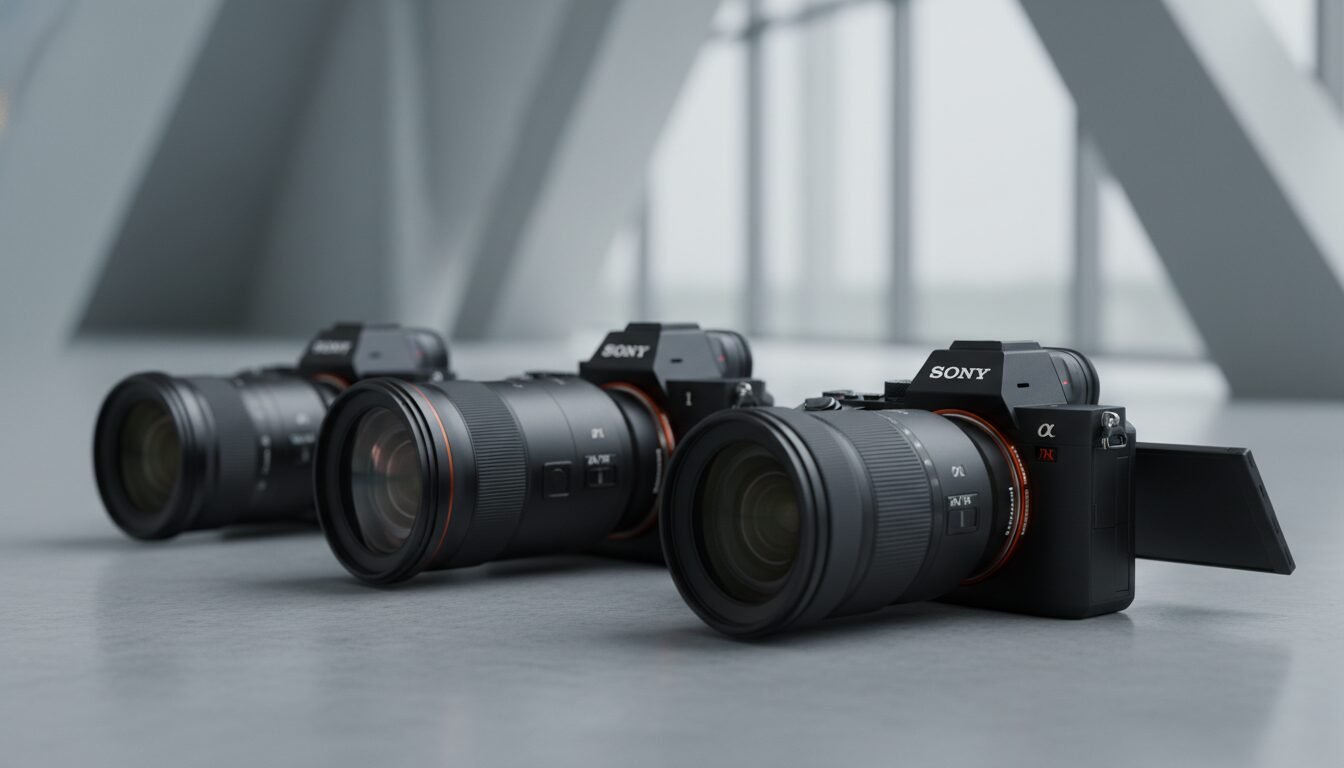
If you search for a sony digital today, you’ll find Sony’s mirrorless Alpha range instead. Below we compare three current models that deliver DSLR-like ergonomics and handling with next-generation technology.
| Model | Sensor & Megapixels | Max Burst (fps) | Video | Approx. Price |
|---|---|---|---|---|
| Sony Alpha 1 | Full-frame 50.1 MP | 30 fps | 8K/30p, 4K/120p | $5,699.99 |
| Sony Alpha 7 IV | Full-frame 33 MP | 10 fps | 4K/60p (oversampled) | $1,999.99 |
| Sony Alpha 6700 | APS-C 26 MP | 11 fps | 4K/60p, 4K/120p (crop) | $1,499.99 |
Prices sourced from Sony Electronics official store as of 2026.
Alpha 1: The Ultimate DSLR Replacement
The Alpha 1 is Sony’s flagship, combining a high-resolution 50.1 MP sensor with 30 fps blackout-free shooting and 8K video. Its autofocus performs 120 AF/AE calculations per second, a feat beyond any optical DSLR. For professionals who once relied on a reflex camera like the A900, the Alpha 1 is the clear spiritual successor. At $5,699.99, it sits in the same price bracket as professional DSLR flagships from Canon and Nikon.
Alpha 7 IV: The All-Rounder for Enthusiasts
With a 33 MP sensor, 10 fps burst, and refined 4K/60p video, the Alpha 7 IV is Sony’s best-selling full-frame hybrid. It inherits Real-time Eye AF for humans, animals, and birds, and includes a vari-angle LCD for vlogging. Originally priced at $2,499.99 and now available at $1,999.99, it represents strong value compared to equivalent DSLR-era bodies. The fixed screens of classic DSLRs feel like a distant memory by comparison.
Alpha 6700: Compact Power for Travel and Content
The APS-C Alpha 6700 (26 MP) packs the same BIONZ XR processor and AI-driven autofocus found in the Alpha 7R V into a travel-friendly body. It shoots 4K/120p slow motion and weighs just 493 g. This camera demonstrates exactly why the this type of camera form factor has been left behind: you simply cannot achieve this level of technology inside a mirror box.
Pros and Cons
Pros
- Superior autofocus: On-sensor phase-detection AF covering 93% of the frame, with 0.02-second lock times, outperforms any DSLR AF system.
- Faster burst shooting: Up to 30 fps on the Alpha 1 with full AF/AE tracking, compared to single-digit fps on most DSLRs.
- Professional video capability: Internal 8K/30p, 4K/120p, and 10-bit 4:2:2 color sampling make Sony mirrorless bodies true hybrid tools.
- Lens ecosystem breadth: Over 70 native E-mount lenses plus full adapter support for legacy A-mount glass.
- Advanced stabilization: 5-axis IBIS with up to 8 stops of correction on the Alpha 7R V surpasses the sensor-shift systems in older DSLRs.
- EVF advantages: Live exposure preview, focus peaking, and real-time histogram overlays are impossible on an optical viewfinder.
Cons
- Battery life: Mirrorless bodies typically rate at 500-700 shots per charge versus 800-1,000+ for DSLRs using optical viewfinders.
- Price premium: Flagship models like the Alpha 1 at $5,699.99 represent a significant investment compared to used DSLR alternatives.
- Learning curve: Shooters transitioning from optical viewfinders may need time to adjust to EVF rendering and menu systems.
- Used DSLR value: The second-hand market for Sony A-mount bodies like the a99 II offers entry-level pricing for budget-conscious buyers, which mirrorless cannot match at the low end.
4. Key Technologies That Made DSLRs Obsolete
Sony’s engineering breakthroughs directly addressed the inherent limitations of the sony digital single lens reflex camera concept. Understanding these technologies shows why mirrorless is now the industry standard, according to camera industry analysts and publications including DPReview and Imaging Resource.
Exmor CMOS Sensors with Back-Illuminated Design
Sony’s Exmor sensors, especially the back-illuminated (BSI) types, capture more light with lower noise than traditional CCD or CMOS sensors used in older DSLRs. The full-frame sensors in the Alpha 7 series deliver up to 15 stops of dynamic range, preserving highlight and shadow detail even in high-contrast scenes. This sensor technology is also supplied to other camera manufacturers, making Sony a foundational force in the broader imaging industry.
BIONZ X and BIONZ XR Image Processors
The BIONZ X engine, and the next-generation BIONZ XR in the latest models, processes massive amounts of data to reduce noise, enhance color, and enable high-speed readouts. Per Sony’s published specifications, the BIONZ XR processor is roughly 8 times faster than its predecessor. This processing power enables Real-time Eye AF and high-resolution video that were unimaginable on an optical DSLR platform.
5-Axis In-Body Image Stabilization (IBIS)
While Sony’s DSLRs had sensor-shift SteadyShot, modern mirrorless bodies feature 5-axis IBIS that compensates for pitch, yaw, roll, and horizontal/vertical shift simultaneously. The Alpha 7R V offers up to 8 stops of shake correction, letting you shoot handheld at slower shutter speeds without a tripod. That is a decisive advantage over most DSLRs, which typically offered 2-3 axis stabilization at best.
Sony’s SLT Technology: The Bridge Between DSLR and Mirrorless
Before fully committing to mirrorless, Sony developed Single-Lens Translucent (SLT) technology as a transitional step. SLT cameras like the Alpha A77 II used a fixed, semi-transparent mirror that allowed light to pass through to the sensor while simultaneously directing a portion to a dedicated phase-detection AF module. This gave SLT bodies continuous phase-detection AF during video recording, something true DSLRs struggled with. The trade-off was a small but measurable light loss through the translucent mirror, roughly 1/3 of a stop. SLT cameras were a clever bridge, but the arrival of on-sensor phase-detection AF made the fixed mirror unnecessary, and Sony retired the SLT line entirely.
5. The Sony Lens Ecosystem: From A-Mount to E-Mount
One of the biggest concerns for former sony digital single lens reflex camera owners is lens compatibility. Sony has addressed this through a rich E-mount system and official adapters that keep legacy glass functional on modern bodies.
Native E-Mount Lenses: 70+ Options
Sony’s E-mount family spans over 70 native lenses, from ultra-wide 12-24mm f/2.8 G Master to super-telephoto 600mm f/4 G Master. Premium optics are co-developed with ZEISS, ensuring edge-to-edge sharpness. This breadth matches or exceeds what was available for A-mount DSLRs, and the lineup continues to expand each year.
Adapting A-Mount Lenses to Mirrorless
If you own a collection of legacy A-mount glass from your sony digital single lens reflex camera days, the LA-EA5 adapter allows full autofocus and aperture control on recent Alpha bodies. This means you can continue using Minolta-era glass with modern mirrorless performance, bridging the gap between systems without abandoning your existing investment.
Third-Party Lens Support
Brands like Sigma, Tamron, and Samyang offer a wide range of E-mount lenses, often at competitive prices. Sigma’s Art series delivers optical quality in mirrorless-optimized designs, and Tamron’s compact zoom lineup has become a favorite among travel photographers. This open ecosystem further cements the E-mount as a future-proof platform for anyone moving on from a Sony or third-party DSLR system.
The Second-Hand Market for Sony DSLRs
For photographers on tight budgets, the used market for Sony A-mount bodies remains active. The a99 II, Sony’s last full-frame A-mount flagship released in 2016, regularly appears on platforms like eBay and KEH Camera in the $400-$700 range depending on condition. These bodies still deliver 42.4 MP resolution and 5-axis IBIS, making them capable tools for studio and landscape work where speed is less critical. Just be aware that A-mount lens support and firmware updates have effectively ended, so you are buying into a closed ecosystem.
6. How to Choose the Right Sony Camera for Your Needs
With the sony digital single lens reflex camera no longer available new, selecting the right mirrorless alternative means matching your shooting style to Sony’s extensive lineup. Follow this step-by-step process:
Step 1: Define Your Primary Subject
Are you shooting sports, portraits, landscapes, or video? For fast action, the Alpha 1 or Alpha 9 III (with global shutter) is ideal. Portraits and studio work benefit from the 50.1-megapixel Alpha 1 or the high-resolution Alpha 7R V. Hybrid creators will appreciate the Alpha 7 IV’s balanced specs at a more accessible price point.
Step 2: Choose a Sensor Format
Full-frame (Alpha 7/9/1 series) offers the best low-light performance and shallow depth-of-field control, comparable to a professional DSLR. APS-C (Alpha 6000-series) is more portable and affordable, making it a smart choice for travel and those new to interchangeable-lens cameras. Both formats outperform the sensors found in older sony digital single lens reflex camera models in dynamic range and high-ISO noise handling.
Step 3: Evaluate Autofocus Demands
If you photograph fast-moving or unpredictable subjects like children, pets, or wildlife, prioritize a model with Real-time Tracking and Real-time Eye AF. The Alpha 6700, Alpha 7 IV, and Alpha 1 are all leaders here. Traditional DSLRs often struggle to maintain focus across the full frame, but Sony’s on-sensor phase-detection AF covers 93% of the image area on many current bodies.
“The shift from DSLR to mirrorless is not just a hardware change. It is a fundamental rethinking of how cameras process and respond to the world in real time.” Imaging Resource, 2024 mirrorless market analysis
Frequently Asked Questions
Does Sony still manufacture a digital single lens reflex camera?
No. Sony stopped producing new DSLR and SLT models years ago. The last A-mount camera, the a99 II, was released in 2016 and has since been discontinued. Today, Sony exclusively sells mirrorless interchangeable-lens cameras under the Alpha brand.
What is the best Sony camera that feels like a DSLR?
The Sony Alpha 7 IV and Alpha 1 offer a deep grip, top-plate LCD, and robust build that many former DSLR shooters appreciate. Paired with a battery grip, they provide familiar ergonomics with far more advanced autofocus and video capabilities than any Sony DSLR offered.
Can I use my old Sony or Minolta A-mount lenses on a Sony mirrorless camera?
Yes. Sony’s LA-EA5 adapter for full-frame E-mount bodies enables full autofocus and aperture control with most A-mount lenses. Third-party adapters also exist, but the official Sony adapter ensures the best compatibility and firmware support for your legacy glass.
How does mirrorless autofocus compare to a DSLR?
Mirrorless autofocus is fundamentally faster and more accurate because it uses the imaging sensor for both AF and image capture, eliminating the separate AF sensor calibration issues common in DSLRs. Sony’s Real-time Eye AF can lock onto human or animal eyes in 0.02 seconds, a performance level unreachable by most DSLR systems.
Which Sony camera is best as a video replacement for a DSLR?
The Sony Alpha 7 IV is an excellent hybrid option, offering 4K/60p oversampled from 6K at $1,999.99. For dedicated videographers, the FX3 Cinema Line camera or the Alpha 1 provide professional 10-bit codecs, internal 4K/120p, and S-Log profiles that surpass any DSLR video functionality available at comparable price points.
Are Sony mirrorless cameras too small for large hands?
While some early models were compact, current full-frame bodies like the Alpha 7R V and Alpha 1 are nearly as large as traditional DSLRs, with deep grips and multi-control layouts. The optional battery grip VG-C4EM adds vertical controls and doubles battery capacity for all-day professional shoots.
Ready to Make the Switch?
The sony digital single lens reflex camera is a chapter of photography history that has firmly closed. Sony’s rapid innovation in mirrorless technology produced cameras that outperform DSLRs in speed, autofocus, video, and portability. Whether you choose the all-round Alpha 7 IV at $1,999.99 or the pro-grade Alpha 1 at $5,699.99, you gain access to a vast lens ecosystem, AI-driven tracking, and a platform built for the next decade of imaging. For those still holding onto the idea of a Sony DSLR, the mirrorless alternatives are not just comparable. They are demonstrably better in every metric that matters to modern photographers.
Ready to find your perfect Sony mirrorless setup? Contact Emin Media for a free brand consultation and let’s build a creative toolkit that matches your vision and your budget.
Enjoyed this article?
Contact Emin Media for a free brand consultation and let's create something amazing together.
Get in Touch