Best Instant Digital Print Camera Guide 2026
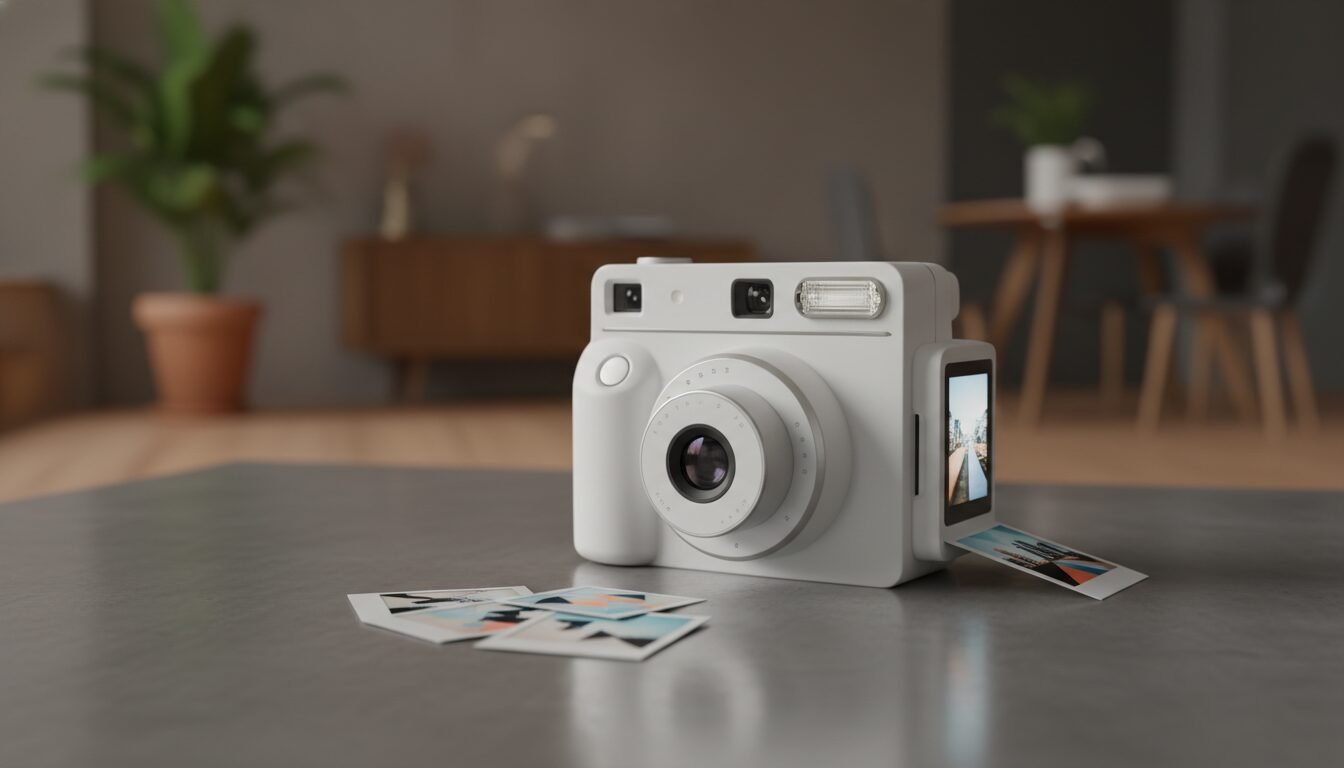
An instant digital print camera is a hybrid device that captures digital photos and prints them on the spot using zero-ink technology. No external printers, no ink cartridges, no waiting.
Key Takeaways
- An instant digital print camera combines a digital sensor with a built-in printer for immediate physical photos.
- ZINK and 4PASS technologies eliminate ink cartridges, using special paper to deliver smudge-proof, water-resistant prints.
- Leading models range from $35 budget kids cameras to $160+ advanced hybrids with LCD screens and Bluetooth.
- The Kodak PRINTOMATIC remains the best-selling model with over 26,000 Amazon reviews, while the Mini Shot 3 Retro offers superior 3×3″ prints via 4PASS dye-sublimation.
- A MicroSD card slot is a critical feature for backing up digital copies, setting these cameras apart from traditional analog instant cameras.
- Print technology matters: ZINK suits casual everyday use, while 4PASS delivers lab-grade results worth the premium price.
What Is an Instant Digital Print Camera?
An instant digital print camera merges a digital image sensor with a built-in photo printer in a single body. Press the shutter, and it captures a digital file and immediately prints a physical copy on special paper. No ink cartridges, no external devices, no waiting for a lab. This category took off after Kodak launched the PRINTOMATIC, which has gathered over 26,000 reviews on Amazon and proved there’s a massive appetite for analog-style prints from a digital source.
The Hybrid Advantage
Unlike pure analog instant cameras such as the Fujifilm Instax Mini 12 or Polaroid Now, an instant digital print camera gives you the best of both worlds: the immediacy of a physical print and the convenience of digital storage. You can preview your shot on an LCD screen (on select models), choose to print only the keepers, and save everything to a memory card. That selective approach cuts wasted paper by at least 30-50% compared to blind analog shooting, where every frame costs you a sheet of film.
How It Differs from Traditional Instant Cameras
Traditional instant cameras use light-sensitive film packs that develop chemically after ejection. An instant digital print camera relies on a CMOS sensor, typically 5-16 megapixels, and prints via heat activation onto ZINK or dye-sublimation paper. Print speeds often come in under 60 seconds, and you gain the ability to store, reprint, or share shots digitally. The Kodak PRINTOMATIC, for example, can print a previous photo while capturing the next shot, a feat that’s simply impossible with analog film.
A Quick Note on Analog Alternatives
If you’re comparing options, it’s worth knowing what you’re stepping away from. The Fujifilm Instax Mini 12 uses credit-card-sized film packs that develop in roughly 90 seconds with no digital backup. The Polaroid Go uses integral film with that iconic white border. Both deliver a one-of-a-kind chemical look that digital printing can’t fully replicate. But neither lets you preview, select, or reprint. For most buyers in 2026, the instant digital print camera wins on practicality.
The Technology Behind Instant Prints: ZINK vs. 4PASS
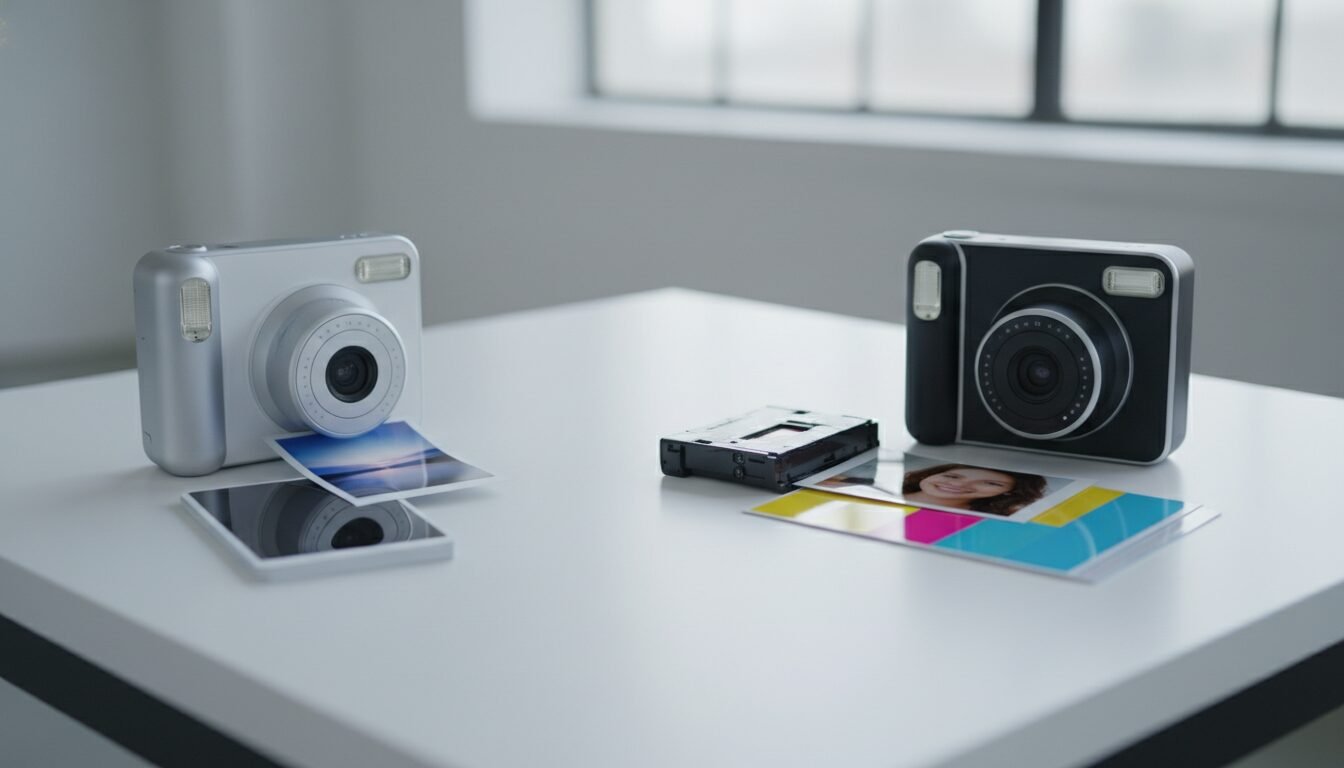
Two competing print engines dominate the instant digital print camera market, and choosing between them shapes your entire experience.
ZINK Zero Ink Technology
ZINK, short for “Zero Ink,” embeds microscopic dye crystals in layers of the photo paper. A heat pulse from the printer head activates each color layer sequentially, producing a full-color print in a single pass. ZINK prints measure 2×3 inches, come with an adhesive backing, and are smudge-free, water-resistant, and tear-resistant. According to Kodak Photo Plus, the PRINTOMATIC uses this technology so that “no ink cartridges, toners or film are needed.”
“The PRINTOMATIC camera instantly prints 2×3″ photos using ZINK Photo Paper, so no ink cartridges, toners or film are needed.” Kodak Photo Plus
4PASS Dye Sublimation
Higher-end instant digital print cameras, such as the Kodak Mini Shot 3 Retro ($159.99), use 4PASS dye-sublimation. The printer makes four passes over the paper: yellow, magenta, cyan, and a protective laminate layer that seals the image. The result is richer color, a wider gamut, and a finish that rivals drugstore photo prints. Each print takes roughly 50 seconds and the paper costs more per sheet, but the quality difference is visible at a glance.
Which One Is Right for You?
For casual party snaps and daily memories, a ZINK-based instant digital print camera like the PRINTOMATIC at $69.99 offers speed and simplicity. If you want gallery-grade prints you’d actually frame, a 4PASS model merits the extra investment. The Mini Shot 3 Retro costs more than double the PRINTOMATIC, but the 3×3″ prints are noticeably sharper and richer in color.
Per-Print Cost: What You’ll Actually Spend
Print costs matter more than most buyers realize. ZINK paper for the PRINTOMATIC runs roughly $0.25-$0.40 per print when bought in bulk packs. Kodak’s 4PASS cartridge packs for the Mini Shot 3 Retro land closer to $0.50-$0.75 per print. By comparison, Fujifilm Instax Mini film typically costs $0.70-$1.00 per shot with no digital backup and no reprints. Over 100 prints, those differences add up fast. Factor in paper costs before you commit to any platform.
Top Instant Digital Print Cameras Compared
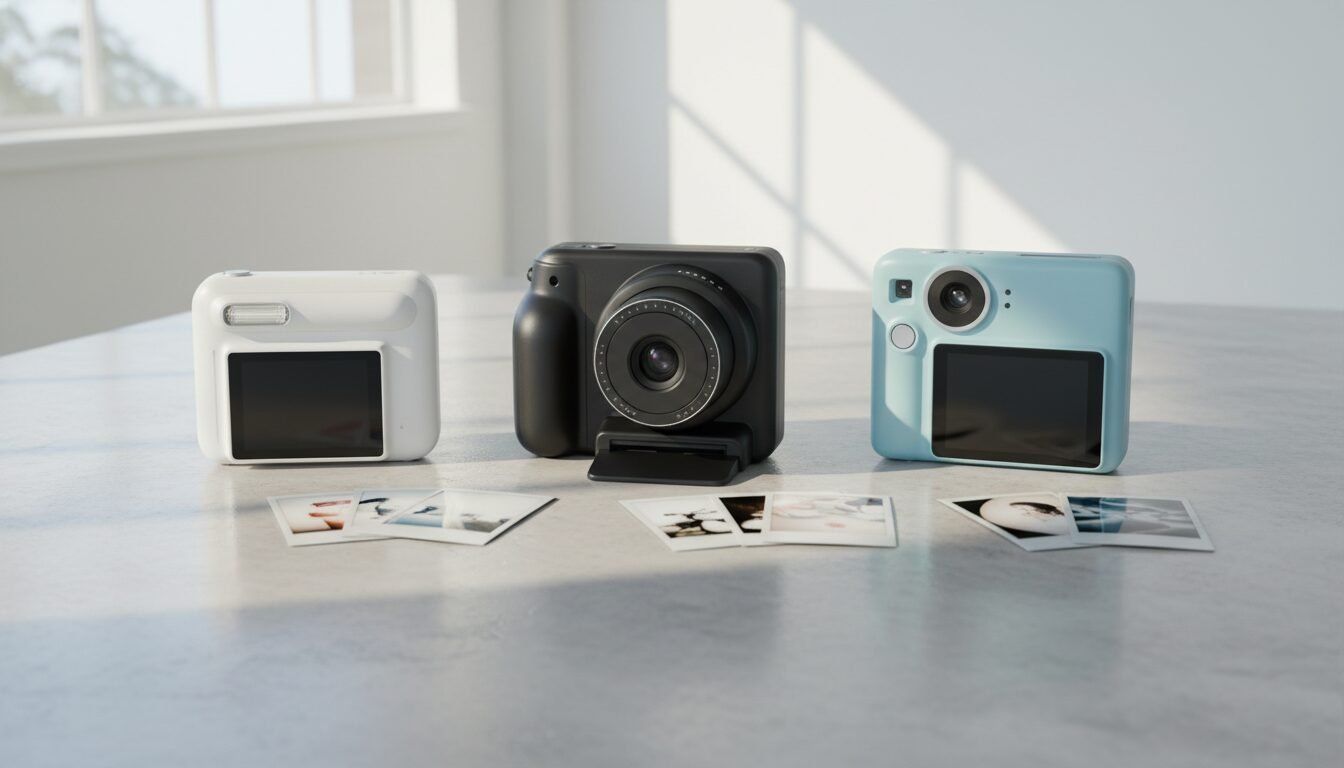
Our curated list draws from real sales data, Amazon best sellers, and hands-on reviews. Every model here has a digital imaging pipeline and a built-in printer.
| Model | Price | Resolution | Print Size | Print Technology | Screen | Best For |
|---|---|---|---|---|---|---|
| Kodak PRINTOMATIC | $69.99 | 5MP | 2×3″ | ZINK | No (optical viewfinder) | Everyday point-and-shoot fun |
| Kodak PRINTOMATIC+ | ~$79.99 | 10MP | 2×3″ | ZINK | No (optical viewfinder) | Higher resolution in same form factor |
| Kodak Mini Shot 3 Retro | $159.99 | Not published | 3×3″ | 4PASS Dye-Sub | Yes (LCD) | Premium hybrid with editing and Bluetooth |
| Dylanto Kids Instant Print Camera | $35.99 | 1080P video / low-MP stills | Roll paper (2×3″ equivalent) | Thermal (ZINK-like) | Yes (small LCD) | Kids ages 3-12 |
| HiMont Kids Instant Camera | $31.99 | Low-MP stills | 2×3″ roll paper | Thermal | Yes (small LCD) | Budget-friendly kids option |
| Kodak SMILE Classic | Not listed | 16MP | Largest in Kodak line | ZINK | Yes (LCD) | High-detail prints with smartphone app |
The Kodak PRINTOMATIC remains the best-selling instant digital print camera on Amazon, holding a 3.9-star rating across over 26,000 reviews. For budget-conscious parents, the Dylanto ($35.99) captures 4.6 stars from 4,242+ customers and ships with print paper and a 32GB card. At the top end, the $159.99 Mini Shot 3 Retro lets you preview, edit, and print wirelessly from your phone, earning 4.1 stars from over 6,200 reviews. The PRINTOMATIC+ doubles the standard resolution to 10MP for roughly $79.99, a smart middle ground for adults who want more detail without jumping to 4PASS pricing.
Video Recording in Instant Digital Print Cameras
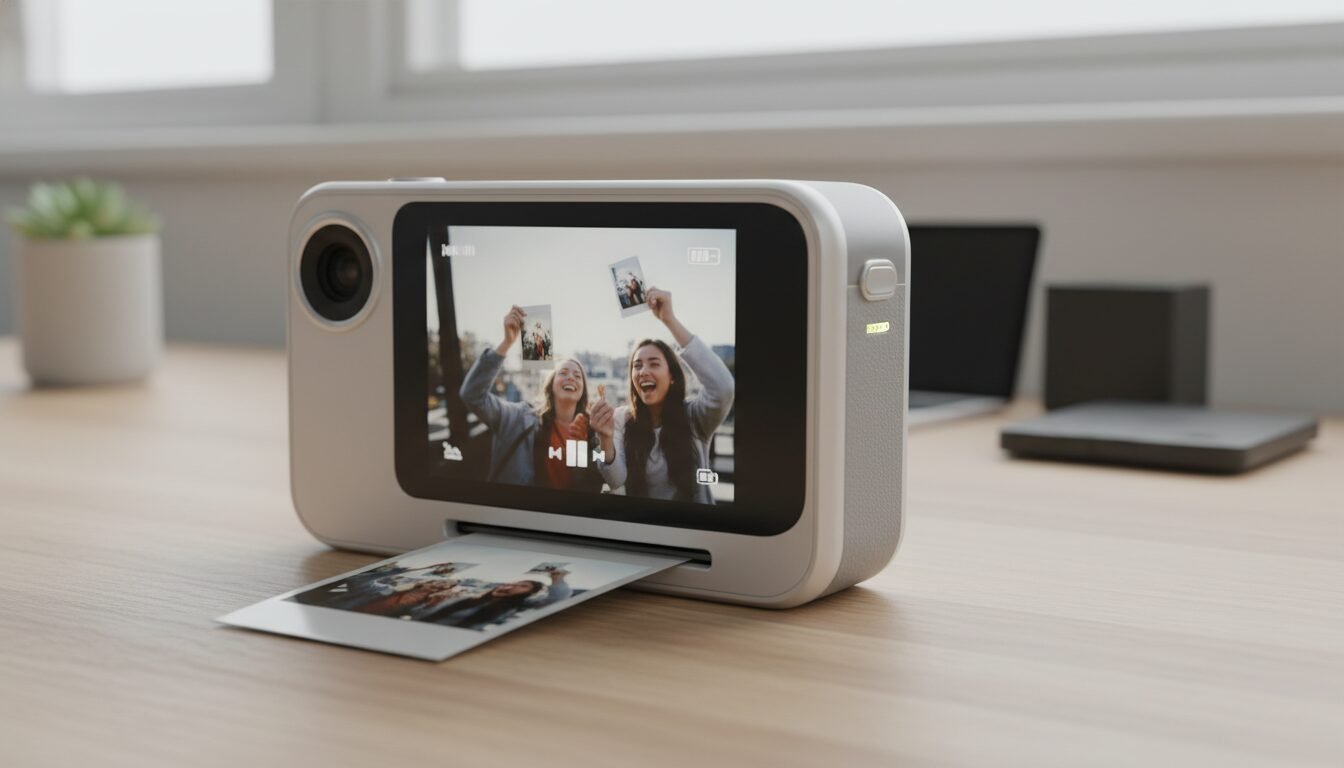
Many instant digital print cameras also record video, though this feature varies widely by model. The Dylanto kids camera captures 1080P video alongside its still photos, which is genuinely impressive at the $35.99 price point. Most ZINK-based adult models, including the PRINTOMATIC, focus on stills and don’t offer video recording. If video matters to you, check the spec sheet carefully before buying. Kids cameras in the $30-$40 range are actually more likely to include video than adult-oriented ZINK models in the $65-$80 range.
Why a MicroSD Card Slot Is Essential
A memory card slot separates a true instant digital print camera from a glorified one-trick device. Without it, you’re stuck with one physical print per shot and no digital record to fall back on.
Storage That Outlasts the Print
The Kodak PRINTOMATIC supports MicroSD cards up to 32GB, which holds roughly 8,000-10,000 photos at 5MP resolution. You’ll never lose a moment even if the ink-free paper runs out or a print gets misplaced. Many budget kids cameras in the $25-$36 range also bundle a 32GB card right in the box, a value that’s clearly reflected in Amazon’s best-seller rankings.
Avoiding the One-Print Trap
Without a memory card, an instant digital print camera behaves like an analog instant shooter: one print per shot, no do-overs. Users who overlook this often express frustration later. One verified PRINTOMATIC reviewer noted, “I thought there would be an app… my pictures are so red and no settings to adjust.” A MicroSD card at least preserves the original file so you can correct colors on a computer and reprint at a later date.
Instant Cameras for Kids vs. Adults: Which Model Fits?
The instant digital print camera market has split into two clear segments: ultra-affordable models for children and more refined devices for adults. Knowing the difference saves both money and disappointment.
Kids’ Instant Cameras: Built for Small Hands
Kids models like the Dylanto, HiMont ($31.99), and TIATUA dominate Amazon’s best-seller list, occupying spots #1 through #3 and selling for $18.98 to $35.99. They feature chunky, drop-resistant bodies, auto-flash, and simplified controls with big buttons. Print quality is modest, often 2×3″ thermal roll paper, and resolution hovers around 480p-720p for video. Children love the instant output regardless. Most pack a 32GB card and a 3-roll paper starter kit, making them ready to use straight out of the box. Reviews for these units average 4.4-4.6 stars, indicating strong satisfaction for the price.
Adult-Targeted Hybrids
For teens and adults, stepping up to a $65-$160 instant digital print camera brings meaningful improvements. The 10MP PRINTOMATIC+ captures twice the detail of the base model. The Mini Shot 3 Retro adds an LCD viewfinder, Bluetooth smartphone printing, and 3×3″ 4PASS dye-sub prints. The Kodak SMILE Classic, with its 16MP sensor, delivers the largest prints in Kodak’s instant lineup. These cameras appeal to party hosts, event organizers, and anyone who wants a tangible keepsake without sacrificing digital quality.
“For most people, an instant digital print camera with an LCD screen and Bluetooth connectivity is the smarter buy, as it lets you preview and edit before printing.” Jim Fisher, PCMag
Pros and Cons of Instant Digital Print Cameras
Every instant digital print camera involves real trade-offs. Here’s an honest look at both sides before you spend your money.
Pros
- No ink cartridges: ZINK and 4PASS paper eliminates the recurring cost and hassle of ink.
- Digital backup: MicroSD slots let you save every shot as a JPEG, unlike analog instant cameras.
- Selective printing: LCD-equipped models let you preview and choose before committing paper, reducing waste by 30-50%.
- All-in-one convenience: Camera and printer in one device means no extra gear to carry.
- Wide price range: Options from $18.98 to $159.99 mean there’s a model for nearly every budget.
- Bluetooth connectivity: Premium models like the Mini Shot 3 Retro let you print wirelessly from a smartphone.
Cons
- Limited image quality: A 5MP sensor won’t match a dedicated digital camera for serious photography.
- Ongoing paper costs: Replacement paper packs are a recurring expense, running $0.25-$0.75 per print depending on technology.
- Slow print speeds: 4PASS models take roughly 50 seconds per print, which can feel slow at busy events.
- Small print sizes: Standard 2×3″ ZINK prints are wallet-sized; even the 3×3″ Mini Shot output is modest for display purposes.
- Paper compatibility issues: Third-party paper can cause jams and color problems, locking you into brand-specific supplies.
How to Choose the Perfect Instant Camera for Your Needs
Follow these five steps to zero in on the right model without overspending.
Step 1: Set Your Budget
Divide the market into three brackets. Under $50 buys a solid kids’ model with basic prints. $50-$100 gets you into a capable ZINK camera like the PRINTOMATIC at $69.99 or the PRINTOMATIC+ at roughly $79.99. Above $150 opens up 4PASS quality and smartphone connectivity, as with the Mini Shot 3 Retro at $159.99.
Step 2: Decide on Must-Have Features
Do you want an LCD screen? Is Bluetooth necessary for printing from a phone? Do you need a memory card slot? The Kodak PRINTOMATIC omits a screen but keeps the price at $69.99. The PRINTOMATIC+ offers no screen either but upgrades to 10MP for about $10 more. If a screen is non-negotiable, you’ll need to jump to the Mini Shot series or a SMILE model.
Step 3: Compare Print Size and Quality
Standard ZINK prints are 2×3 inches, wallet size. The Mini Shot 3 Retro prints square 3×3 inches, while the SMILE Classic handles a larger format. Larger prints mean more visible detail and make the camera viable for photo booth-style events where guests want something worth keeping.
Step 4: Check Print Technology
ZINK is fast, dry, and affordable at $0.25-$0.40 per print. 4PASS is slower but rivals drugstore photo quality at $0.50-$0.75 per print. For a child, ZINK’s trouble-free operation is a clear advantage. For adult use where print quality matters, 4PASS is worth the premium.
Step 5: Read Reviews and Verify Paper Availability
Always confirm that replacement paper is readily available before buying. The PRINTOMATIC uses widely stocked 2×3″ ZINK paper. The Mini Shot 3 Retro requires Kodak 3×3″ cartridge packs. Several negative reviews of the PRINTOMATIC mention jamming linked to third-party paper. Stick with the manufacturer’s brand to avoid that headache entirely.
Tips for Getting the Best Photo Quality
Even a 5MP instant digital print camera can produce charming prints if you follow a few practical guidelines.
Master the Flash and Distance
The PRINTOMATIC’s auto-flash cannot be manually overridden, and close-range shots often appear washed out. Keep 4-6 feet between the camera and your subject to avoid flash blow-out. For models with an LCD screen, use the preview to adjust framing before committing to print.
Use Genuine Paper to Prevent Jams
Multiple 1- and 2-star reviews of the PRINTOMATIC report paper jams and poor color rendering when using non-Kodak paper. A jammed printer can render the camera unusable until the paper is cleared. Stick with the brand’s own ZINK packs, which are engineered for the specific heat profile of each camera model.
Store Prints Properly
ZINK prints are water-resistant and tear-resistant, but they will fade if left in direct sunlight for extended periods. Keep them in an album or frame to preserve vibrancy. The adhesive backing lets you stick them into journals or scrapbooks without any glue.
Use the MicroSD Slot Every Time
If your camera has a memory card slot, always insert one before shooting. This gives you a high-resolution digital file you can tweak in editing software and reprint later, especially useful for once-in-a-lifetime moments where a second chance at the shot doesn’t exist.
Is an Instant Digital Print Camera Right for You?
An instant digital print camera carves a unique niche between digital convenience and analog nostalgia. It won’t replace a 20-megapixel mirrorless camera for serious photography, and it won’t satisfy film purists who love the chemical unpredictability of Instax or Polaroid. But for social gatherings, travel journals, and creative projects, it delivers tangible joy within minutes of the click.
When to Buy One
If you often find yourself wanting to hand someone a photo immediately, at a wedding, a birthday party, or a classroom activity, this is the tool for the job. The ability to print only the shots you like reduces paper waste by at least 30% compared to analog instant shooting. The enduring popularity of the Kodak PRINTOMATIC, with 26,000+ reviews and a strong positive rating, proves that millions of users see real value here. According to PCMag’s camera testing data, hybrid instant cameras consistently rank among the top gifted electronics in the $50-$150 range.
When to Look Elsewhere
If photo quality is your top priority, consider a dedicated digital camera paired with a portable dye-sub printer like the Kodak Mini 2 Retro, a Bluetooth-only printer that accepts photos from your smartphone and produces 2×3″ prints without any built-in camera. The prints will be sharper, but you’ll carry two devices instead of one. And if you crave the chemical, one-of-a-kind look of integral film, stick with a Fujifilm Instax or Polaroid camera. Those are not instant digital print cameras and offer a genuinely different experience.
At Emin Media, we help brands tell visual stories that stick, whether through product photography, video production, or content that converts. Understanding the tools that create memorable moments is part of how we think about creative production and brand storytelling. Ready to build something bold? Contact Emin Media for a free brand consultation.
Frequently Asked Questions
What exactly is an instant digital print camera?
An instant digital print camera is a camera with a built-in printer that produces physical photos without ink, using a digital image sensor and special paper like ZINK or 4PASS dye-sublimation media. It captures a digital file and prints it in under 60 seconds, all in one device.
Do these cameras need ink cartridges?
No. They use ink-free technology, either ZINK heat-activated paper or 4PASS dye sublimation, so you never buy ink. You only purchase replacement paper packs, which typically cost $0.25-$0.75 per print depending on the technology.
Can I save digital copies from a PRINTOMATIC?
Yes. The Kodak PRINTOMATIC has a MicroSD slot supporting cards up to 32GB, which saves every shot as a digital JPEG file. A USB cable is not included in the box, so plan to use a card reader to transfer files.
Are instant cameras good for kids?
Absolutely. Kid-friendly models like the Dylanto ($35.99) and HiMont ($31.99) are durable, easy to use, and come with paper and a memory card included. They’re designed for ages 3-12 and average 4.4-4.6 stars across thousands of Amazon reviews.
Which print technology is better: ZINK or 4PASS?
ZINK is faster and cheaper per print, making it ideal for casual everyday use. 4PASS yields higher-quality, lab-grade prints with richer color and a protective laminate finish. Choose ZINK for fun and simplicity; choose 4PASS when print quality is the priority.
How many photos can I print on a single charge?
Battery life varies by model. The Kodak PRINTOMATIC typically delivers 20-25 prints per charge, while larger models with bigger batteries may reach 40 prints. Always charge fully before events where you plan to print heavily.
What paper does the Kodak Mini Shot 3 Retro use?
It uses Kodak 3×3″ cartridge packs designed for 4PASS dye-sublimation printing. A starter pack of 8 sheets is usually included in the box, and replacement packs are sold separately online and at major retailers.
Enjoyed this article?
Contact Emin Media for a free brand consultation and let's create something amazing together.
Get in Touch