Digital SLR Camera Definition: Complete Guide to DSLR
Key Takeaways
- A digital SLR camera uses a reflex mirror and optical viewfinder to show the exact image through the lens.
- DSLRs combine large digital sensors with interchangeable lenses for superior image quality and creative control.
- Despite the rise of mirrorless systems, DSLRs remain a strong choice for durability, battery life, and optical viewing.
- Key specifications like sensor size, megapixel count, and burst rate influence real-world performance.
- Modern DSLRs offer dust reduction, weather sealing, and a vast ecosystem of lenses from brands like Canon, Nikon, and Pentax.
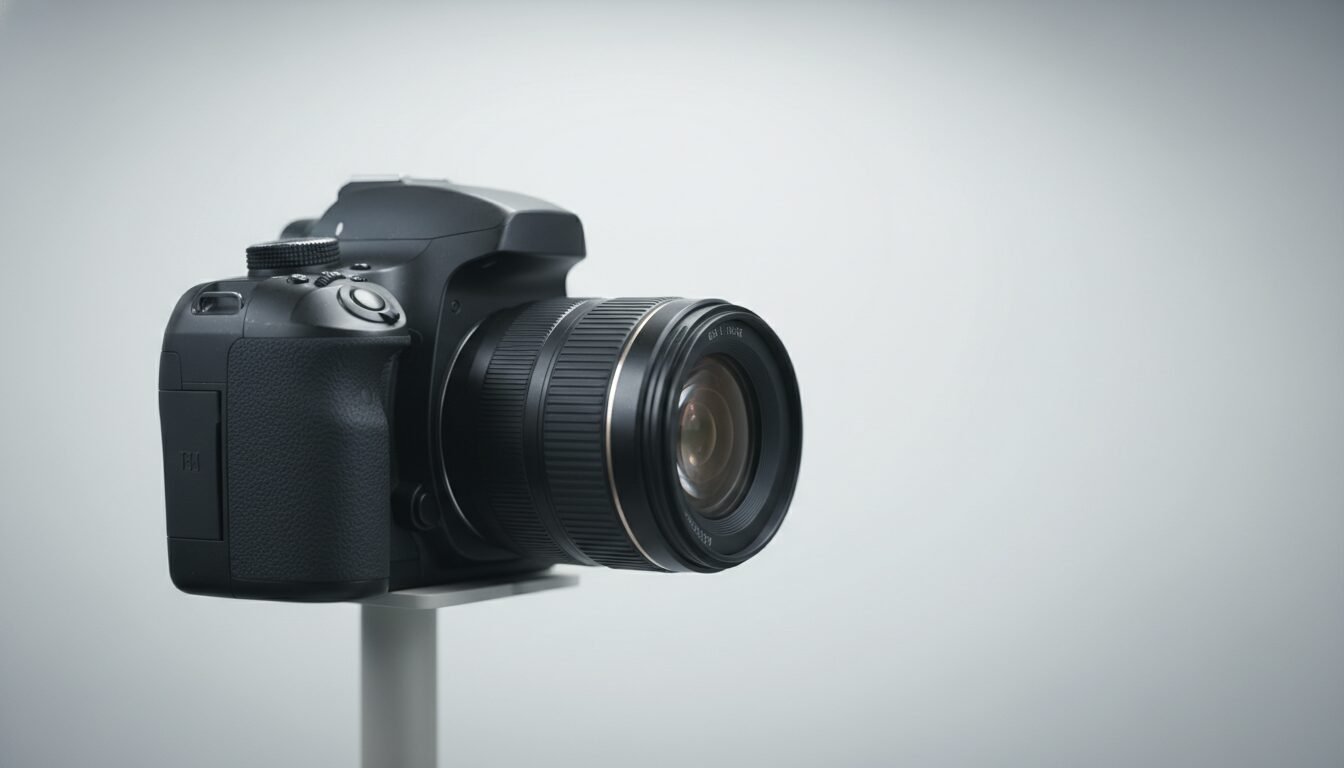
A digital SLR camera (DSLR) uses a reflex mirror to show photographers an exact optical view through the lens. This digital SLR camera definition centers on mirror-based design that delivers superior image quality and lens flexibility.
What Is a Digital SLR Camera? Digital SLR Camera Definition
Digital SLR Camera Definition and Core Concept
A digital single-lens reflex camera—commonly called a DSLR—is defined by its use of a reflex mirror and a pentaprism (or pentamirror) to direct light from the lens to an optical viewfinder. The digital SLR camera definition emphasizes that the mirror swings out of the way during exposure, allowing light to hit the digital sensor and record the image. This design ensures that what you see through the viewfinder is almost identical to what is captured, giving photographers precise composition control.
The Role of the Reflex Mirror
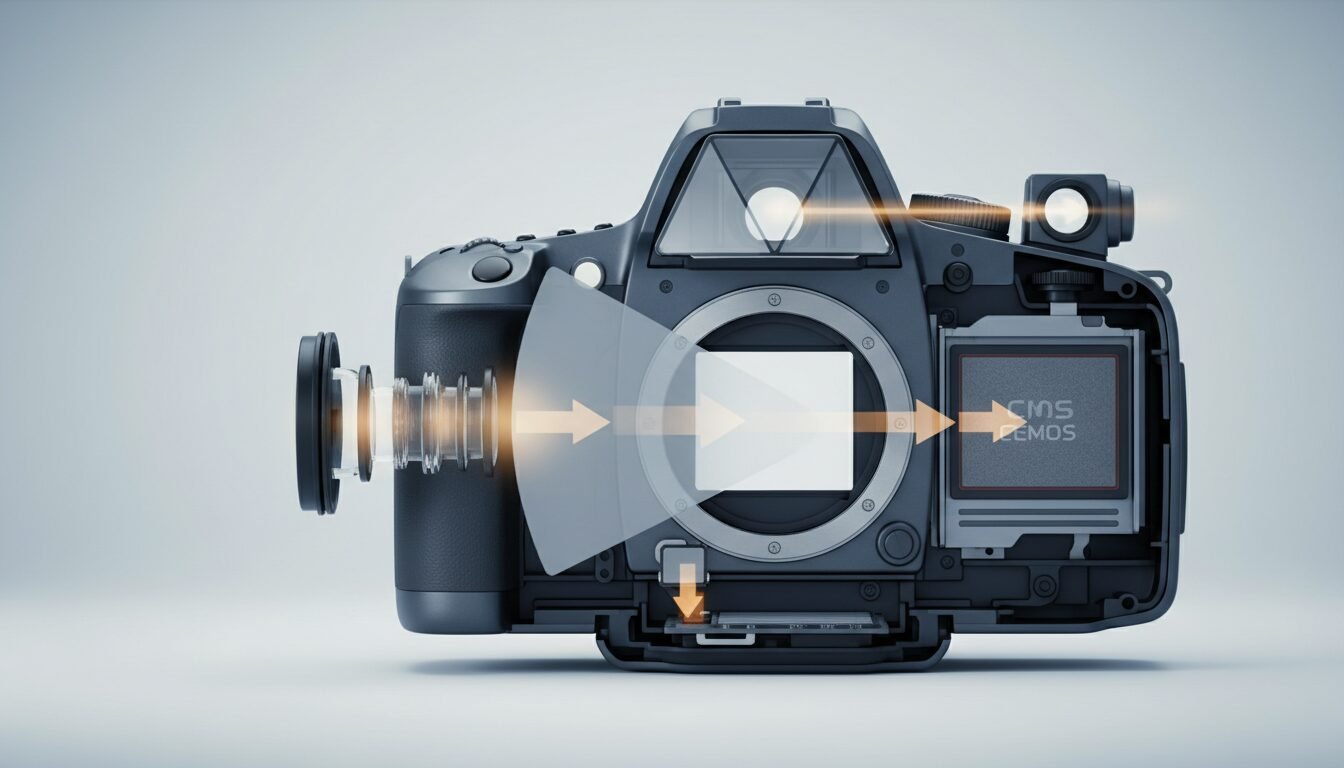
The reflex mirror sits at a 45-degree angle inside the camera body. According to Wikipedia, light enters the lens, hits the mirror, and is reflected upward to a focusing screen. From there it passes through a pentaprism and into the optical eyepiece. When the shutter button is pressed, the mirror flips up, the shutter opens, and the sensor captures the scene. This mechanical sequence is what distinguishes a DSLR from a mirrorless camera, where light falls directly on the sensor at all times.
Optical Viewfinder Advantage
The optical viewfinder is a hallmark of the digital SLR camera definition. It provides a real-time, lag-free preview of the subject, which is especially useful for fast-moving action or long shooting sessions where an electronic viewfinder might cause eye strain. Since it uses no power for the display, a DSLR can offer hundreds of shots on a single battery charge, a benefit often cited by sports and wildlife photographers.
How a DSLR Camera Works: Light Path and Mirror Mechanism
Step-by-Step Light Path
- Light enters the lens and travels through the aperture.
- The reflex mirror reflects the light upward at a 45-degree angle.
- A pentaprism (or pentamirror) redirects the light to the optical viewfinder, allowing the photographer to see the image right-side up.
- When the shutter is pressed, the mirror flips up, the focal-plane shutter opens, and light hits the image sensor directly.
- The sensor records the image, the shutter closes, and the mirror drops back into position, ready for the next shot.
The Mirror Swing-Up Action
During exposure, the mirror rises completely out of the optical path. This brief moment blacks out the viewfinder, a characteristic sound and feel of DSLR operation. Advanced models like the Nikon D850 can perform this action at burst rates exceeding 10 frames per second, capturing rapid sequences of high-resolution images. The mirror mechanism is designed to be durable, often rated for hundreds of thousands of cycles.
Data Processing and Storage
Once the sensor captures the light, the camera’s image processor converts the analog signal into a digital file. It applies white balance, noise reduction, and color profiles, then writes the file to a memory card. DSLRs typically support SD, CFexpress, or XQD cards and can store thousands of images on a single card, a figure highlighted by Adobe.
Evolution of the Digital SLR: From Film to Digital
Early Film SLRs and the Move to Digital
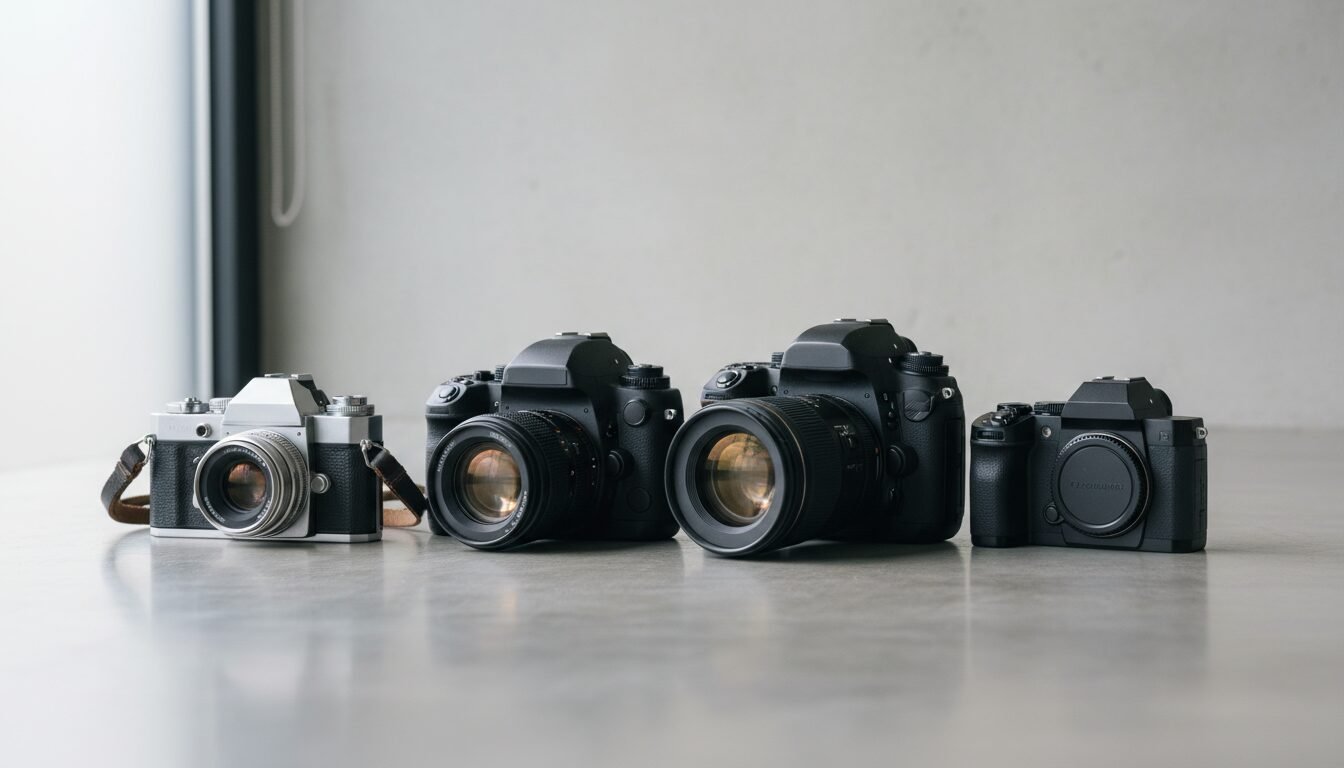
Single-lens reflex cameras existed for decades using film. The first Japanese 35mm film SLR was introduced in 1952 by Asahi Optical (later Pentax), and in 1954 the instant-return mirror was introduced, eliminating the need to manually lower the mirror after each shot. These innovations set the stage for the digital revolution, as reported by Pentax.
First Commercial DSLRs (1991–2000s)
The first commercial digital SLR appeared in 1991, combining a film SLR body with a solid-state image sensor. Throughout the 2000s, DSLRs largely replaced film SLRs as digital technology matured. The EOS Magazine notes that the first Canon EOS SLR was the EOS 650, launched in March 1987, setting a foundation for Canon’s later digital lineup.
Decline and Mirrorless Transition
Beginning in the 2010s, major manufacturers started shifting their product lines away from DSLRs toward mirrorless interchangeable-lens cameras (MILCs). According to Wikipedia, this transition was driven by the demand for smaller, lighter bodies and advanced autofocus systems. However, DSLRs continue to be produced and used, especially in niche markets like weather-sealed outdoor photography.
Core Components and Design of a DSLR
Mirror and Pentaprism System
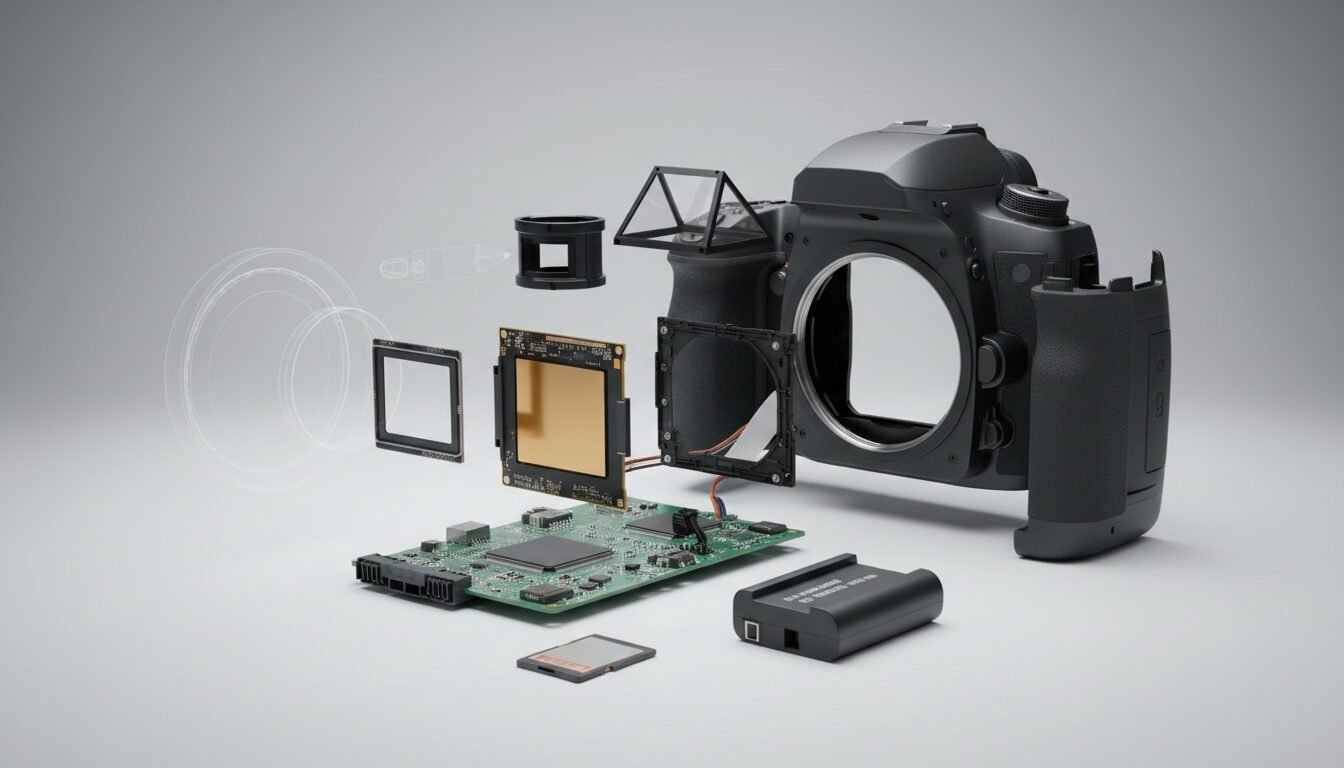
The mirror and pentaprism are the defining physical components of the digital SLR camera definition. The mirror reflects light upward, and the pentaprism corrects the image orientation so that it appears right side up in the viewfinder. Some entry-level DSLRs use a cheaper pentamirror instead, which can be slightly less bright but still effective.
Shutter Mechanism and Focal-Plane Shutter
DSLRs employ a focal-plane shutter located in front of the sensor. It consists of two curtains that open and close to control exposure time. The Nikon D850, for instance, offers shutter speeds from 1/8000 second to 30 seconds, plus a bulb mode. Mechanical shutters are durable but eventually wear out; many high-end models are rated for 200,000 to 400,000 actuations.
Image Sensor and Megapixel Count
The image sensor is the heart of any digital camera. DSLRs use either CCD (charge-coupled device) or CMOS (complementary metal-oxide-semiconductor) sensors. The invention of the CCD in 1969 by Willard S. Boyle and George E. Smith, which earned them the 2009 Nobel Prize in Physics, was fundamental. Today, CMOS sensors dominate, with resolutions reaching 45.7 megapixels on cameras like the Nikon D850—a level of detail that rivals medium-format systems of the past.
Sensor Technology and Image Quality
Full-Frame vs. APS-C Sensors
DSLRs come in two main sensor sizes: full-frame and APS-C. Full-frame sensors measure approximately 36 mm × 24 mm, matching 35mm film and providing a wider field of view and better low-light performance. APS-C sensors are smaller, introducing a crop factor (typically 1.5× or 1.6×) that effectively magnifies the lens’s focal length. According to Adobe, full-frame is the standard for professionals seeking the highest image quality.
Crop Factor and Field of View
The crop factor of an APS-C sensor means that a 50mm lens behaves like a 75mm lens on a Canon (1.6× crop) or a 75mm on a Nikon (1.5× crop). This can be an advantage for telephoto work, giving extra reach without added lens weight. Conversely, wide-angle photography benefits from a full-frame sensor to capture expansive scenes.
Low-Light Performance and Dynamic Range
Larger sensors gather more light, resulting in better performance at high ISO settings. Full-frame DSLRs like the Canon 5D Mark IV deliver clean images up to ISO 12800 and beyond. Dynamic range—the ability to retain details in shadows and highlights—is also superior, giving photographers more latitude in post-processing.
DSLR vs. Mirrorless Cameras: A Comparison
Optical Viewfinder vs. Electronic Viewfinder
The most obvious difference is the viewing system. DSLRs provide an optical viewfinder with zero lag, while mirrorless cameras use an electronic viewfinder (EVF) that shows a digital preview. EVFs can display exposure simulation and histograms in real time, but they consume power and may lag in low light. The choice often comes down to personal preference and shooting style.
Autofocus Systems: Phase Detection vs. Contrast Detection
DSLRs traditionally rely on a dedicated phase-detection autofocus module, which is very fast for still subjects and moving objects in bright light. Mirrorless cameras use on-sensor phase detection or contrast detection, which has improved dramatically but can still struggle in very low light. The Pentax K-3 III, a rugged DSLR, features a high-precision AF system with 101 focus points, including 25 cross-type points, for reliable tracking.
Size, Weight, and Battery Life
Mirrorless bodies are generally lighter and more compact, but lens size can offset that advantage. Battery life is a clear win for DSLRs: the optical viewfinder uses almost no power, allowing 800–1200 shots per charge, while mirrorless cameras typically manage 300–400 shots. For all-day shoots without access to charging, a DSLR remains a practical choice.
| Feature | DSLR | Mirrorless |
|---|---|---|
| Viewfinder | Optical (OVF), zero lag | Electronic (EVF), can show exposure preview |
| Autofocus | Dedicated phase-detect module | On-sensor phase/contrast detection |
| Battery life | 800–1200 shots | 300–400 shots |
| Body weight | Heavier, bulkier | Generally lighter |
| Lens ecosystem | Vast legacy and modern lenses | Growing but more recent |
| Durability/weather sealing | Excellent in mid to high-end models | Improving, but premium models only |
Weather Sealing and Dust Reduction in DSLR Bodies
Dust Reduction Technologies
Dust on the sensor can ruin images. DSLRs combat this with ultrasonic vibration systems that shake the sensor upon startup or manually. The Pentax K-3 III uses a five-axis in-body stabilization unit that also doubles as a dust removal mechanism, a technology originally patented by Pentax and now common across brands. Additionally, many cameras include a dust reference data feature for software removal in post-processing.
Weather Sealing and Industrial Standards
Flagship DSLRs are built to withstand rain, dust, and freezing temperatures. The Nikon D850 and Canon 5D series feature extensive gaskets and seals, often adhering to IPX-equivalent standards. Pentax is particularly renowned for its weather resistance; the K-3 III boasts 87 seals and operates down to -10°C. Such durability makes DSLRs indispensable for landscape and wildlife photographers who work in harsh conditions.
Top Sealed DSLR Models
- Pentax K-3 III: 87 seals, magnesium alloy body, cold-proof to -10°C.
- Nikon D850: Full-frame, weather sealing, rated to 200,000 shutter cycles.
- Canon EOS 5D Mark IV: Dust and water resistance, rugged construction.
Why DSLRs Excel as a Learning Tool for Beginners
Manual Controls and Tactile Feedback
A DSLR offers physical dials for shutter speed, aperture, and ISO, making it easier for beginners to grasp the exposure triangle. The mechanical feel reinforces the relationship between settings and image results. Unlike smartphones that computationally merge multiple frames, a DSLR teaches fundamental photographic principles.
Optical Viewfinder for Composition Training
The optical viewfinder forces the photographer to consider the frame carefully before pressing the shutter, since there is no live histogram or exposure preview. This deliberate process improves compositional skills over time. Many photography instructors recommend a basic DSLR like the Pentax KF, which includes a pentamirror viewfinder and intuitive controls, for students.
Long Battery Life for Extended Practice
A full day of shooting without worrying about battery recharge is invaluable for learners. DSLRs can take over 1,000 images on a single charge, enabling uninterrupted practice. This is a significant advantage over mirrorless cameras, which demand spare batteries for extended use.
Popular DSLR Models and Brands
Nikon DSLRs
Nikon’s F-mount lens system has been a staple for decades. The D850 (45.7 MP, 7 fps native, 9 fps with grip) is widely regarded as one of the best DSLRs ever made. Other notable models include the D780, which blends DSLR handling with mirrorless-style live view AF, and the D500, an APS-C flagship with 10 fps burst and superb autofocus.
Canon DSLRs
Canon’s EOS system offers extensive lens compatibility. The 5D Mark IV (30.4 MP, 7 fps) is a workhorse for wedding and portrait photographers, while the 7D Mark II (APS-C, 10 fps) is a favorite for sports and wildlife. Canon’s Dual Pixel AF technology in live view mode provides smooth focusing for video, a feature that gives DSLRs unexpected versatility.
Pentax DSLRs
Pentax remains a niche but dedicated player. The K-3 III (APS-C, 25.7 MP) features a 100% optical viewfinder with 1.05× magnification, 5-axis stabilization, and class-leading weather sealing. The full-frame K-1 Mark II offers a unique Pixel Shift Resolution mode, which produces ultra-detailed images by combining four exposures with sensor micro-movements. Pentax’s continued commitment to DSLRs is reflected in their focus on optical purity.
Live View and Its Limitations on DSLRs
Live View Mode Operation
Live View allows DSLRs to function more like mirrorless cameras by keeping the mirror up and displaying a live image on the LCD screen. This mode is useful for macro work, video recording, and precise manual focusing. However, it drains battery faster and often results in slower autofocus performance compared to the dedicated phase-detection system used in optical viewfinder mode.
Contrast Detection Autofocus in Live View
When using Live View, most DSLRs switch to contrast detection autofocus, which is slower than the dedicated phase-detection module. This creates a noticeable lag when focusing, especially in low light. Some newer DSLRs like the Canon 5D Mark IV incorporate Dual Pixel AF to improve Live View performance, but it still doesn’t match the speed of optical viewfinder focusing.
Software and Post-Processing Compatibility
RAW File Support and Professional Workflows
DSLRs produce RAW files that are widely supported by professional editing software like Adobe Lightroom, Capture One, and Photoshop. The mature DSLR ecosystem means excellent compatibility across platforms, with years of lens profiles and color science refinements. This established workflow support makes DSLRs particularly attractive for professional photographers who rely on consistent processing pipelines.
Tethering and Studio Integration
Many DSLRs offer robust tethering capabilities, allowing direct connection to computers for studio work. This feature is essential for commercial photography where immediate image review and backup are critical. The reliable USB and sometimes wireless tethering options make DSLRs a staple in professional studio environments.
Conclusion: The Enduring Digital SLR Camera Definition
The digital SLR camera definition remains a benchmark for photographic quality, blending time-tested mechanical optics with advanced digital sensors. While mirrorless technology has advanced, DSLRs continue to offer unmatched optical viewfinder clarity, battery longevity, and a rugged, weather-sealed build that professionals trust. For beginners, the tactile controls and broad lens libraries make DSLRs an ideal entry point into serious photography. Understanding the digital SLR camera definition—its mirror, pentaprism, and sensor dynamics—provides a foundation for making informed gear choices in 2026 and beyond. Contact Emin Media for a free brand consultation to explore how professional photography can elevate your visual storytelling.
Frequently Asked Questions
What does DSLR stand for?
DSLR stands for Digital Single-Lens Reflex. It describes a camera that uses a mirror mechanism to reflect light to an optical viewfinder, with a digital sensor instead of film.
How is a DSLR different from a point-and-shoot camera?
DSLRs have interchangeable lenses, larger image sensors, and an optical viewfinder. Point-and-shoot cameras are compact, have fixed lenses, and smaller sensors, resulting in lower image quality and less creative control.
Can a DSLR record video?
Yes, virtually all modern DSLRs can capture high-definition video, typically up to 4K resolution. However, autofocus during video may be slower compared to mirrorless cameras unless the DSLR has dual-pixel or hybrid AF technology.
Is a DSLR better than a mirrorless camera?
It depends on priorities. DSLRs offer superior battery life and an optical viewfinder with zero lag, while mirrorless cameras are smaller, provide real-time exposure preview, and have faster burst rates. Both systems produce excellent images.
What is the crop factor in DSLR sensors?
Crop factor refers to the smaller field of view when using an APS-C sensor compared to a full-frame sensor. It effectively multiplies the focal length of a lens, making a 50mm lens behave like a 75mm lens on a 1.5× crop sensor body.
Do professionals still use DSLR cameras in 2026?
Yes, many professionals, especially in sports, wildlife, and landscape photography, continue to use DSLRs for their durability, optical viewfinders, and extensive lens availability. While mirrorless is growing, DSLRs remain a reliable tool in professional kits.
Enjoyed this article?
Contact Emin Media for a free brand consultation and let's create something amazing together.
Get in Touch