Digital Single Lens Reflex Camera Guide: DSLRs Worth Buying
Key Takeaways
- A digital single lens reflex camera (DSLR) uses a mirror and prism to provide a direct optical view through the lens, eliminating parallax error.
- DSLRs remain a practical choice for beginners and budget‑conscious buyers, thanks to an extensive used market and affordable entry‑level models like the Canon EOS Rebel T7.
- Large APS‑C and full‑frame sensors deliver high image quality, wide dynamic range, and excellent depth‑of‑field control for portraits and low‑light scenes.
- Although mirrorless cameras dominate new development, DSLRs still excel in battery life (often 800+ shots per charge) and offer vast, inexpensive lens libraries.
- Key brands — Nikon, Canon, and Pentax — continue to sell and support DSLR bodies and accessories through 2026.
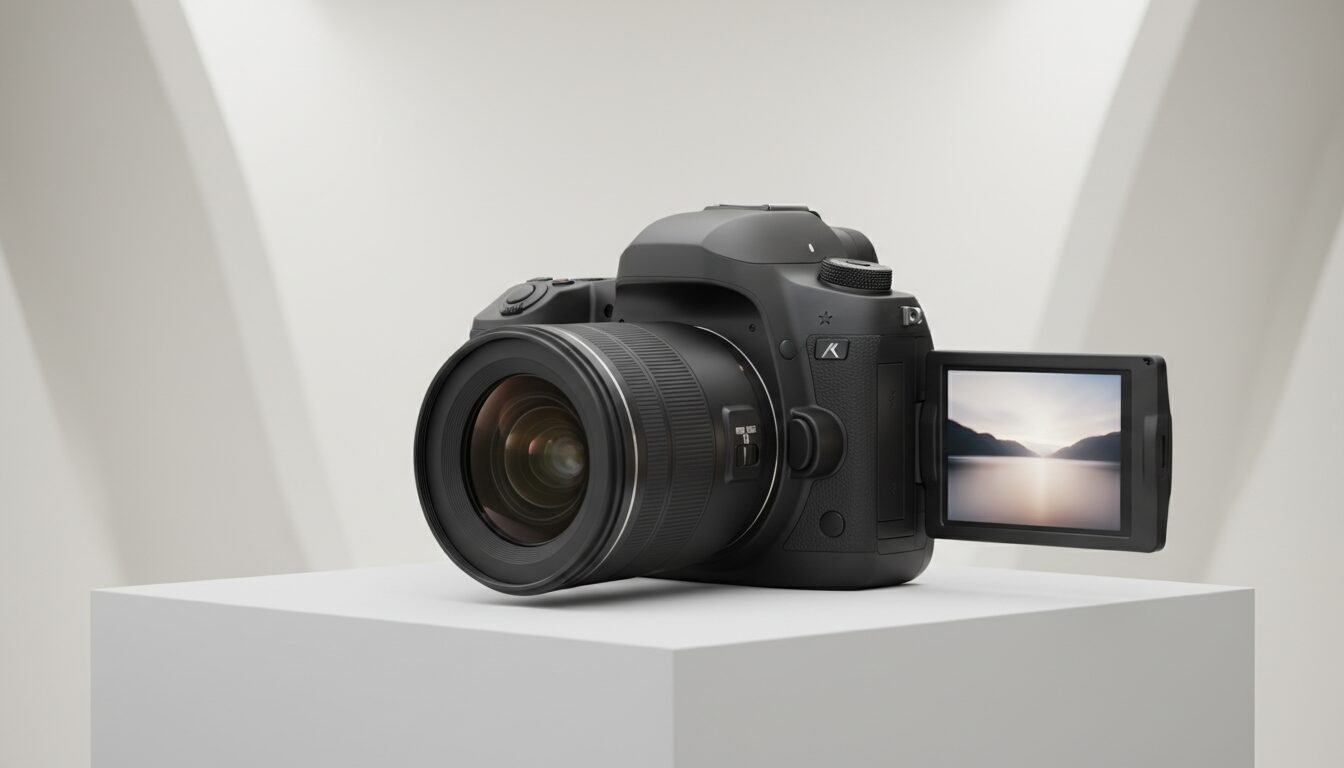
A digital single lens reflex camera is a digital camera that uses a mirror and prism system to show you exactly what the lens sees through an optical viewfinder. This design offers interchangeable lenses, large sensors, and superior image quality.
What is a Digital Single Lens Reflex Camera?
At its core, a reflex camera combines the optics of a traditional single‑lens reflex mechanism with a digital image sensor. The reflex design — the “R” in SLR — is what separates this equipment from mirrorless or point‑and‑shoot cameras. Light enters the lens, strikes an angled mirror, and gets reflected up to a pentaprism or pentamirror before reaching the optical viewfinder. When you press the shutter, the mirror flips up, the shutter opens, and light hits the sensor to capture the photo. This through‑the‑lens (TTL) system ensures that what you see is exactly what you get, with no lag or electronic processing between the scene and your eye.
The Reflex Mirror Mechanism
The heart of any digital single lens reflex camera is its mirror box. A reflex mirror redirects light up toward a focusing screen, where the image forms. That image then passes through a pentaprism (or a lighter pentamirror in entry‑level bodies) that corrects left‑right inversion and directs it to the eyepiece. This purely optical path gives a bright, real‑time view with infinite resolution and zero power consumption. When the shutter button is fully pressed, the mirror swings upward and a focal‑plane shutter opens, exposing the sensor. The mirror must reset after each shot, which is why DSLRs have a characteristic “clack‑clack” sound — one of the few drawbacks of the design.
Optical Viewfinder vs. Digital Display
Unlike mirrorless cameras, which rely on electronic viewfinders (EVFs) or rear LCDs to compose, a DSLR’s optical viewfinder (OVF) gives a direct, lag‑free view of the subject. This is especially valuable for action photography — think sports, wildlife, or fast‑moving kids — where even millisecond delays in an EVF can cause you to miss the decisive moment. OVFs also consume no battery power, contributing to the impressive battery life for which DSLRs are known. The trade‑off is that you cannot see real‑time exposure changes, depth‑of‑field previews, or overlay histograms in an OVF; for those features, you must switch to Live View mode on the rear LCD.
History and Evolution of DSLRs
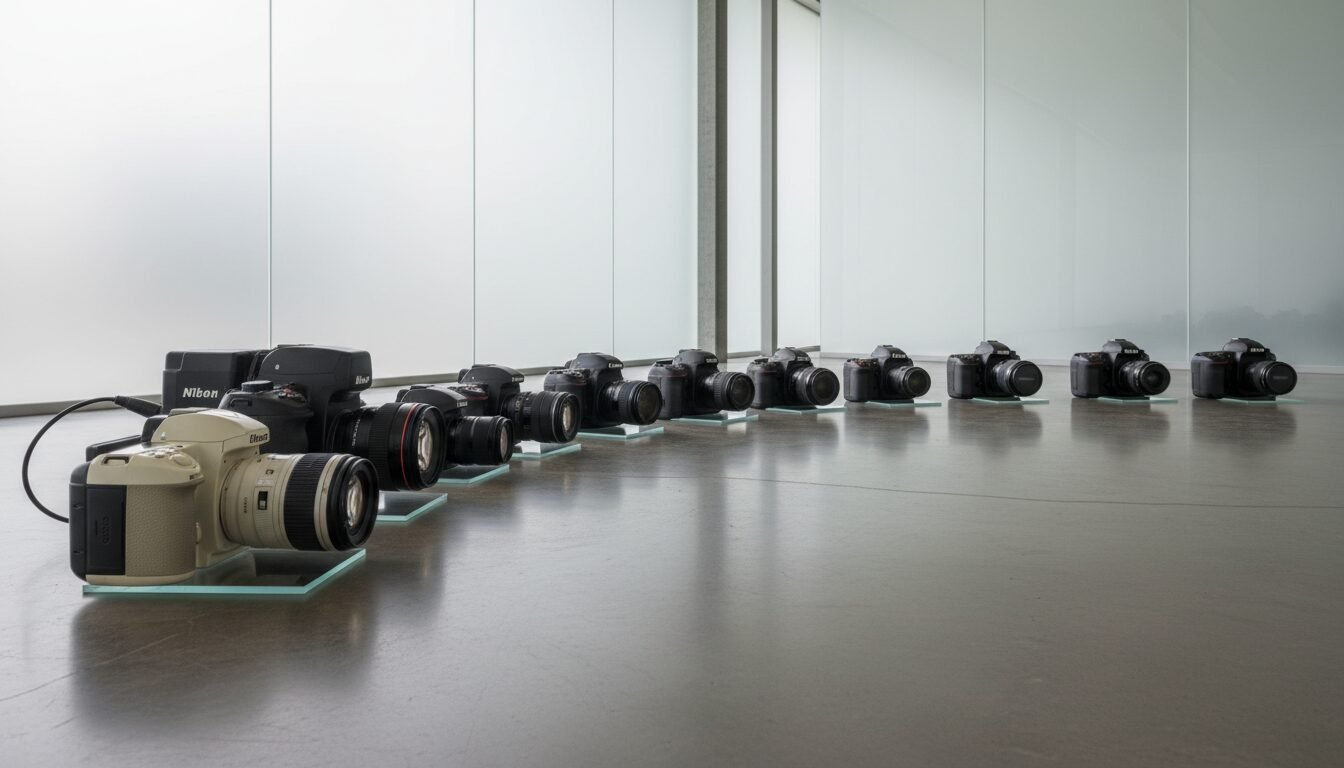
The path to the modern digital single lens reflex camera began in the film era and accelerated with the invention of solid‑state image sensors. According to Wikipedia, the first prototype film‑less SLR was shown by Sony in 1981 as the Mavica — an analog still‑video camera that recorded images onto magnetic floppy disks. True digital SLRs emerged later, but the Mavica proved the concept of marrying an SLR viewfinder with electronic capture.
The Transition from Film to Digital
During the 1990s and early 2000s, companies like Nikon and Kodak collaborated to place digital sensors inside existing film bodies. Kodak’s DCS series — based on Nikon F‑mount camera bodies — were among the first commercially available DSLRs, aimed at photojournalists who needed immediate image transmission. By the mid‑2000s, price drops and sensor improvements made DSLRs accessible to consumers. Canon’s EOS 300D (Digital Rebel) in 2003 and Nikon’s D70 in 2004 are widely credited with bringing interchangeable‑lens digital photography to the masses.
Early Digital SLR Prototypes and Milestones
In 1975, Kodak engineer Steven Sasson built the first digital still camera, though it didn’t use an SLR design. The first true DSLR prototype is often cited as the 1991 Kodak DCS 100, which paired a 1.3‑megapixel sensor with a Nikon F3 film body and a tethered hard drive. By 1999, Nikon released the D1, a 2.7‑megapixel DSLR that cost under $5,500 — a breakthrough in affordability for professional digital capture. These milestones laid the groundwork for the high‑resolution, feature‑rich models we see today.
Key Features of a Digital Single Lens Reflex Camera
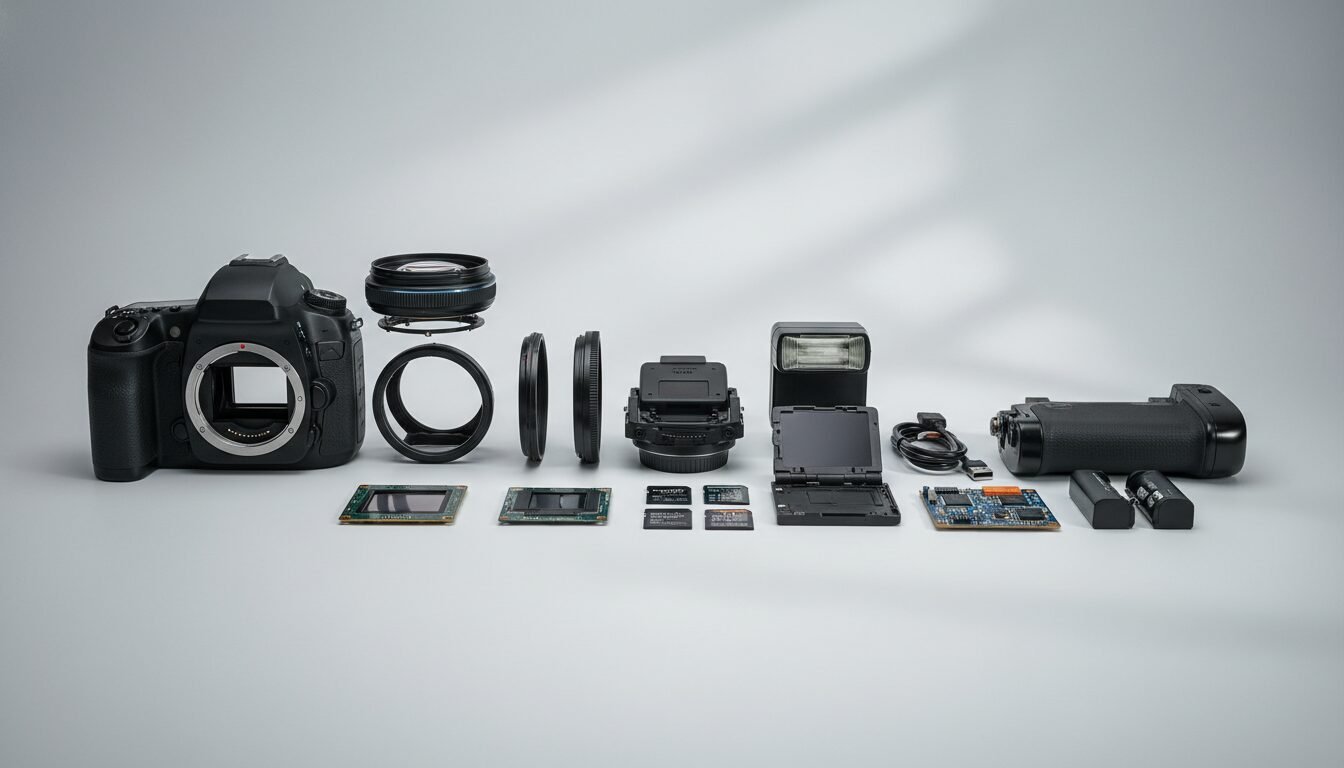
Several characteristics define a digital single lens reflex camera and distinguish it from other camera types. Understanding these features helps you make an informed buying decision, whether you’re stepping up from a smartphone or adding a backup body to your kit.
Interchangeable Lenses and Lens Systems
Perhaps the greatest advantage of a DSLR is its ability to swap lenses. From ultra‑wide‑angle zooms to super‑telephoto primes, the lens ecosystem for popular mounts is vast. Canon EF and Nikon F mount lenses span decades, and many older, fully manual optics can be used with modern bodies. Third‑party manufacturers like Sigma and Tamron further expand your choices. This flexibility lets you tailor the camera to any subject — a wide‑angle for landscapes, a fast 50mm f/1.8 for portraits, or a 70‑200mm for events.
Sensor Sizes and Image Quality
DSLRs generally use either APS‑C (“crop sensor”) or full‑frame (35mm) sensors. Crop‑sensor bodies, like the Canon EOS Rebel T7 (24.1MP) or Nikon D7500 (20.9MP), are smaller, lighter, and more affordable. Full‑frame models such as the Nikon D850 (45.7MP) or Canon EOS 5D Mark IV (30.4MP) offer superior low‑light performance, wider dynamic range, and shallower depth of field. The larger the sensor, the better the image quality — but also the heavier and more expensive the camera. According to B&H Photo, the D850’s back‑side illuminated sensor delivers noticeable gains in high‑ISO noise control.
Autofocus and Performance
DSLRs rely on a dedicated phase‑detection autofocus (AF) module, separate from the sensor, which achieves fast, accurate focus — especially in good light. High‑end models like the Nikon D6 feature 105 cross‑type AF points that track moving subjects with precision. Sports and wildlife photographers prize this dedicated AF system because it remains responsive even when shooting through the optical viewfinder at high frame rates (up to 14 fps on the D6). In Live View mode, however, most DSLRs switch to slower contrast‑detection or on‑sensor phase detection, which lags behind mirrorless cameras. Still, for optical‑viewfinder shooting, DSLR AF is hard to beat.
DSLR vs Mirrorless Cameras: A Detailed Comparison
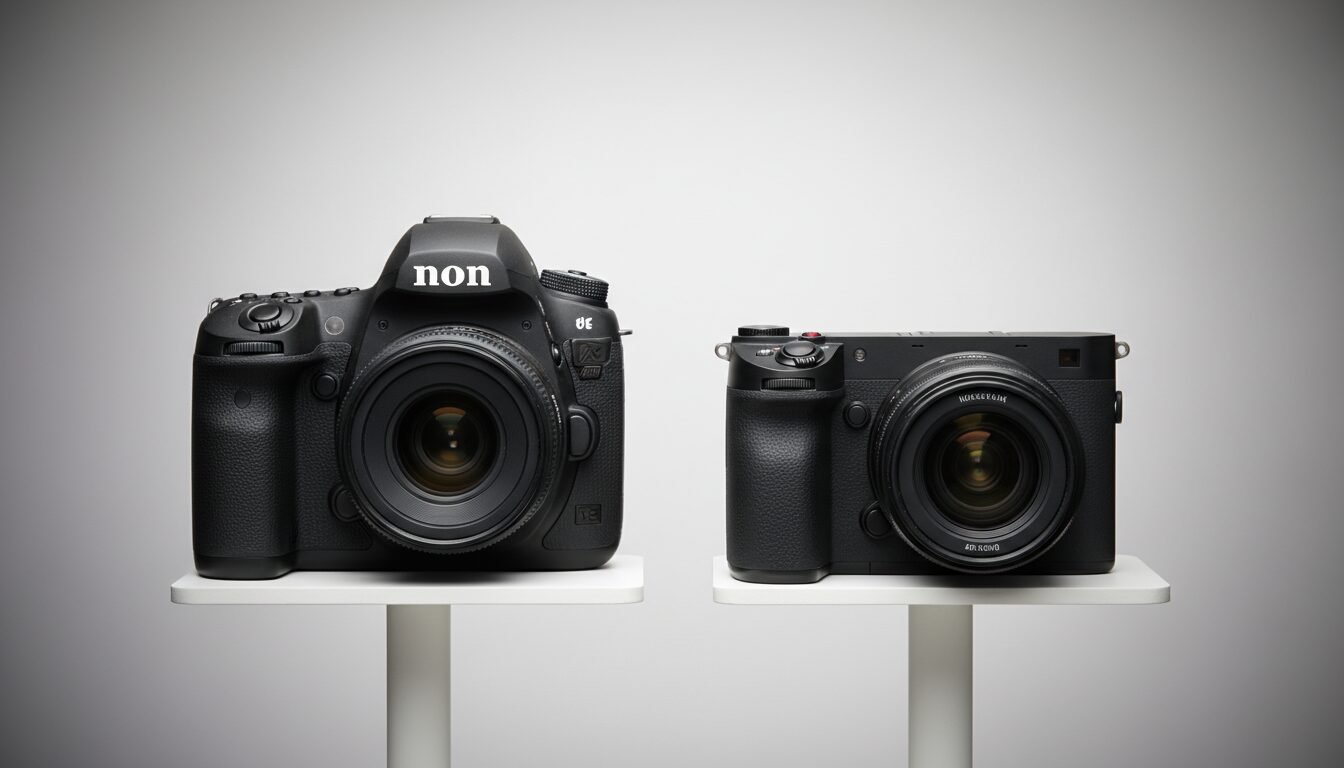
The photography world has been steadily moving toward mirrorless interchangeable‑lens cameras (MILCs), but DSLRs retain practical advantages. Below is a side‑by‑side breakdown of the key differences.
Quick Comparison Table: DSLR vs Mirrorless
| Feature | DSLR | Mirrorless |
|---|---|---|
| Viewfinder | Optical (OVF) — real‑time, no lag, zero battery drain | Electronic (EVF) — shows exposure, histogram, and focus peaking |
| Autofocus | Dedicated phase‑detection module; extremely fast in OVF mode | On‑sensor phase detection; consistent speed in all modes |
| Battery Life | 800–1,200 shots per charge (CIPA rating) | 300–700 shots per charge (CIPA rating) |
| Body Size & Weight | Larger and heavier due to mirror box and prism | Smaller and lighter; easier for travel |
| Lens Ecosystem | Decades of new and used lenses; many affordable options | Growing native mirrorless lenses; adapters allow DSLR lens use |
| Silent Shooting | Mirror slap is audible; quiet modes are limited | Fully silent electronic shutter available |
| Used Market | Abundant, mature, and budget‑friendly | Smaller used selection, though growing |
Which system is right for you depends on your priorities. If you need maximum battery stamina, prefer an unfiltered view, and value inexpensive legacy glass, a digital single lens reflex camera is still a wise choice. If you want the latest technology, smaller size, and features like real‑time exposure simulation, a mirrorless body may be more appealing.
Optical vs Electronic Viewfinder
The viewfinder is the most subjective difference. An OVF shows you the world as it is, without resolution limitations or processing delays. It feels natural and keeps you connected to the subject. An EVF, on the other hand, can darken when backlit or stutter in low light, but it overlays critical information — live histogram, focus peaking, exposure simulation — that helps you nail the shot before you press the shutter. For extended shoots in bright daylight, many photographers find the OVF less fatiguing, while event shooters who chimp often prefer the EVF’s instant review capability.
Lens Ecosystem and Availability
One area where DSLRs still shine is the sheer volume of available glass. Canon’s EF mount, introduced in 1987, and Nikon’s F mount, dating to 1959, have spawned thousands of lenses from multiple manufacturers. On the used market, you can find a 50mm f/1.8 for under $100 or a professional 70‑200mm f/2.8 for around $600–$800. Mirrorless systems are catching up — Canon RF and Nikon Z lenses are excellent — but their used inventories are shallower and often pricier. If you’re building a kit on a budget, the DSLR lens pool is hard to beat.
Pros and Cons
Pros
- Exceptional battery life — Often 800+ shots per charge thanks to the optical viewfinder requiring no power
- Zero‑lag optical viewfinder — Real‑time view with infinite resolution and no electronic processing delays
- Vast lens ecosystem — Decades of compatible lenses available new and used at competitive prices
- Proven reliability — Mechanical simplicity and weather‑sealed construction for demanding conditions
- Budget‑friendly entry point — Used DSLRs and lenses offer professional quality at accessible prices
- Fast autofocus in good light — Dedicated phase‑detection modules excel at tracking moving subjects
Cons
- Larger and heavier — Mirror box and pentaprism add bulk compared to mirrorless designs
- Audible mirror slap — Mechanical operation creates noise that can disturb subjects or environments
- Limited Live View performance — Slower autofocus and reduced functionality when using the rear LCD
- No real‑time exposure preview — Cannot see depth of field or exposure changes through the optical viewfinder
- Declining new model development — Manufacturers focus R&D resources on mirrorless systems
Who Should Buy a DSLR in 2026?
Despite the industry’s shift toward mirrorless, a digital single lens reflex camera remains a practical tool for specific groups. It’s not about clinging to outdated tech; it’s about matching the gear to the task.
For Beginners and Students
If you’re taking your first photography class or learning the exposure triangle, a DSLR offers a straightforward, no‑frills platform. Entry‑level models like the Canon EOS Rebel T7 (starting under $500 with a kit lens on Amazon) or the Nikon D3500 are easy to operate, yet they give you full manual control. The optical viewfinder forces you to think about settings before you shoot, accelerating the learning process. Plus, the low cost of used lenses means you can experiment without breaking the bank.
For Sports and Wildlife Photographers
Action shooters often favor DSLRs for their instantaneous viewfinder and robust autofocus. A camera like the Nikon D500 (20.9MP DX format) can rattle off 10 frames per second with a buffer that rarely chokes, while the Canon EOS 7D Mark II offers 65 cross‑type AF points and weather‑sealed construction. When you’re tracking birds in flight or athletes on a field, the zero‑lag OVF keeps you locked on the action. Long telephoto lenses — many available used at a discount — round out the package.
For Budget‑Conscious Buyers
If you want to capture high‑quality images without investing in a cutting‑edge ecosystem, the DSLR market is your friend. Used professional bodies like the Nikon D810 or Canon 5D Mark III often sell for less than $700 in 2026, yet they deliver 36.3MP or 22.3MP full‑frame files that meet the demands of wedding portfolios and landscape prints. Combine one of these with a couple of inexpensive primes, and you have a capable, reliable kit for less than the price of a single mirrorless body.
Popular DSLR Models and Brands
Several manufacturers continue to produce and support digital single lens reflex cameras. While new model releases have slowed, the existing lineup covers every need.
Canon EOS DSLR Lineup
Canon’s EOS system is one of the most recognizable in photography. The EOS Rebel T7 (24.1MP APS‑C) remains a top seller for beginners, while the EOS 90D (32.5MP) appeals to enthusiasts with 4K video and fast burst rates. On the professional side, the EOS 5D Mark IV (30.4MP full‑frame) is still widely used for weddings and studio work. Canon’s EF‑S and EF lens families are vast, and the company continues to service and update firmware for many DSLR bodies.
Nikon DSLR Range
Nikon currently lists four DSLR models on its USA website: the D6 ($6,499.95), D850 ($1,999.95), D780 ($1,549.95), and D7500 ($699.95). The D6 is a flagship sports camera with a 20.8MP sensor and 14‑fps continuous shooting, while the D850 remains a benchmark in resolution and dynamic range. For anyone who values optical viewfinder shooting and F‑mount lens compatibility, Nikon’s DSLRs remain a strong option.
Other Notable Brands
While Canon and Nikon dominate the conversation, Pentax (Ricoh Imaging) still develops DSLRs like the K‑3 Mark III (25.7MP APS‑C), noted for its weather‑resistant build and in‑body image stabilization. These niche options prove that the digital single lens reflex camera form factor still appeals to photographers who prioritize specific ergonomics and build quality.
Tips for Choosing Your First Digital Single Lens Reflex Camera
Picking the right digital single lens reflex camera can feel overwhelming, but breaking it down into a few key decisions simplifies the process. Follow this step‑by‑step approach:
- Step 1: Set a total budget. Include the body, a basic kit lens, a memory card, and a camera bag. For a starter DSLR, $400–$800 is realistic if you shop used or during sales.
- Step 2: Decide on sensor format. An APS‑C (crop) sensor is more than enough for daily use and travel. Go full‑frame only if you frequently shoot in very low light or need ultra‑wide angles.
- Step 3: Check lens availability. Browse used listings for the mount you’re considering. Canon EF and Nikon F offer the most options. Pentax K is smaller but includes some unique glass.
- Step 4: Hold the camera in person. Ergonomics matter — grip depth, button layout, and weight can make or break your enjoyment. Visit a local camera store or retailer like B&H Photo or Adorama to test models.
- Step 5: Factor in future growth. Even if you start with a basic body, choose a brand whose lenses and accessories can graduate with you to a higher‑end model later.
New vs. Used: What to Look For
Buying a used digital single lens reflex camera can save you 30–50% off retail, and many bodies have shutter lives rated for 150,000–300,000 actuations. Check the shutter count (via free online tools) before purchasing; anything under 50,000 is considered low mileage. Look for cosmetic wear, sensor dust, and button responsiveness. Reputable dealers like KEH Camera and MPB include a warranty, giving you peace of mind. Used lenses are an even better deal — optical quality doesn’t degrade with age, assuming no fungus or scratches.
Essential Accessories
A DSLR alone isn’t enough. Add a fast memory card (UHS‑I or UHS‑II), an extra battery, and a decent strap. A 50mm f/1.8 prime lens is often the first upgrade: it’s cheap, sharp, and teaches you about depth of field. A tripod, circular polarizer, and external flash open up new creative possibilities. Don’t overlook a sturdy camera bag or backpack that protects your gear from bumps and weather.
Sensor Technology in Modern DSLRs
Understanding sensor technology helps you make informed decisions when shopping for a digital single lens reflex camera. Modern DSLRs primarily use CMOS (Complementary Metal‑Oxide‑Semiconductor) sensors, which offer better power efficiency and faster readout speeds compared to older CCD (Charge‑Coupled Device) sensors. CMOS sensors enable features like Live View, video recording, and faster burst rates. Full‑frame sensors (36mm x 24mm) match the dimensions of 35mm film, while APS‑C sensors are roughly 24mm x 16mm. The larger surface area of full‑frame sensors captures more light, resulting in better low‑light performance and shallower depth of field at equivalent focal lengths.
Video Capabilities in DSLRs
While primarily designed for still photography, many modern DSLRs offer impressive video features. The Canon EOS 90D shoots 4K video at 30fps, while the Nikon D780 provides full‑frame 4K recording with excellent dynamic range. However, most DSLRs lack in‑body image stabilization for video, relying instead on lens‑based stabilization. The mirror mechanism also means no continuous autofocus during video recording through the optical viewfinder — you must use Live View mode, which switches to contrast‑detection autofocus. For serious video work, mirrorless cameras generally offer superior features, but DSLRs can still produce professional results with proper technique and stabilization equipment.
The Future of DSLR Technology
In 2026, the digital single lens reflex camera sits at a crossroads. Major brands have publicly shifted R&D resources to mirrorless systems, but this doesn’t mean the format is dead. It simply means its role is evolving.
Continuing Production of DSLR Bodies and Lenses
Nikon’s current DSLR lineup includes four actively marketed models, and Canon still sells the Rebel series and the 5D Mark IV. While no new DSLR bodies are expected from Sony or Panasonic (both having abandoned SLR designs years ago), the robust used market ensures a steady supply for years to come. Third‑party lens makers like Sigma and Tamron continue to release F‑mount and EF‑mount lenses, though the pace has slowed. As long as people use and value optical viewfinders, DSLRs will remain on store shelves.
DSLRs in Niche Markets
Certain segments may preserve DSLRs for the foreseeable future. High‑volume school photography, budget‑conscious hobbyists, and specific scientific or industrial imaging applications still rely on DSLRs. Their mechanical simplicity and proven reliability make them a safe choice when a task doesn’t require the latest AI autofocus or video features. Ultimately, the digital single lens reflex camera fills a niche that values optical purity, battery endurance, and rock‑solid construction over bleeding‑edge electronics.
Ready to explore the world of DSLR photography? Contact Emin Media for a free brand consultation and discover how professional photography can transform your visual storytelling.
Frequently Asked Questions
Is a single‑lens reflex camera the same as a DSLR camera?
Yes. A single‑lens reflex (SLR) camera uses a mirror and pentaprism to give a view through the taking lens. When the SLR design incorporates a digital sensor instead of film, it becomes a digital single lens reflex camera (DSLR).
What’s the difference between a DSLR and a mirrorless camera?
DSLRs use a mirror to direct light to an optical viewfinder, while mirrorless cameras omit the mirror and display the sensor feed on an electronic viewfinder or rear screen. This makes mirrorless bodies smaller but often reduces battery life.
Can I use old film SLR lenses on a DSLR?
Often, yes. Many Nikon F‑mount film lenses work on modern Nikon DSLRs, and Canon EF‑mount film lenses fit Canon DSLRs. Pentax K‑mount bodies retain backward compatibility with legacy glass. Check your camera’s manual for specific compatibility, as some features (autofocus, metering) may be limited.
What is the best DSLR for beginners on a budget?
The Canon EOS Rebel T7 and Nikon D3500 are frequently recommended. Both offer APS‑C sensors, guided modes, and access to abundant, affordable lenses. Used, they can be found with a kit lens for under $400.
Do professional photographers still use DSLRs?
Yes. Many professionals keep DSLRs for their optical viewfinders, long battery life, and robust weather‑sealing. Cameras like the Nikon D850 and Canon 5D Mark IV remain workhorse bodies in wedding, portrait, and landscape photography.
Are new DSLR lenses still being made?
Yes, though at a slower pace. Sigma and Tamron continue to produce lenses for Canon EF and Nikon F mounts, and Nikon itself recently released a few F‑mount updates. The used lens market, however, offers a much wider selection at lower prices.
Enjoyed this article?
Contact Emin Media for a free brand consultation and let's create something amazing together.
Get in Touch