Digital Rangefinder Camera: Why Creatives Are Obsessed
Key Takeaways
- Digital rangefinder cameras excel in street photography and brand documentation with silent operation
- Only a handful of manufacturers produce true digital rangefinders, making them exclusive tools
- The optical viewfinder experience creates more intentional, connected shooting
- Price points range from boutique to investment-level, but the creative returns justify the cost
- Modern digital rangefinders blend vintage aesthetics with modern sensor technology
The Digital Rangefinder Renaissance: Why Less Tech Means More Art
We’re living through a fascinating paradox in photography. While everyone else chases megapixels and AI features, the most compelling visual work often comes from cameras that deliberately strip away the noise.
A digital rangefinder camera represents this philosophy perfectly. No autofocus hunting. No mirror slap. No electronic viewfinder lag. Just you, the scene, and a focusing system that’s remained fundamentally unchanged since the 1930s.
The Minimalist’s Dream Tool
Think about the last time you saw a photographer working completely silently at an event. Chances are, they were using a rangefinder. The mechanical precision of these cameras creates an almost meditative shooting experience that translates directly into more thoughtful imagery.
We’ve noticed this shift in our client work. Brand photographers who switch to rangefinders often produce more intimate, authentic content. There’s something about the deliberate nature of rangefinder focusing that forces you to slow down and really see your subject.
Beyond the Hype: Real Creative Benefits
The optical viewfinder shows you exactly what the lens sees, plus a bit more. This extra visibility helps you anticipate moments before they happen — important for capturing those split-second brand moments that make campaigns memorable.
Street photographers have known this secret for decades. Now, commercial creatives are catching on.
Leica vs. The Underdogs: Your Digital Rangefinder Options in 2026
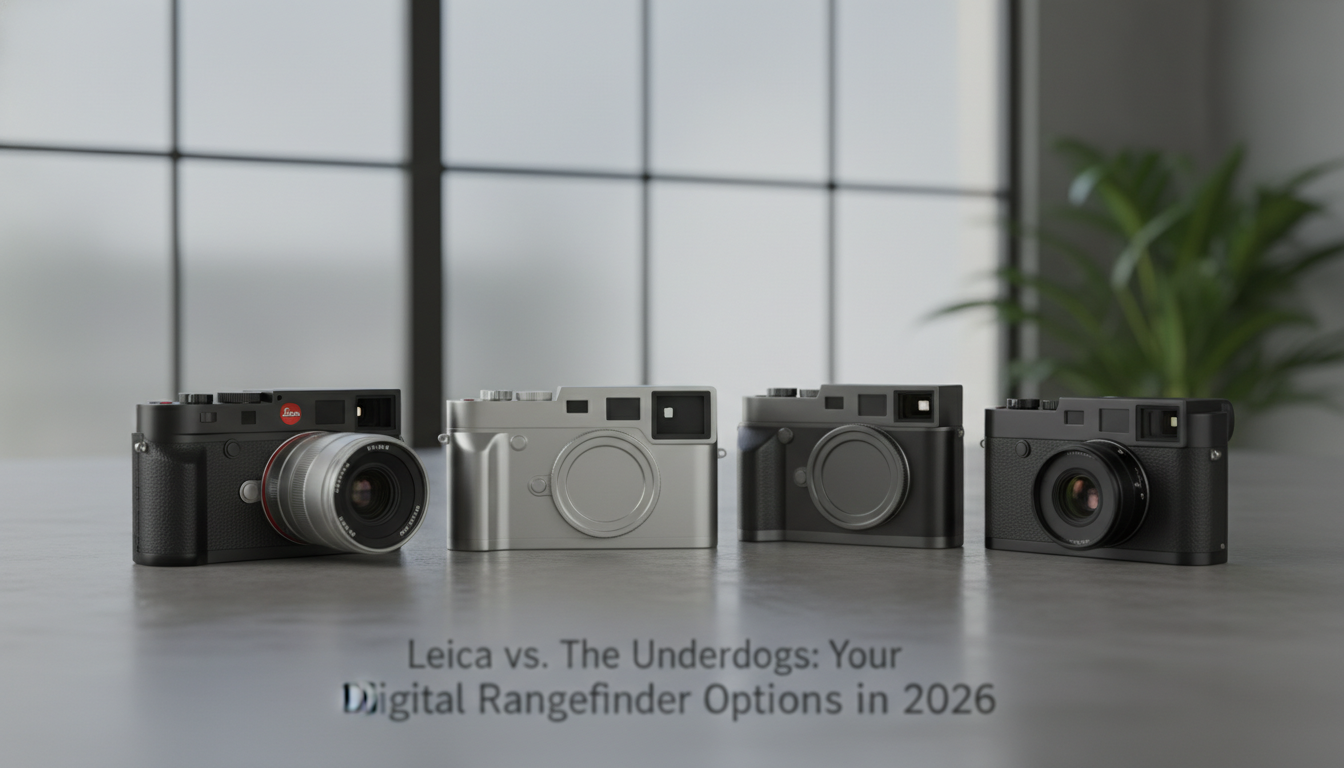
Let’s be honest about the elephant in the room: when most people think digital rangefinder camera, they think Leica. And yes, Leica makes exceptional tools. But the space has evolved dramatically.
The Leica M System: Still the Gold Standard
The Leica M11 continues to set the benchmark for digital rangefinder excellence. Full-frame sensor, impeccable build quality, and that unmistakable Leica rendering that makes every image feel cinematic.
But here’s what the spec sheets don’t tell you: Leica cameras force you to become a better photographer. The manual focus, the limited lens selection, the deliberate controls — everything pushes you toward more intentional image-making.
Pixii: The French Challenger
Pixii represents something genuinely exciting in the rangefinder world. This French manufacturer has created a digital rangefinder that feels both vintage and futuristic. The camera connects to your smartphone for image review and sharing, but maintains that pure optical viewfinder experience while shooting.
We’ve been testing the Pixii extensively, and it’s remarkable how the hybrid approach works. You get the focused shooting experience of a traditional rangefinder with modern connectivity when you need it.
The Epson Legacy
While no longer in production, the Epson R-D1 series deserves mention as the pioneer that proved digital rangefinders could work. These cameras paved the way for everything that followed, and used models still command respect among collectors and working photographers alike.
Why Your Brand Photography Needs the Rangefinder Advantage
Brand photography in 2026 faces a unique challenge: how do you create authentic, human connections in an increasingly digital world? The answer might be counterintuitive — use less technology, not more.
Silent Operation for Authentic Moments
Corporate events, intimate brand sessions, documentary-style content — these scenarios demand discretion. A digital rangefinder camera operates virtually silently, allowing you to capture genuine interactions without disrupting the natural flow of events.
We’ve documented executive meetings, behind-the-scenes brand content, and customer interactions where the silent operation was absolutely critical. Try doing that with a DSLR’s mirror slap echoing through a quiet conference room.
The Aesthetic Advantage
Rangefinder lenses, particularly those from Leica and Zeiss, produce a distinctive look that’s immediately recognizable. The rendering has a three-dimensional quality that makes subjects pop from their backgrounds in a way that’s difficult to replicate with other systems.
This isn’t just pixel-peeping nonsense. Clients notice the difference. The organic bokeh, the micro-contrast, the color rendering — these elements contribute to brand imagery that feels premium and considered.
Building Client Confidence Through Craft
There’s something powerful about showing up to a shoot with a beautifully crafted camera. It signals intentionality and expertise in a way that generic camera gear simply doesn’t. The rangefinder becomes part of your brand story as a creative professional.
Technical Mastery: Getting the Most from Your Digital Rangefinder
Rangefinder photography requires a different skill set than modern autofocus systems. But once you develop these skills, you’ll find yourself creating more consistent, intentional imagery across all your camera systems.
Mastering Manual Focus
The rangefinder focusing system uses a split-image or double-image system that requires practice to master. When properly aligned, the two images merge into perfect focus. This tactile, visual feedback creates a connection between photographer and subject that autofocus simply can’t replicate.
Start with stationary subjects and gradually work up to moving subjects. The key is developing muscle memory for the focus throw of each lens. Most rangefinder photographers can focus accurately without even looking at the rangefinder patch after sufficient practice.
Understanding Parallax
The viewfinder and lens see slightly different perspectives, especially at close distances. Modern digital rangefinders include parallax correction lines in the viewfinder, but understanding this limitation helps you compose more effectively.
For brand work, this means being extra careful with tight headshots and product photography. The slight offset can throw off precise compositions if you’re not accounting for it.
Lens Selection Strategy
Rangefinder systems typically offer fewer lens options than SLR systems, but this limitation becomes a creative advantage. Most professionals settle on two or three focal lengths and become masters of those specific perspectives.
The classic combination remains 35mm and 50mm, with many adding an 85mm for portraits. This constraint forces you to move your feet and think more carefully about composition rather than zooming your way out of creative challenges.
Investment Analysis: Understanding Digital Rangefinder Pricing
Let’s address the cost factor directly. Digital rangefinder cameras aren’t cheap, and the ecosystem can represent a significant investment. But for the right photographer, the returns justify the expense.
Entry-Level Investment Strategy
Used Leica M bodies from previous generations offer an accessible entry point into the rangefinder world. The M240 and M262 still produce exceptional results and can be found at roughly half the price of current models.
Alternatively, the Pixii system offers new-camera warranties and modern features at a lower entry price than Leica. For photographers testing the rangefinder waters, this represents a smart middle ground.
Professional ROI Considerations
For working professionals, the digital rangefinder camera investment pays dividends in several ways. The distinctive image quality commands premium rates. The silent operation opens up shooting opportunities that other systems can’t handle. And the reliability means fewer missed shots due to technical failures.
We’ve calculated that the premium rates we can charge for rangefinder-shot brand content typically recover the camera investment within the first year of professional use.
Resale Value Protection
Leica cameras, in particular, hold their value exceptionally well. Many models actually appreciate over time, making them as much investment as tool. This isn’t true for most camera systems, where depreciation is rapid and inevitable.
| Camera System | Initial Investment | 5-Year Value Retention | Professional Applications |
|---|---|---|---|
| Leica M11 | $8,000+ | 85-90% | Premium brand work, street photography |
| Pixii | $3,000+ | 70-75% | Hybrid digital/analog workflow |
| Used Leica M240 | $4,000+ | 80-85% | Entry-level professional rangefinder |
The Creative Workflow: Integrating Rangefinders into Modern Production
Modern brand work demands efficiency and consistency. How does a deliberately analog camera system fit into digital workflows that prioritize speed and volume?
Hybrid Shooting Strategies
Most professionals don’t shoot exclusively with rangefinders. Instead, they use them strategically for specific types of content where the unique advantages matter most. Intimate brand portraits, executive headshots, documentary-style behind-the-scenes content — these applications play to the rangefinder’s strengths.
We typically pair rangefinder shooting with more conventional camera systems, using each tool where it excels. The rangefinder handles the quiet, contemplative moments while DSLRs or mirrorless cameras cover the high-volume, fast-action requirements.
Post-Processing Considerations
Rangefinder files, particularly from Leica sensors, have distinctive characteristics that require adjusted post-processing approaches. The color science tends toward warmer, more organic rendering that often needs less aggressive correction than files from other systems.
Many rangefinder photographers develop signature editing styles that enhance rather than fight the natural characteristics of their camera system. This consistency becomes part of their brand identity as visual creators.
Client Education and Expectation Management
Clients sometimes need education about why you’re choosing a more limited camera system for their project. The key is framing the limitations as creative advantages. Fewer shots, but more intentional ones. Manual focus that ensures critical sharpness exactly where you want it.
We’ve found that showing before-and-after examples of rangefinder work versus conventional camera work helps clients understand the aesthetic and emotional differences immediately.
Future-Proofing Your Rangefinder Investment
Camera technology evolves rapidly, but rangefinder systems have remained remarkably stable. This consistency represents both an advantage and a consideration for long-term investment planning.
The Timeless Appeal Factor
Unlike digital cameras that become obsolete within a few years, a well-maintained digital rangefinder camera can remain professionally viable for decades. The fundamental shooting experience doesn’t depend on the latest autofocus algorithms or computational photography features.
This longevity makes rangefinders particularly attractive for photographers building long-term creative practices. The camera becomes an extension of your vision rather than a piece of technology that needs constant updating.
Lens Investment Strategy
Rangefinder lenses, especially from premium manufacturers, often outlast multiple camera bodies. A high-quality 50mm Summicron purchased today will likely still be producing exceptional results on cameras not yet invented.
This makes lens investment a particularly smart strategy for rangefinder photographers. Start with one exceptional lens rather than multiple mediocre ones, then build the system gradually around proven focal lengths.
Market Evolution Predictions
The rangefinder market will likely remain niche but stable. New manufacturers may enter the space, but the fundamental appeal — simplicity, reliability, distinctive image quality — ensures continued demand among serious photographers.
We expect to see more hybrid approaches like Pixii’s smartphone integration, bridging the gap between analog shooting experiences and digital workflow requirements.
Making the Decision: Is a Digital Rangefinder Right for Your Creative Work?
The decision to invest in a digital rangefinder system shouldn’t be taken lightly. These cameras demand a different approach to photography and represent a significant financial commitment.
Honest Self-Assessment Questions
Do you find yourself slowing down and becoming more deliberate when shooting constraints are introduced? Are you drawn to the aesthetic qualities of classic photography over modern computational imaging? Do you value the craft aspects of photography as much as the final results?
If you answered yes to these questions, a rangefinder system might align with your creative vision. If you prioritize convenience, speed, and technical automation, you might be better served by other camera systems.
Testing Before Investing
Most major cities have camera rental facilities that stock Leica and other rangefinder systems. Spending a weekend with a rental M11 or Pixii will tell you more about rangefinder compatibility than any amount of online research.
Pay attention to how the shooting experience feels, not just how the images look. The tactile feedback, the focusing experience, the overall workflow — these factors matter as much as image quality for long-term satisfaction.
Building Your System Gradually
Start with a single focal length that matches your natural shooting style. Most photographers gravitate toward either 35mm or 50mm as their primary perspective. Master that focal length completely before adding others.
The constraint of a single lens forces creative growth in ways that having every focal length available simply doesn’t. You’ll develop a more consistent visual voice and learn to see opportunities that match your tools rather than constantly switching perspectives.
Ready to Transform Your Creative Vision?
The right camera system can fundamentally change how you see and create. Whether you’re drawn to the precision of a Leica M11 or the new approach of a Pixii, investing in a digital rangefinder represents a commitment to intentional, craft-focused photography.
Contact Emin Media for a free brand consultation and discover how the right tools can enhance your visual storytelling to new heights.
Enjoyed this article?
Contact Emin Media for a free brand consultation and let's create something amazing together.
Get in Touch