Canon 600D Digital SLR Camera Review: Still Worth It in
Canon 600D Digital SLR Camera: Still Worth It in 2026?
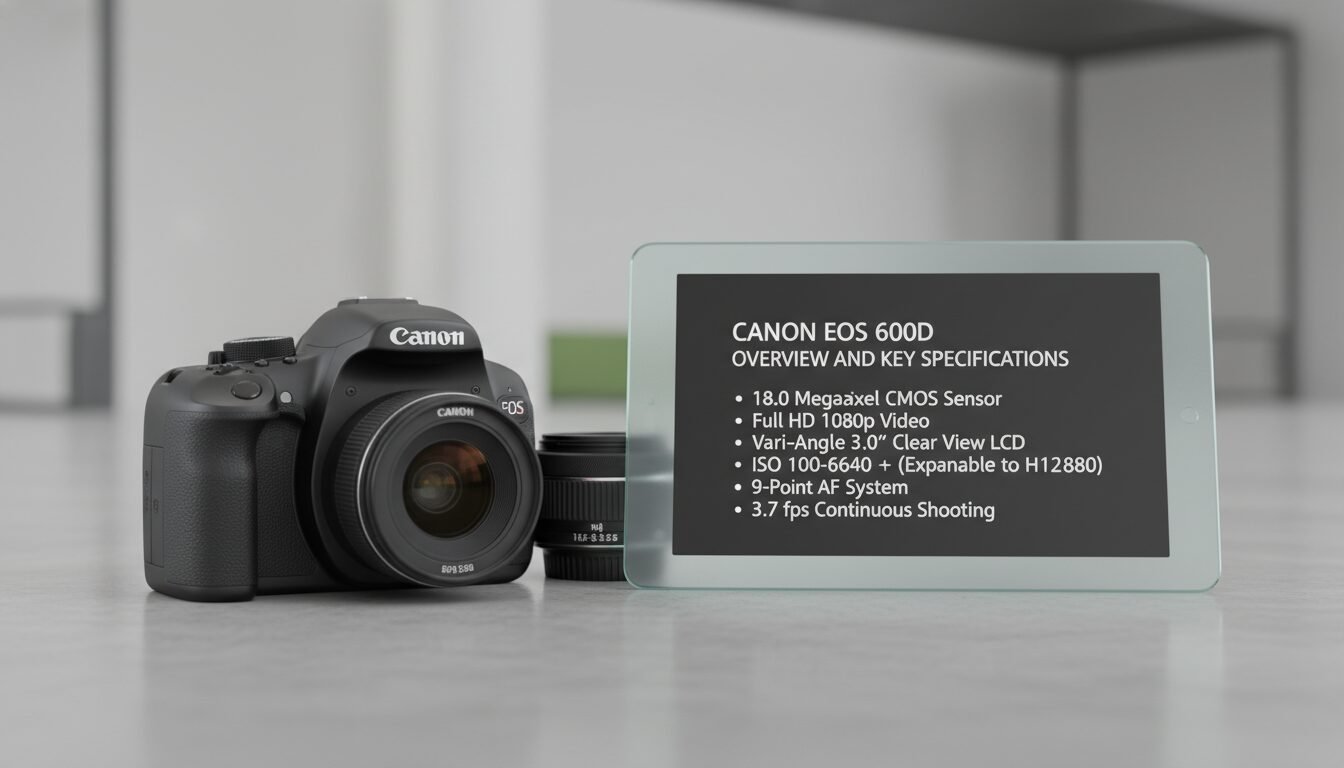
The Canon 600D digital SLR camera is an 18-megapixel APS-C DSLR with Full HD video recording and a flip-out screen. Released in 2011, it remains surprisingly capable for photography beginners and budget filmmakers.
Key Takeaways
- The slr camera packs an 18MP APS-C sensor and Full HD video into an affordable entry-level body.
- Its vari-angle screen and beginner-friendly features make it ideal for learning photography and filmmaking.
- Despite being released in 2011, used models are now available for under $300, offering excellent value for money.
- It lacks modern autofocus speed, 4K video, and built-in WiFi – consider your needs before buying in 2026.
- With the right lenses and techniques, the 600D can still capture stunning images that rival newer cameras.
Overview and Key Specifications
Media” class=”wp-image-9608″ loading=”lazy” width=”1792″ height=”1024″ />The Canon 600D digital SLR camera delivers professional-level image quality at a fraction of today’s camera prices. Its 18-megapixel sensor captures detailed photos suitable for large prints, while Full HD video recording makes it a solid choice for content creators on a budget.
Sensor and Image Quality
The Canon 600D is built around an 18-megapixel APS-C CMOS sensor (22.3 × 14.9 mm) that captures highly detailed images suitable for large prints and heavy cropping. According to Canon’s official product page, this resolution was class-leading at launch and still delivers crisp 5184 × 3456 pixel files. The sensor pairs with a 14-bit DIGIC 4 image processor, which ensures accurate colours, smooth tonal transitions, and effective noise control across the ISO range.
A sensitivity of ISO 100–6400 (expandable to 12,800) allows handheld shooting in dim conditions without flash. In practice, images remain clean up to ISO 1600, while higher values show some grain but remain usable for web-sized output. This performance, first praised in EOSHD’s 600D review, still holds up well against budget mirrorless cameras a decade later.
Autofocus and Metering
The 600D uses a 9-point wide-area autofocus system with one cross‑type centre point sensitive to f/2.8. This arrangement, backed by a 63-zone iFCL metering sensor, provides reliable focus and exposure in everyday scenes. The centre cross-type point delivers extra precision with fast lenses, while the other eight line-type points cover the frame well enough for off-centre compositions. However, tracking moving subjects is limited compared to modern on-sensor phase‑detection systems—expect a hit rate around 70–80% for slow action, dropping noticeably for fast-paced sports or wildlife.
Video Capabilities
For its time, this Canon 600D digital SLR camera was a strong video performer. It records Full HD 1080p at 24, 25, or 30 fps and HD 720p at 50 or 60 fps. A standout feature is full manual control over shutter speed, aperture, ISO, and audio levels during movie capture—rare in entry‑level DSLRs of the era. The built‑in microphone picks up ambient sound, but the 3.5 mm mic input lets you attach an external microphone for cleaner audio, a must for serious video projects.
Design and Build Quality
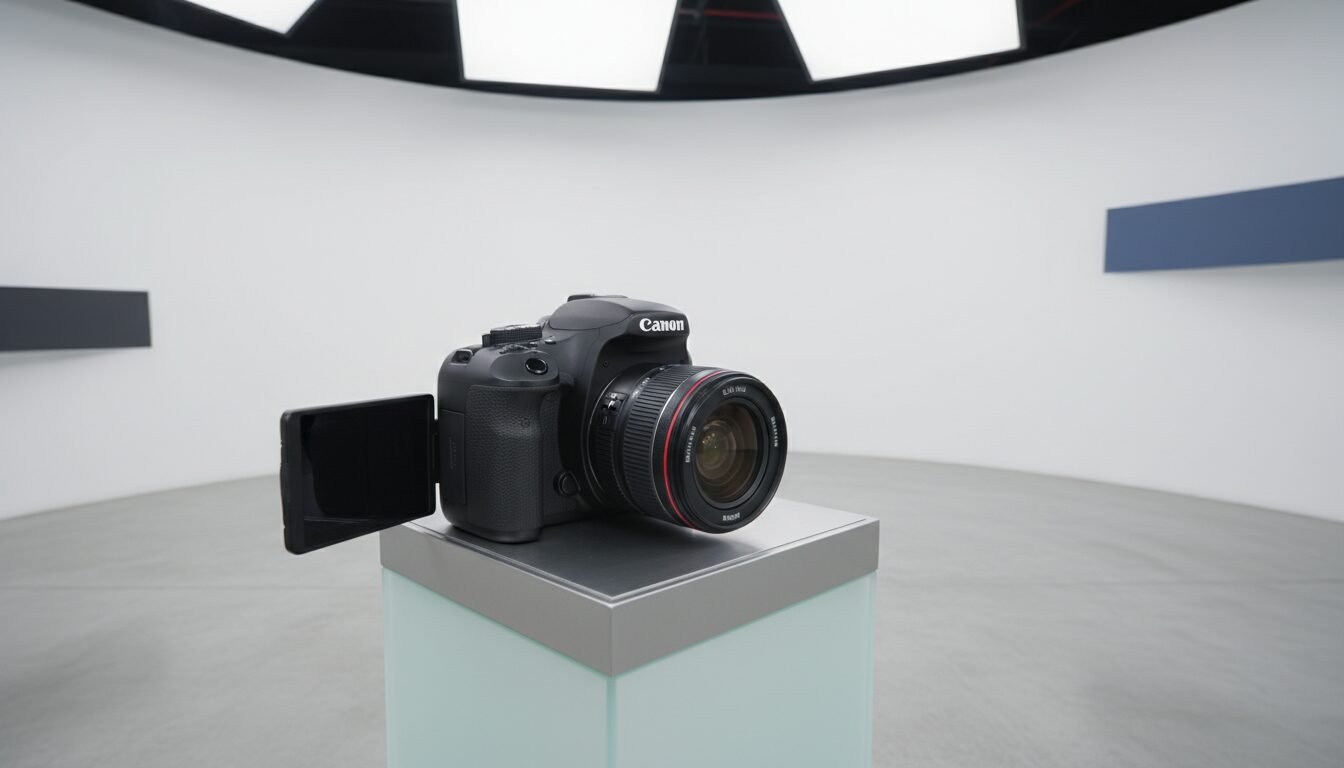
The Canon 600D digital SLR camera feels solid despite its entry-level positioning. Its thoughtful design makes complex photography concepts accessible to newcomers without sacrificing the manual controls that enthusiasts demand.
Ergonomics and Handling
The camera measures 133.1 × 99.5 × 79.7 mm and weighs 560 g with battery and card. The polycarbonate body feels solid for its class, with a deep grip that provides a secure hold even with larger lenses. Buttons are well spaced, and the mode dial on the top plate gives quick access to all shooting modes. The optical pentamirror viewfinder offers 95% frame coverage and a magnification of 0.85×—adequate for framing, though not as bright as the 100% pentaprism finders on Canon’s higher-tier models.
Vari-angle LCD Screen
One of the 600D’s defining features is its 3.0-inch vari-angle Clear View LCD with 1,040,000 dots. The screen flips out and rotates, making it easy to shoot from high, low, or front-facing angles—especially useful for vlogging, macro work, and video. The 3:2 aspect ratio matches the sensor, so still images fill the display without black bars. An on-screen feature guide overlays explanations of camera functions, helping beginners learn on the go.
Battery Life and Storage
The LP-E8 lithium-ion battery delivers roughly 440 shots per charge under CIPA testing standards. For a full day of photography, carrying a spare is recommended. Storage relies on SD/SDHC/SDXC memory cards—the camera supports UHS‑I speeds, so a Class 10 or higher card is sufficient for both burst shooting and video recording.
Performance in Photography
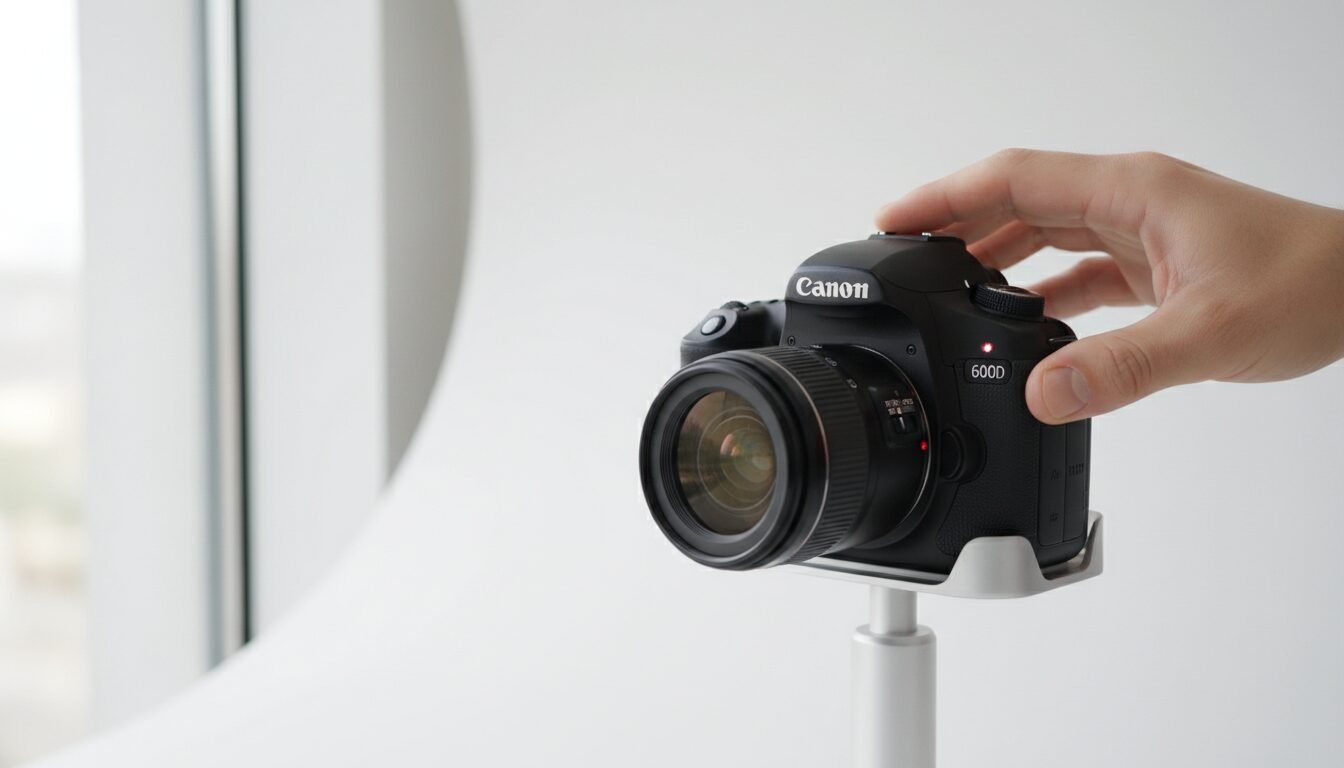
The Canon 600D digital SLR camera excels in controlled lighting but shows its age when pushed to extremes. Understanding its strengths helps you work within its capabilities for consistently great results.
Continuous Shooting Speed
The 600D can fire at 3.7 frames per second, enough for casual action, children’s sports, and wildlife encounters. Buffer depth is 34 JPEGs or just 6 RAW frames. That means after about a second of RAW shooting, the camera slows down noticeably. If fast action is your main subject, the 7D or later 80D would be better choices, but for most family and travel scenes the 3.7 fps rate is perfectly adequate.
Low‑light Performance (ISO)
At ISO 100 the 600D produces clean, detailed images with excellent dynamic range. At ISO 800, a fine luminance grain becomes visible but doesn’t harm print quality. Even at ISO 1600–3200, noise reduction does a good job of preserving colour accuracy, though fine details soften. The expandable ISO 12,800 setting is best reserved for emergencies, as it introduces heavy noise and reduces contrast. Overall, the camera’s low‑light ability remains competitive for an APS‑C sensor of its generation.
Creative Filters and Basic+
Post‑shoot creative filters include Toy Camera, Soft Focus, Miniature, Grainy Black & White, and Fish Eye—applied to both RAW and JPEG files. Basic+ technology lets you adjust ambience and lighting effects in automatic modes, adding warmth or coolness to suit the scene. These tools make it easy to add a personal touch without computer editing.
Video Recording Features
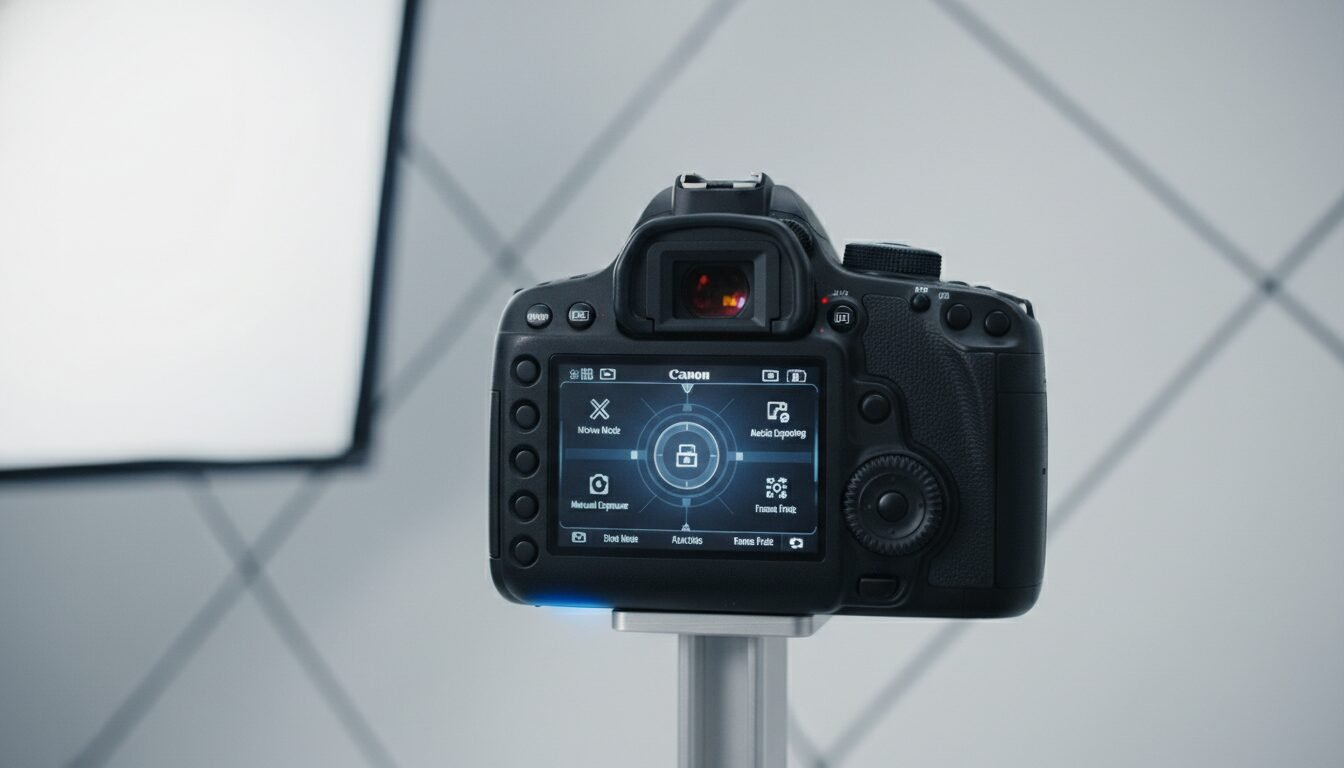
Video recording on the Canon 600D digital SLR camera was revolutionary for its price point in 2011. While 4K cameras dominate today’s market, the 600D’s Full HD output still looks professional when properly lit and graded.
Full HD 1080p Recording
The 600D was among the first entry‑level DSLRs to offer Full HD with full manual control. You set aperture, shutter speed, and ISO independently, and the camera’s 14‑bit processor delivers smooth motion at up to 30 fps. While today’s 4K‑capable bodies have eclipsed it in resolution, the quality of the 1080p output is still very usable for YouTube, online courses, and family films.
Movie Crop Mode and Digital Zoom
A unique addition is the 3×–10× digital zoom in 1080p. It crops into the centre of the sensor, providing a telephoto reach without losing optical quality. EOSHD’s reviewer noted that this “crop mode” can be creatively useful, though it isn’t true lossless zoom. For filmmakers, it offers extra flexibility when you can’t change lenses.
Manual Audio Control and External Mic
Sound matters. The 600D provides manual audio level adjustment (64 steps) during recording, visible on the LCD. The 3.5 mm stereo microphone jack accepts powered mics, drastically improving audio quality over the internal monaural mic. Paired with a $50 shotgun mic, the 600D becomes a capable interview camera.
Canon 600D Digital SLR Camera Compared to Rivals
Understanding where the Canon 600D digital SLR camera fits in Canon’s lineup helps you decide if it’s the right choice or if spending a bit more (or less) makes sense for your needs.
600D vs 550D: What’s New?
The 550D shares the same sensor and processor, but the 600D adds the vari-angle screen, an on-screen feature guide, wireless flash control, and the movie crop mode. If you don’t need the articulating screen, a second‑hand 550D may be even cheaper, but for most beginners the 600D’s extra usability is worth the small premium.
600D vs 60D: Key Differences
The 60D sits one step above. It offers a faster burst rate (5.3 fps), a top‑panel LCD, a pentaprism viewfinder with 96% coverage, and a more robust body. However, the 600D matches or beats the 60D in video features: both have articulating screens, but the 600D introduces the movie crop mode. If video is a priority, the 600D often represents better value.
600D vs 650D: The Next Generation
The 650D replaced the 600D in 2012, adding a touchscreen, phase‑detection autofocus during video, and GPS via an optional accessory. While those upgrades improve video tracking and live view, the core image quality remains similar. The 650D commands a higher used price, so the 600D retains a strong budget appeal.
| Feature | Canon 600D | Canon 550D | Canon 60D | Canon 650D |
|---|---|---|---|---|
| Vari-angle LCD | Yes | No | Yes | Yes (touch) |
| Feature Guide | Yes | No | No | No |
| Creative Filters | Yes | No | Yes | Yes |
| Wireless Flash Control | Yes | No | Yes | Yes |
| Movie Crop Mode | Yes | No | No | No |
| Continuous Shooting | 3.7 fps | 3.7 fps | 5.3 fps | 5.0 fps |
| Video AF System | Contrast detect | Contrast detect | Contrast detect | Phase detect |
| Launch Price (body) | $799 | $799 | $1,099 | $849 |
Using the Canon 600D in 2026: Is It Still Worth It?
The Canon 600D digital SLR camera faces stiff competition from modern mirrorless cameras, but its combination of image quality, lens ecosystem, and rock-bottom used prices keeps it relevant for specific users.
Advantages for Beginners
The 600D teaches the fundamentals of exposure, composition, and manual control without overwhelming you with features. Its RAW files are compatible with every major editing program, and the huge ecosystem of EF‑S lenses gives endless creative options. Photographers switching from smartphones will immediately notice the natural background blur and low‑light quality that a large sensor delivers.
Limitations and What’s Missing
In 2026, you’ll feel the absence of modern conveniences. There’s no built‑in WiFi or Bluetooth for image transfer, no 4K video, and the 9‑point AF struggles with fast action. Live view focusing is slow, relying on contrast detection, so using the viewfinder is often preferred. Battery life is okay, but newer mirrorless cameras can shoot over 500 frames per charge.
Second‑hand Prices and Value
Used Canon 600D bodies now sell for $150–$250, often with a kit lens. This makes it one of the cheapest ways to enter interchangeable‑lens photography. For the cost of a modern point‑and‑shoot, you gain access to a massive lens system and creative control that will outlive your next phone upgrade. If budget is your main concern, the 600D remains a smart buy.
Pros and Cons
Pros
- Excellent image quality from 18MP APS-C sensor
- Flip-out screen perfect for video and creative angles
- Full manual control over video recording
- Huge selection of compatible EF and EF-S lenses
- Beginner-friendly feature guide and interface
- Exceptional value on the used market
Cons
- No 4K video recording capability
- Slow live view autofocus performance
- Limited 9-point AF system
- No built-in WiFi or Bluetooth connectivity
- Modest battery life compared to modern cameras
- Plastic build feels less premium than higher-end models
Unique Use Cases for the Canon 600D
The Canon 600D digital SLR camera shines in specific scenarios where its unique features and affordable price point create opportunities that expensive modern cameras can’t match.
Astrophotography with the 600D
The camera’s 18‑megapixel sensor and good high‑ISO performance make it a popular choice for astrophotography. When paired with a fast wide‑angle lens and a sturdy tripod, you can capture sharp Milky Way shots with 20‑second exposures at ISO 3200. The articulating screen also helps when the camera is pointed skyward on a star tracker, saving your neck from awkward viewing angles.
Time‑lapse Photography
While the 600D lacks an internal intervalometer, connecting a $20 external timer remote unlocks time‑lapse shooting. The camera’s large buffer and battery life allow you to capture hundreds of frames, which can be stitched into stunning day‑to‑night sequences. Videographers often use this technique to add production value to projects at minimal cost.
Using Legacy Lenses
Thanks to the short flange distance of the EF mount, many vintage manual‑focus lenses from brands like M42, Nikon F, and Pentax K can be adapted with cheap glass‑less adapters. This opens up a world of character‑filled optics—Helios 44‑2 swirly bokeh, Super‑Takumar sharpness, or Nikon AI‑S rendering—at bargain prices. Manual focusing is aided by the Live View magnification, turning the 600D into a digital back for classic glass.
Tips to Get the Most from Your Canon 600D Digital SLR Camera
Maximizing the Canon 600D digital SLR camera’s potential requires understanding its strengths and working around its limitations. These proven techniques will elevate your photography immediately.
Step‑by‑Step Guide to Better Image Quality
Step 1: Shoot RAW. The 14‑bit files retain far more shadow and highlight detail than JPEGs, giving you greater flexibility in post‑processing. Canon’s own Digital Photo Professional software is free and works well for beginners.
Step 2: Use a neutral picture style. Setting Picture Style to “Neutral” or “Faithful” with contrast and sharpness dialled down prevents the camera from over‑processing your images. You can always add punch later in editing.
Step 3: Master manual white balance. A custom white balance using a grey card eliminates colour casts in mixed lighting. This is especially helpful for product or portrait photography.
Step 4: Invest in good glass. The kit 18‑55mm IS lens is a fine starter, but upgrading to a prime like the Canon EF 50mm f/1.8 STM ($125) instantly transforms sharpness and low‑light ability.
Step 5: Control your focus point. Instead of letting the camera auto‑select a point, manually choose the centre point, lock focus, and recompose. This simple technique dramatically improves keeper rate.
Recommended Lenses and Accessories
To extend the 600D’s capabilities, consider these affordable additions:
- Canon EF‑S 24mm f/2.8 STM – a tiny pancake lens perfect for street and travel.
- Canon EF‑S 55‑250mm f/4‑5.6 IS STM – a budget telephoto zoom for wildlife and sports.
- Neewer TT560 flash – a manual speedlite that works wirelessly with the 600D’s integrated flash controller.
- Intervalometer remote – essential for time‑lapse and long‑exposure bulb mode.
- Extra LP‑E8 battery – always carry a spare for all‑day shooting.
Ready to explore what your Canon 600D digital SLR camera can achieve? Whether you’re shooting your first portrait series or planning a documentary project, the right creative guidance makes all the difference. Contact Emin Media for a free brand consultation and let’s build something bold together.
Frequently Asked Questions
How old is the Canon 600D camera?
Canon released the 600D in February 2011, making it over 15 years old as of 2026. Despite its age, many photographers still use it successfully for both stills and video work.
Is the Canon 600D any good?
Yes, especially for beginners and budget-conscious creators. It captures excellent stills in good light, shoots Full HD video with manual control, and benefits from a huge range of lenses. Its main drawbacks are slow live view autofocus and no 4K video capability.
Is the Canon EOS 600D a professional camera?
No, it is an entry‑level DSLR designed for enthusiasts and beginners. However, professionals have used it for certain projects—EOSHD reported that similar DSLRs have shot Hollywood scenes. With proper technique, the 600D can deliver professional‑looking results in controlled environments.
What lenses are compatible with the Canon 600D?
The camera accepts all Canon EF and EF‑S lenses, as well as third‑party options from Sigma, Tamron, and others. With simple adapters, you can also use many vintage manual‑focus lenses from different manufacturers.
Does the Canon 600D shoot 4K video?
No, its maximum resolution is Full HD 1080p at 24/25/30 fps. For 4K recording, you would need a newer model like the Canon R50 or M50 Mark II.
Enjoyed this article?
Contact Emin Media for a free brand consultation and let's create something amazing together.
Get in Touch