Camera Film vs Digital: Which Should You Shoot?
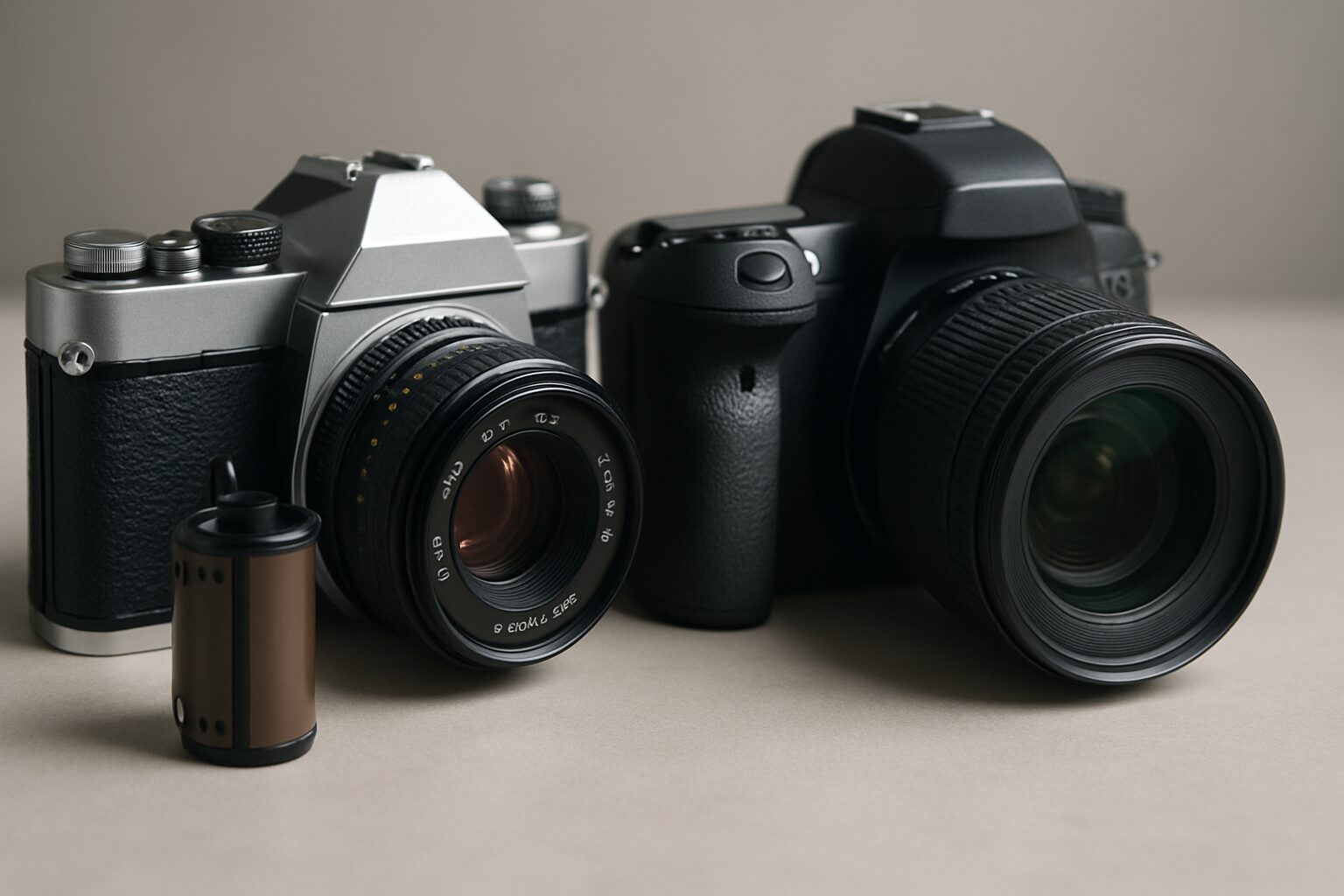
Camera film vs digital is the choice between chemical-based image capture and electronic sensor technology, each producing distinct results in cost, aesthetics, and workflow. Film delivers organic grain and built-in color science. Digital delivers speed, volume, and instant feedback.
Key Takeaways
- A 35mm fine-grain ISO 100 film frame resolves roughly 20 megapixels; medium format film pushes to around 83 megapixels.
- Film costs approximately $0.50–$1.00 per shot including development and scanning; digital costs fractions of a cent per frame after equipment purchase.
- Digital cameras like the Sony A7R V offer burst modes of 20–30 fps and ISO ranges from 50 to 400,000+, making them essential for action and commercial work.
- Film stocks like Kodak Portra 400, Kodak Ektar, and Ilford HP5 bake in color palettes that digital post-processing only approximates.
- Neither format is environmentally clean: film generates chemical and plastic waste, while digital creates manufacturing energy demands and e-waste.
- Most serious photographers in 2026 use both: digital for professional deadlines, film for personal and artistic projects.
| Criteria | Digital Photography | Film Photography |
|---|---|---|
| Cost per shot | Negligible after purchase | $0.50–$1.00 per frame (film + dev) |
| Resolution (35mm eq.) | 24–60+ megapixels | Equivalent to ~20 MP (fine-grain ISO 100) |
| Convenience | Instant review, easy sharing | Delayed gratification, requires dev/scan |
| Learning curve | Fast due to feedback loop | Slower, rewards patience |
| Built-in aesthetic | Neutral and editable | Film stock character baked in |
| Environmental impact | Energy use and e-waste | Chemical and plastic waste |
Camera Film vs Digital: What Is the Real Difference?
The vs digital divide comes down to physics. Digital sensors convert light into electrons pixel by pixel, storing a numeric value for each point of the image. Film relies on a chemical emulsion of silver halide crystals that physically change when photons strike them. That fundamental split creates downstream divergences in resolution, noise character, cost structure, and creative workflow that no amount of post-processing can fully erase.
According to Wikipedia’s detailed comparison of digital and film photography, a single 36x24mm frame of ISO 100 fine-grain film holds roughly 20 million pixels worth of information, approximately 23,000 pixels per square millimeter. Medium format 60x60mm film pushes that to around 83 million pixels, and large format 4×5 inch sheets can exceed 298 million pixels. Today’s flagship mirrorless cameras routinely capture 50–60 megapixels, with medium-format digital backs reaching 150 MP and beyond.
Film grain is the visible texture of randomly oriented silver halide crystals in the emulsion. Because of that random arrangement, film avoids the moiré artifacts that digital sensors with rigid pixel grids can produce. For color photography, modern CMOS sensors exhibit far less noise than film at equivalent ISOs, according to established photographic research. Black-and-white shooters, though, often prefer the organic grain of film precisely because it adds a timeless, tactile quality that no digital filter fully replicates.
“Film is the handwritten letter of the digital age: slower, more deliberate, and imbued with personal touch. The act of choosing each frame carefully changes how you see.” – Hannah Lee, analog photographer
Pros and Cons of Camera Film vs Digital
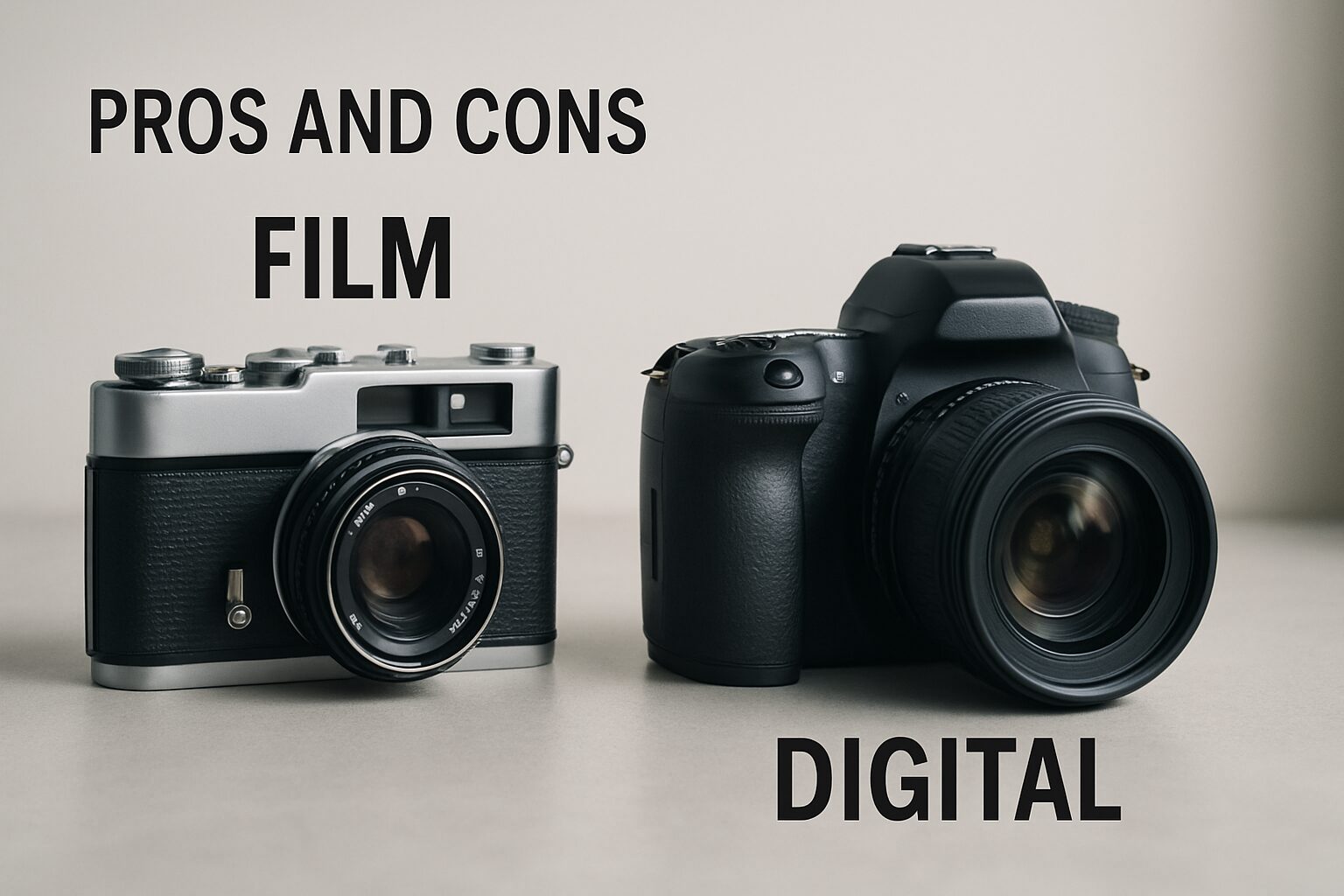
Pros of Digital Photography
- Instant feedback: An LCD screen or electronic viewfinder lets you review exposure, composition, and focus immediately. Photography educators consistently report that digital’s real-time feedback loop helps students master manual settings in weeks rather than months.
- Cost efficiency at scale: After the initial body and lens purchase, every additional frame costs essentially nothing. A single 512 GB memory card holds over 10,000 RAW files, enabling high-volume shoots without budgeting per frame.
- Speed and versatility: Cameras like the Sony A7R V offer burst modes of 20–30 fps, eye-tracking autofocus that locks in milliseconds, and ISO ranges from 50 to 400,000+. You can change sensitivity shot by shot for total flexibility.
- Editing latitude: RAW files allow non-destructive white balance, exposure, and color adjustments, giving you a blank canvas for creative post-processing in tools like Adobe Lightroom or Capture One.
Cons of Digital Photography
- Over-shooting risk: Zero cost per frame encourages a spray-and-pray approach, resulting in terabytes of near-identical images that demand hours of culling before any editing begins.
- Moiré and pattern noise: Digital’s regular pixel matrix produces false color artifacts on fine textures, and high-ISO shots often show fixed-pattern noise, especially in the blue channel.
- Sensor aging and obsolescence: A ten-year-old digital camera can feel technologically dated, whereas a 50-year-old film SLR like the Nikon FM2 still operates perfectly without a single battery.
- E-waste burden: Rapid upgrade cycles contribute to electronic waste. The UN Global E-waste Monitor reported 53.6 million metric tons of e-waste generated globally in 2019, a figure that has continued climbing each year since.
Pros of Film Photography
- Organic, non-repeating look: Film grain is natural and random. Dynamic range in film is non-linear, meaning highlights roll off gently instead of clipping abruptly, a quality digital sensors still struggle to fully replicate.
- Baked-in color science: Each film stock delivers a distinct palette. Kodak Portra 400 excels at soft skin tones, Kodak Ektar provides bold saturation, Ilford HP5 lends gritty black-and-white, and CineStill 800T casts a dreamy tungsten glow. As The Darkroom notes, these looks require little to no editing after scanning.
- Tangible archive: Properly stored negatives can last over 100 years, providing a physical safeguard against data corruption or format obsolescence that no cloud backup can fully match.
- Mindful, intentional process: With only 24 or 36 exposures per roll, every frame carries weight. No LCD screen keeps your eye on the subject, building a deeper connection to the moment you’re capturing.
Cons of Film Photography
- Cost and turnaround time: A roll of 36-exposure Kodak Portra 400 costs roughly $15, plus $12–$20 for development and high-resolution scans, totaling approximately $0.75–$1.00 per shot. Lab turnaround ranges from 1 hour to 2 weeks depending on the lab.
- Fixed ISO and limited exposures: You’re locked to the film’s box speed for an entire roll, making it difficult to switch between bright outdoor light and dim interiors without changing rolls and wasting frames.
- Chemical waste: The C-41, E-6, and black-and-white development processes use chemicals that can harm aquatic ecosystems if not disposed of correctly. Spent canisters and backing paper add to plastic pollution.
- No instant preview: Without an LCD, you won’t know if you missed focus until days or weeks later, which can be costly for beginners still dialing in their technique.
How to Decide Between Camera Film vs Digital in 5 Steps
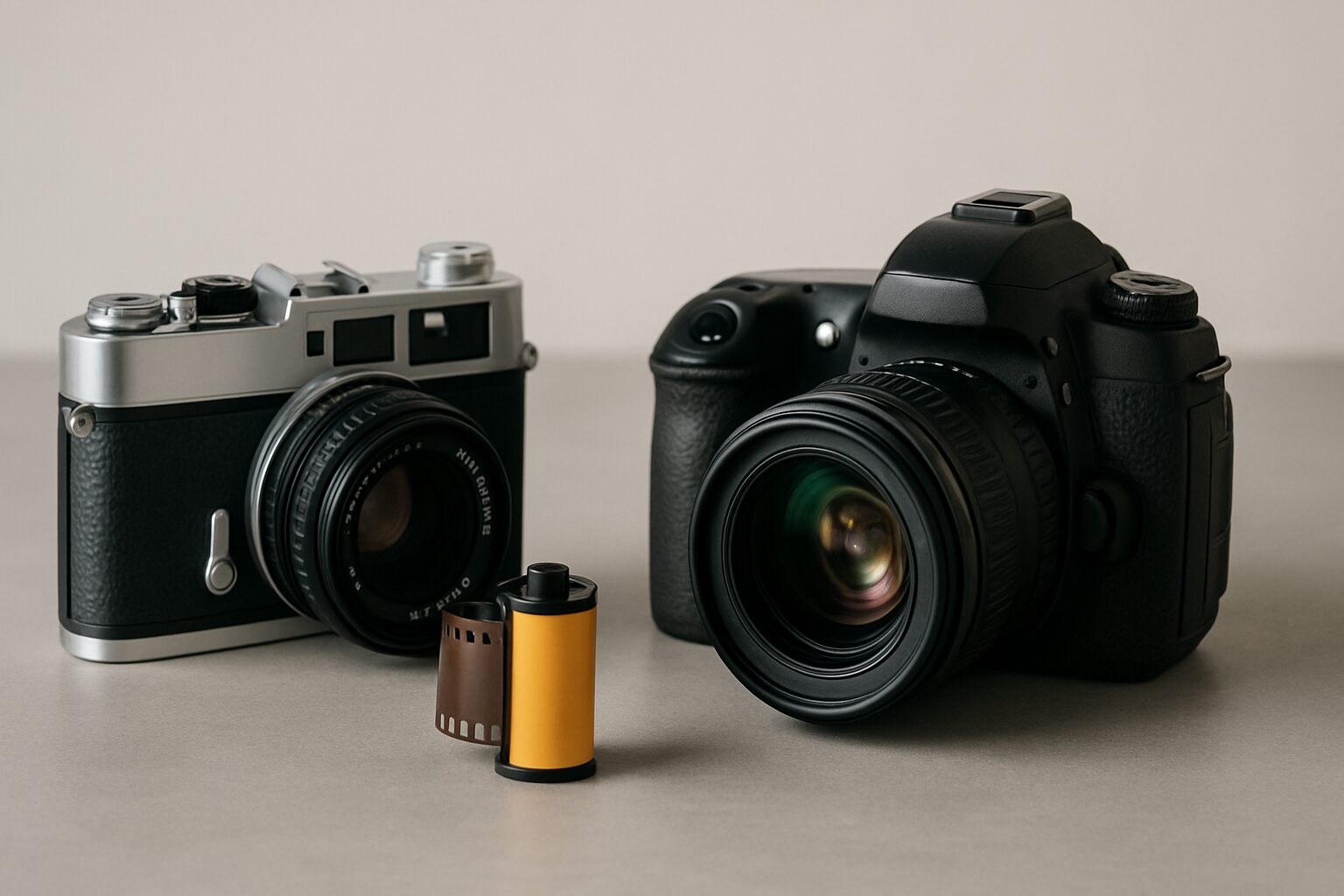
- Define your primary subject: Action and wildlife favor digital’s speed and burst capability. Portraiture and landscapes benefit from film’s tonal latitude and built-in color science.
- Calculate your true budget: A solid mirrorless digital kit runs $800–$3,000 upfront but costs fractions of a cent per image afterward. Film spreads the expense across every shutter press, becoming more expensive than digital after roughly 2,000–3,000 frames.
- Assess your patience for process: If the suspense of waiting for scans and the tactile ritual of loading a roll sounds appealing rather than frustrating, the analog workflow will reward you deeply.
- Consider your editing habits: If you spend hours in Lightroom trying to replicate film presets, shooting actual Portra or Ektar might save you significant time at the computer and produce more authentic results.
- Try a hybrid approach: Many photographers keep a digital body for client work and a vintage 35mm SLR like the Nikon FM2 or Canon AE-1 for personal projects, blending the practical strengths of both formats.
When to Choose Digital Over Film
Digital wins decisively when speed, volume, and reliability are non-negotiable. Wedding photographers routinely deliver 800 or more edited images within days of the event, a workflow that film simply cannot support at that pace. Sports shooters covering major events in 2026 rely on 40+ megapixel mirrorless cameras with global shutters to capture and transmit images within seconds of the action. Digital also dominates in low-light environments, where ISO 12,800 and above is routine, and for any situation requiring rapid sequence shooting or immediate client review.
Choose digital if you: shoot commercially, need immediate client previews, cover fast-moving subjects, or want to build technical skills quickly through the instant feedback loop that only digital provides.
“The this type of digital question is really a question about your relationship with time. Digital compresses it. Film stretches it. Both produce extraordinary images when used with intention.” – Emin Media Creative Team
When to Choose Film Over Digital
Film excels when the experience itself is part of the creative output. Analog cameras like the all-mechanical Nikon FM2 operate without batteries, inviting you to rely entirely on your eye and a handheld light meter. The anticipation of receiving scans after a trip heightens memory and emotional connection to the images in a way that scrolling through a camera’s LCD simply does not. For photographers who want to disconnect from screens and reconnect with craft, the camera film vs digital comparison tips decisively toward analog.
Choose film if you: love the look of Portra 400 straight out of the scanner, want to disconnect from screens, prioritize archival security with physical negatives, or crave a more meditative creative process where every frame is a considered decision.
Camera Film vs Digital for Beginners: Where to Start
For beginners, the camera film vs digital choice shapes not just the images but the entire learning experience. Digital is the faster teacher. The immediate feedback loop means you can shoot 100 frames in an afternoon, review every mistake, and adjust in real time. Entry-level mirrorless cameras from Sony, Fujifilm, and Canon now start below $800 with a kit lens, making digital accessible without a massive upfront commitment.
Film, on the other hand, teaches discipline first. Shooting a 36-exposure roll over a weekend and waiting for the scans forces you to think before pressing the shutter. Many photographers credit film with building their compositional instincts faster than any tutorial. A used Canon AE-1 or Pentax K1000 can be found for $50–$150, making film entry surprisingly affordable on the camera side. The ongoing cost of film and development is where the budget adds up over time.
Our recommendation for most beginners: start with digital to learn the technical fundamentals, then pick up a used 35mm SLR to develop intentionality and compositional discipline. You can explore more about building a photography brand identity in our Emin Media blog, and if you’re thinking about how visual storytelling fits into your broader brand strategy, our creative services page covers how we approach visual content for brands.
The Environmental Reality of Camera Film vs Digital
Neither format gets a clean environmental record. Film development requires C-41, E-6, and black-and-white chemistry that can harm aquatic ecosystems if improperly disposed of, plus plastic canisters and backing paper that add to landfill waste. According to a ACS ChemMatters analysis, the environmental footprint of each format depends heavily on usage patterns and local recycling infrastructure.
Digital’s environmental cost is front-loaded in manufacturing. Producing a single digital camera body requires rare earth minerals, significant energy, and complex supply chains. The UN Global E-waste Monitor documented 53.6 million metric tons of e-waste in 2019 globally, and the photography industry’s rapid upgrade cycles contribute to that figure. The honest answer: shoot less and shoot better, regardless of which format you choose.
Camera Film vs Digital: The Final Word
By 2026, the camera film vs digital conversation has matured well beyond a binary rivalry. Most serious photographers now treat each format as a distinct tool for different creative visions. Digital is the pragmatic workhorse: essential for commercial deadlines, action photography, and anyone who values technical precision and immediacy. Film is the deliberate companion: indispensable for those seeking an unhurried, tangible, and emotionally resonant image-making process. The best camera system is the one that makes you want to pick it up and shoot.
Ready to build a visual identity that’s as intentional as your photography? Contact Emin Media for a free brand consultation and let’s build something bold together.
Frequently Asked Questions
Is film still better than digital in 2026?
Film is not universally better, but it offers a distinct character: organic grain, smooth highlight transitions, and pre-built color palettes that many photographers find more emotionally resonant than digital’s clinical precision. The camera film vs digital question ultimately comes down to aesthetic preference and creative intent, not technical superiority.
Does film have higher resolution than digital?
It depends on the format. A 35mm fine-grain film frame resolves roughly 20 megapixels, competitive with entry-level digital but not with high-end sensors. Medium format film reaches around 83 megapixels and large format exceeds 298 megapixels, though modern professional digital backs at 150 MP are closing that gap significantly.
What can film do that digital can’t?
Film produces genuine random grain and a non-linear light response that prevents harsh highlight clipping, creating an organic look that digital simulations only approximate. It also provides a physical negative archive with no reliance on batteries, proprietary file formats, or cloud storage services that may not exist in 20 years.
Is it cheaper to shoot film or digital?
Digital is cheaper over time. After the initial equipment investment, each frame costs fractions of a cent. Film runs approximately $0.50–$1.00 per shot including development and scanning, so a photographer shooting heavily could recoup the cost of a digital camera body within 2 years compared to ongoing film expenses.
Does film photography harm the environment more than digital?
Neither format is footprint-free. Film generates more immediate chemical and plastic waste during development, while digital’s environmental impact concentrates in manufacturing energy and e-waste at end of life. According to the ACS ChemMatters analysis, the better choice depends on usage patterns, lab practices, and local recycling infrastructure.
Can I learn photography faster with a digital camera?
Yes. Digital’s instant feedback lets you see the effect of aperture, shutter speed, and ISO changes immediately, compressing the learning timeline significantly. Many photography educators report that students using digital master manual exposure in roughly half the time it takes when shooting film exclusively.
Enjoyed this article?
Contact Emin Media for a free brand consultation and let's create something amazing together.
Get in Touch