Best Digital Filming Camera Guide 2026
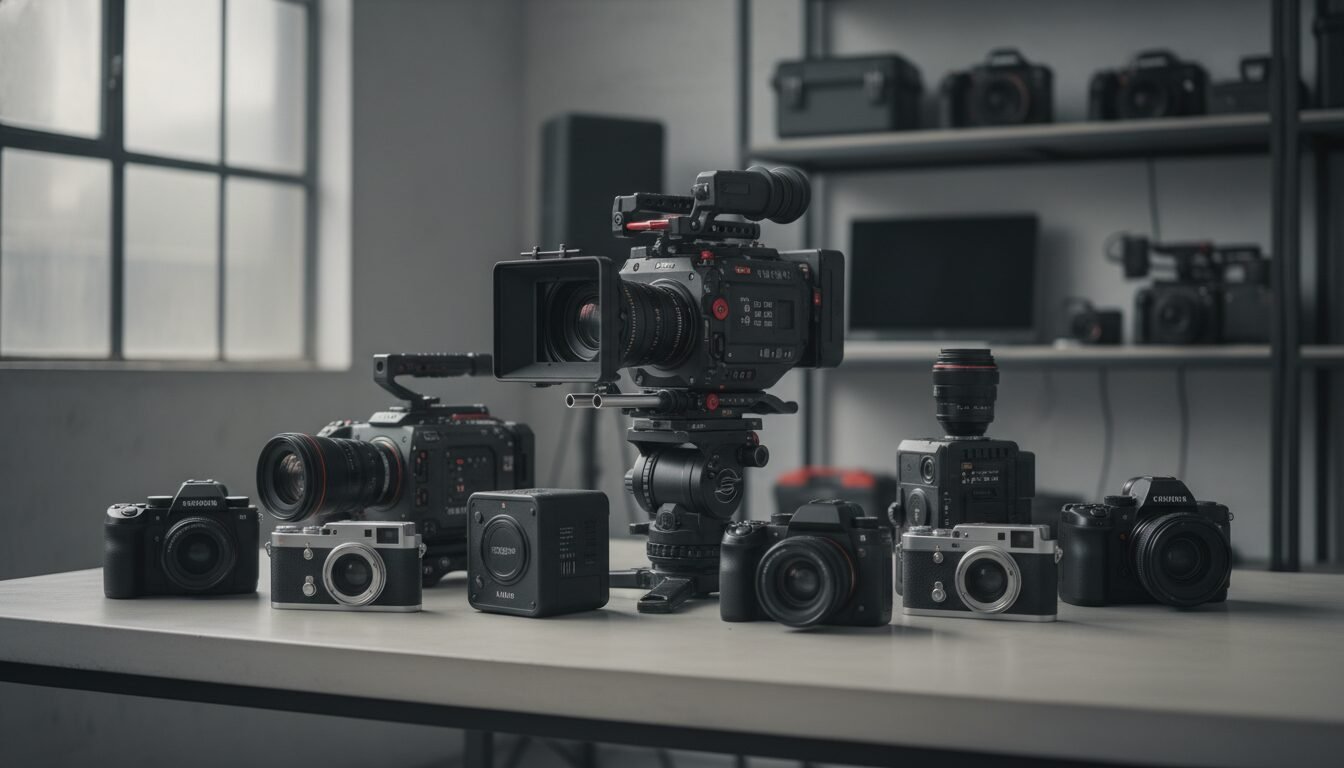
A digital filming camera is a digital device that captures stills or video while replicating the aesthetic of analog film, through built-in simulations, retro controls, or cinema-grade recording. In 2026, models like the Fujifilm X100VI, Nikon Zf, and Blackmagic Pocket Cinema 4K cover every budget and creative style.
Key Takeaways
- filming cameras split into two main types: film-simulation mirrorless bodies and dedicated cinema cameras.
- Fujifilm’s 20 built-in film simulations and Nikon’s tactile brass dials replicate the film experience in stills.
- Professional options from Blackmagic, Canon, and Sony output 4K to 8K RAW for cinematic video production.
- Budget picks like the Camp Snap ($69.99) and used CCD cameras deliver authentic film looks for under $200.
- Key 2026 upgrades include AI-driven film grain, IBIS on retro bodies, and half-frame digital sensors entering the market.
Understanding the Digital Filming Camera Landscape
Media” class=”wp-image-9835″ loading=”lazy” width=”1792″ height=”1024″ />The term this type of camera covers two distinct, and sometimes overlapping, categories. First, there are mirrorless and compact cameras that use built-in film simulations, vintage-inspired controls, and retro designs to replicate shooting analog film. Second, there are professional digital cinema cameras purpose-built for motion picture capture, offering high resolution, RAW recording, and cinema-grade color science. Both segments have seen strong growth, with Amazon listing over 7,000 digital film cameras, reflecting the scale of demand.
Film-Simulation Cameras vs. Cinema Cameras
A film-simulation camera is defined by its ability to mimic classic film stocks straight out of the box. Fujifilm pioneered this approach with its Film Simulation modes, now numbering 20 distinct looks including Classic Chrome, Nostalgic Neg., and Acros. Nikon’s Zf adds physical dials and a dedicated monochrome mode that emulates the grain structure of Tri-X film. On the cinema side, cameras like the Sony FX3 and Canon EOS R5 C are designed for high-end video production, supporting DCI 4K at up to 120 fps and wide-gamut color spaces such as S-Log3 and Cinema Gamut. While both types capture moving images, cinema variants put video codecs, audio I/O, and thermal management first.
The 2026 Market: A Hybrid Renaissance
According to MPB’s 2026 buyer research, the most sought-after this kind of camera today blends stills and video capabilities in a single body. Hybrid creators want film-like JPEGs and 10-bit 4:2:2 internal recording without carrying two separate systems. Models like the Panasonic Lumix S5IIX and Nikon Zf are gaining traction because they offer 5.9K open-gate video alongside tactile, film-inspired controls. The rise of computational photography, specifically AI-driven grain and light-leak overlays, further blurs the line between analog nostalgia and digital precision.
Sensor Technology: CCD, CMOS, and NMOS
The sensor type in a digital filming greatly shapes its film-like quality. Older CCD sensors are prized for their global shutter and color rendition that resembles slide film, as seen in the Nikon D200. The YouTube channel KingJvpes notes that “the colors are not super accurate and that is why they are so good” when comparing CCD models to modern CMOS sensors. Between those two sits the NMOS sensor used in early Olympus PEN cameras (E-P1, E-PL1), which delivers a softer tonal roll-off reminiscent of 35mm print film. Modern CMOS sensors, while technically superior, rely on extensive processing to achieve a similar aesthetic.
“The sensor is only half the story. Color science, lens character, and the intentional friction of the shooting process are what make a digital camera feel like film.” – Digital Camera World, 2026 buyer guide
How Digital Cameras Replicate the Film Aesthetic
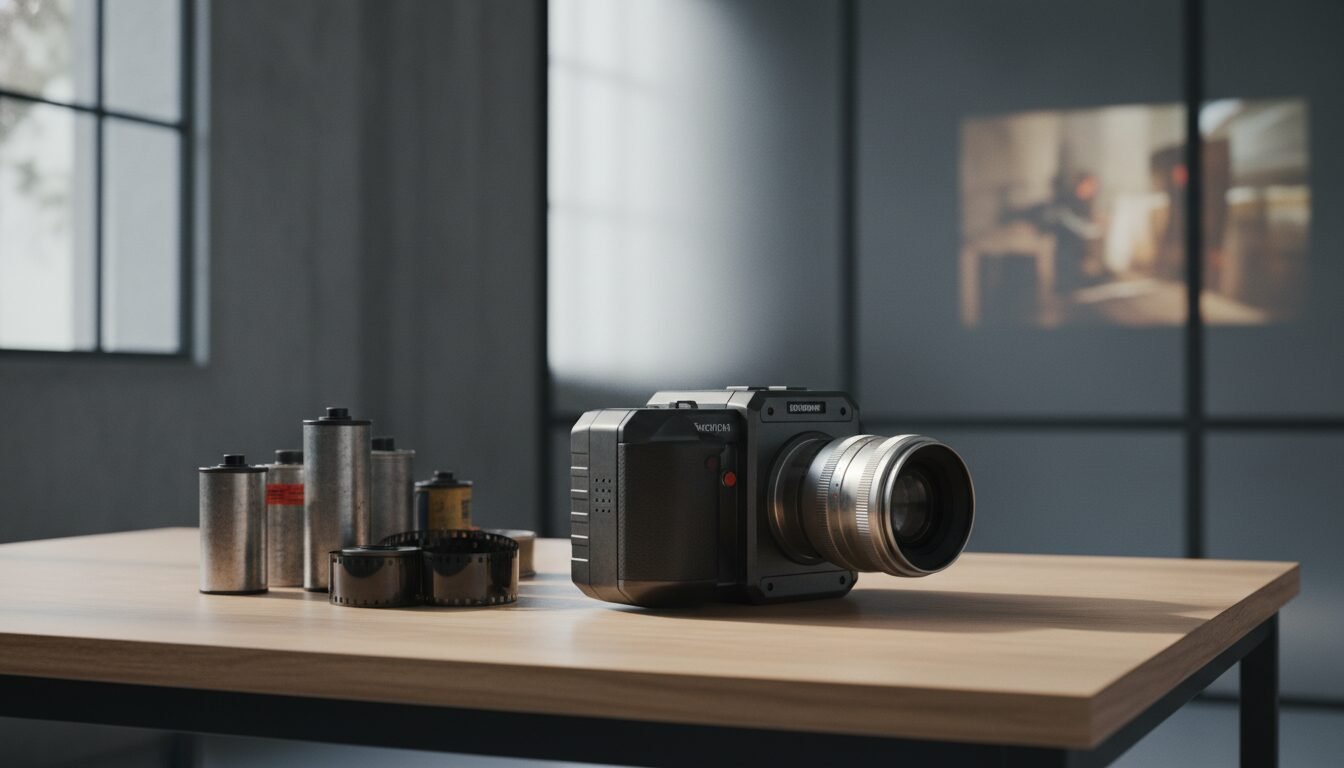
A true digital filming camera goes beyond megapixels. Film simulation is a complex interplay of color science, dynamic range mapping, and added imperfections. Camera manufacturers now pre-tone JPEGs using 3D Look-Up Tables (LUTs) derived from real film stocks, while cinema bodies offer log profiles that colorists can grade to match classic cinema emulsions.
Built-In Film Simulation Profiles
Fujifilm leads with its X-Processor 5 engine, which powers 20 base simulations in cameras like the GFX 100 RF and X100VI. These include cinema staples like Eterna Bleach Bypass and beloved stills modes like Velvia/Vivid. Sony, while not offering built-in film looks natively, enables the loading of custom Picture Profiles, a workflow popularized by creators like Veres Deni Alex, who develops Kodak-inspired recipes for Sony RAW files. Ricoh’s GR series takes a different route with its “Image Control” system, providing high-contrast B&W and cross-process effects in a pocketable body.
Physical Design and Tactile Controls
A great digital filming camera should handle like its analog ancestors. Nikon’s Zf features machined brass dials for ISO, shutter speed, and exposure compensation, directly referencing the FM2 film SLR. The OM System OM-3 includes a mode dial with a dedicated “Art” position that cycles through film-inspired looks. Even the Fujifilm X Half enforces a “roll-of-film” discipline: you cannot review images until the virtual 36-exposure count is finished. These design choices intentionally slow down the photographic process, which is a core part of what makes the film experience feel different.
The Role of Lenses and Optical Imperfections
According to Digital Camera World, the lens is “half the equation.” Vignetting, soft corners, and subtle color fringing all contribute to a filmic image. The PolarPro LightLeak 28mm lens lets photographers dial in intentional light leaks via an adjustable window, eliminating the need for post-processing overlays. Adapters that mount vintage M42 or FD glass on a modern mirrorless body further enhance organic character, often cutting contrast and adding the characteristic glow of old-school coatings.
Film Recipes: The Community-Driven Secret Weapon
One of the most powerful tools for any digital filming camera owner is the global community of user-developed “film recipes.” Fujifilm shooters share settings that mimic Kodak Portra 400, Fujifilm Natura 1600, and even obscure slide stocks like Agfachrome RS. Sony users rely on custom Picture Profile recipes from creators like Veres Deni Alex, who publishes step-by-step settings for achieving warm, lifted shadows and desaturated highlights. Before buying any camera, check whether a strong recipe ecosystem exists for that body. A camera with 5 great community recipes is worth more in practice than one with 20 mediocre built-in presets.
The Yashica Y35: Digital Film Cartridges
Worth a mention for its novelty factor, the Yashica Y35 uses physical “digiFilm” cartridges that slot into the base of the camera and change the sensor’s output to mimic different film stocks, including ISO 200 color, ISO 1600 high-speed, and B&W. Each cartridge costs roughly $10-15, and swapping them replicates the ritual of loading a new roll. The image quality is modest at best, but as a concept piece that bridges physical and digital film culture, it’s a fascinating entry in the digital filming camera space.
Top Digital Filming Cameras for Authentic Film-Like Photography
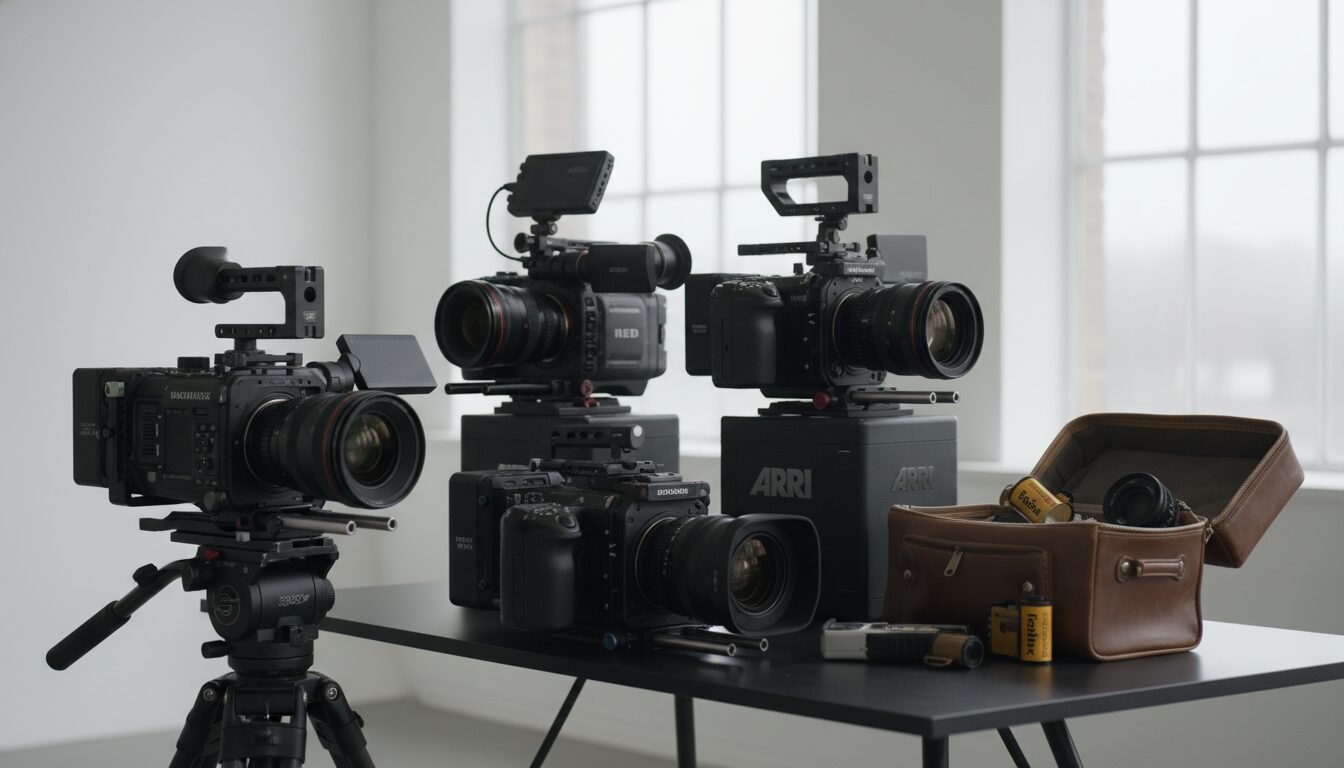
| Model | Sensor / Resolution | Key Film Features | Price Range (USD) |
|---|---|---|---|
| Fujifilm X100VI | APS-C X-Trans CMOS 5 HR, 40.2MP | 20 film sims, built-in ND filter, IBIS, hybrid viewfinder | $1,599 |
| Nikon Zf | Full-frame CMOS, 24.5MP | Dedicated B&W mode, physical brass dials, 5.9K video | $1,999 |
| OM System OM-3 | Micro Four Thirds, 20.3MP | Art filters, live composite, weather-sealed | $1,299 |
| Camp Snap CS-Pro | 1/3-inch CMOS, 8MP | Screen-free, film stock dial, disposable camera feel | $69.99 |
Fujifilm X100VI: The Compact Film-Simulation Powerhouse
The X100VI is the digital filming camera most street and travel shooters reach for first. Its 23mm f/2 lens (35mm equivalent) and compact rangefinder design owe a debt to the classic Konica Hexar AF, while the 40.2-megapixel sensor and 5-axis IBIS bring current-generation performance to a pocketable body. The built-in 4-stop ND filter lets you shoot wide open in daylight, and the redesigned hybrid viewfinder offers an electronic overlay that mimics the parallax-corrected bright lines of film rangefinders. With all 20 film simulations onboard, you can replicate everything from Kodachrome 64 to Fuji Provia 100F straight out of camera, no editing required.
Nikon Zf: Retro Design Meets Modern Video
Nikon’s Zf is a full-frame mirrorless body that looks back to the 1980s while delivering 2026 specifications. Its dedicated monochrome switch instantly applies a B&W profile with subtle grain and orange-filter contrast, reminiscent of shooting Ilford XP2 Super. For video shooters, the Zf records 5.9K oversampled 4K UHD at 30p in 10-bit 4:2:2, making it a legitimate hybrid tool. The magnesium-alloy body, brass dials, and leatherette finish add tactile satisfaction that no smartphone can replicate.
OM System OM-3: MFT’s Film-Inspired Flagship
The OM-3 continues Olympus’s legacy of compact, weather-sealed bodies. Its live composite mode mimics long-exposure film techniques for light trails and starscapes, while the “Color Creator” function gives direct control over hue and saturation, much like choosing a specific film stock. Photographers who grew up with the OM-1 film camera will appreciate the familiar prism hump and metal mode dial. The in-body 7-stop stabilization lets you handhold slow-shutter pans that recall the blur of a half-frame Fisheye camera, all for $1,299.
Professional Digital Filming Cameras for Cinematic Video
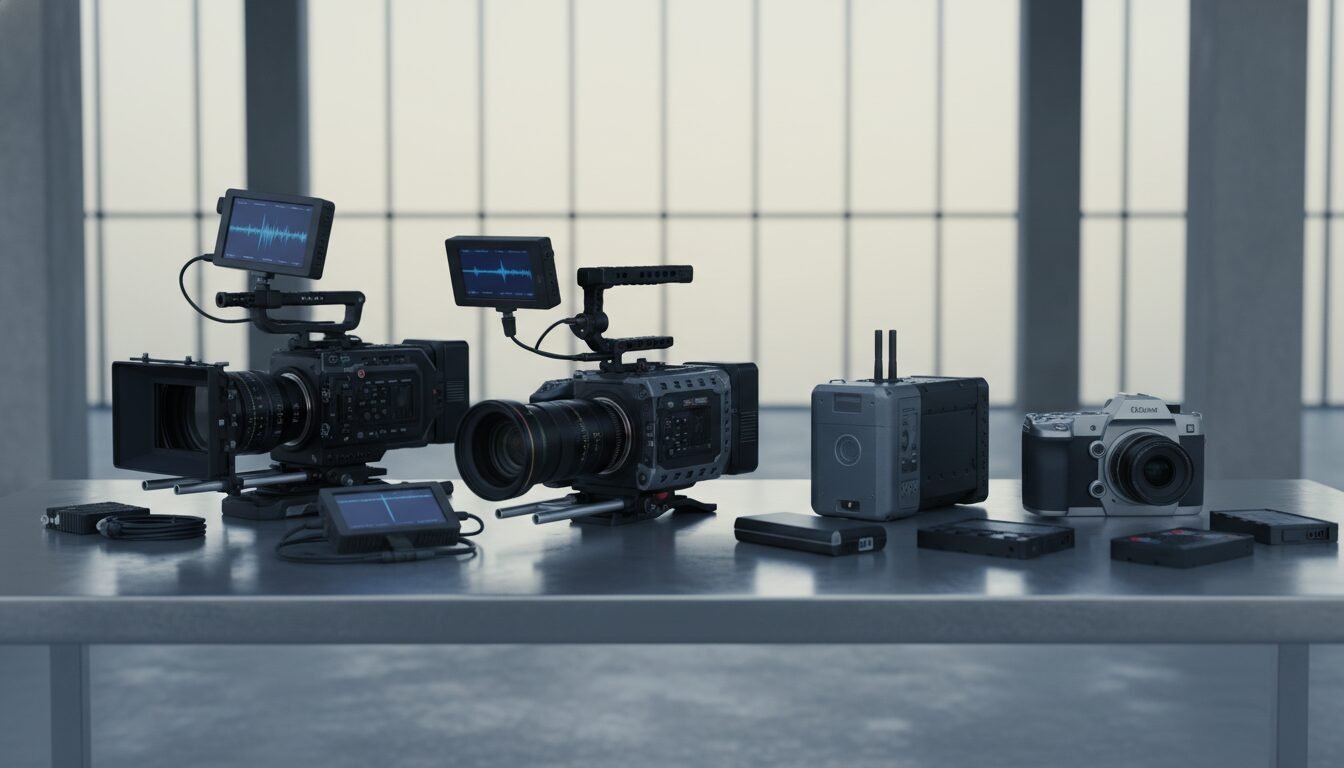
On a movie set, a digital filming camera means a body designed for motion capture first and foremost. These cameras feature large sensors, internal RAW recording, and professional audio I/O. Brands like Arri, RED, and Blackmagic define the high end, but a new wave of mirrorless hybrids has made cinema production accessible to independent creators.
Blackmagic Pocket Cinema 4K and 6K
The Blackmagic Pocket Cinema 4K (BMPCC4K) is a classic choice for indie filmmakers. It records 4K DCI at 60 fps in Apple ProRes or up to 4K RAW in uncompressed CinemaDNG, and the large 5-inch touchscreen makes monitoring easy on a shoulder rig. At $1,295, it undercuts many mirrorless alternatives while offering dual XLR inputs with phantom power. The BMPCC6K G2 bumps resolution to 6K and adds an EF mount, further bridging the gap between affordable hybrid cameras and true cinema bodies.
Sony FX3 and Canon EOS R5 C
Sony’s FX3 is a full-frame cinema camera squeezed into an A7-style body. It shoots 4K 120p with 10-bit 4:2:2 color, features built-in cooling fans for unlimited recording, and includes S-Cinetone color science that matches the Venice cinema line. Canon’s EOS R5 C dual-purpose design adds an internal fan and a cinema-inspired menu overlay, transforming it from a 45MP stills body into an 8K RAW video machine. Both cameras support external recorders like the Atomos Ninja V for ProRes RAW output, making them capable A-cams on professional sets.
Panasonic LUMIX S5IIX: The Hybrid That Does It All
Panasonic’s S5IIX is a full-frame mirrorless body that excels in both stills and video. According to the Panasonic shop, the body sells for $1,799.99 and supports 6K open-gate recording, which allows reframing for vertical social cuts without quality loss. Real-Time LUTs let you apply custom film emulations directly to the live view, and the phase-detection AF keeps up with fast-moving subjects. For a single camera that can capture a cinematic interview and a roll-of-film aesthetic in the same afternoon, the S5IIX is hard to beat.
“The hybrid camera category has fundamentally changed who can make a film. A $1,800 body that shoots 6K open-gate and accepts vintage glass is a production studio in your hands.” – Emin Media creative team, based on client production work
Budget-Friendly Digital Filming Cameras That Punch Above Their Weight
Not every digital filming camera needs a four-figure budget. A vibrant community of retro-tech enthusiasts has driven demand for used CCD and early CMOS cameras, many of which produce images that newer models can’t replicate without heavy editing.
The Screen-Free Revival: Camp Snap and Y2K Digicams
The Camp Snap (8MP, no rear screen) mimics the experience of a disposable film camera. There’s no playback, just a mechanical frame counter that reminds you how many shots remain. The CS-Pro version adds a dial that selects between three film stocks: standard color, a warm Ektachrome-like tone, and high-contrast B&W. At $69.99, it’s the most affordable entry into intentional, film-like photography available today. Other Y2K digicams like the Sony Cyber-shot DSC-W800 and Canon PowerShot SX series flood eBay for under $100, their small CCD sensors delivering the nostalgic “flash-and-blur” party-pic aesthetic that defined early 2000s visual culture.
Used Digital Film Cameras Under $300
For a more capable used option, the market is full of gems. The Nikon D200 (released 2005) uses a CCD sensor that renders colors with a slide-film pop, and clean copies go for $150-$200 on platforms like MPB and KEH Camera. The Olympus E-PL1 with its NMOS sensor and in-body stabilization can be found for under $100, often bundled with a kit lens. These cameras lack video features beyond 720p, but for stills, they deliver a genuine film-era look without film’s recurring costs.
Pros and Cons
Pros
- Immediate film-like results: Built-in simulations and LUT support mean you can shoot Velvia or Eterna looks straight out of camera, no darkroom required.
- Wide price range: Options span from $69.99 (Camp Snap) to $5,000-plus cinema bodies, making the aesthetic accessible at every budget level.
- Hybrid versatility: Modern bodies like the Panasonic S5IIX and Canon EOS R5 C handle both high-resolution stills and 6K-8K RAW video in a single system.
- Strong community ecosystems: Film recipe communities for Fujifilm and Sony mean thousands of free, tested looks are available before you even pick up the camera.
- Vintage lens compatibility: Short flange distances on mirrorless mounts make adapting M42, FD, and Leica glass straightforward and affordable.
Cons
- No perfect analog replica: Even the best digital simulation can’t fully reproduce the organic grain structure and chemical response of physical film stocks.
- Accessory costs add up fast: Cinema bodies like the BMPCC4K start at $1,295 but require lenses, XLR adapters, SSDs, and rigs that can double or triple the total investment.
- Retro design vs. ergonomics: Physical dials and compact bodies look great but can feel awkward during extended shoots or when using large telephoto lenses.
- Budget CCD cameras lack video: Used CCD bodies under $200 typically cap out at 720p video, limiting their usefulness for hybrid creators.
Step-by-Step: How to Choose the Right Digital Filming Camera
With so many options, selecting your ideal digital filming camera can feel overwhelming. Follow this five-step process to narrow the field.
Step 1: Define Your Primary Output
Are you a stills purist who wants film simulations straight out of camera? Or do you need 4K 120p video for client work? If stills dominate, a Fujifilm or Nikon Zf is ideal. If video is the priority, a dedicated cinema camera like the Blackmagic Pocket 4K will give you professional codecs and audio. Hybrid shooters should look at the Panasonic S5IIX or Canon EOS R5 C.
Step 2: Set a Realistic Budget
Digital filming cameras span from $69.99 to $5,000-plus. Used CCD cameras provide the most affordable entry into film-like stills. For $1,000-$2,000 you can access current-generation mirrorless models with IBIS and 4K video. Cinema rigs typically start at $1,295 (BMPCC4K) and climb steeply once you add lenses and accessories. Factor in the cost of adapters if you plan to use vintage glass.
Step 3: Evaluate Sensor Size and Lens Ecosystem
APS-C sensors (Fujifilm) offer a great balance of shallow depth of field and compactness. Full-frame bodies (Nikon Zf, Sony FX3) provide the cinematic shallow-focus look with fast lenses. Micro Four Thirds (OM System) gives long reach and extensive IBIS, ideal for wildlife and handheld video. Your choice should align with the lenses you already own or are willing to purchase. Adapting old film lenses works best on mirrorless mounts with short flange distances.
Step 4: Prioritize Film-Like Features
Look for granular control over color and grain. Built-in RAW editing (Fuji X-Raw Studio) lets you apply film sims after capture. Real-time LUT support (Panasonic, Canon) allows custom film emulations in video. Physical controls, dedicated ISO dials, and exposure comp wheels enhance the shooting ritual. Don’t underestimate the value of an optical or hybrid viewfinder. Composing through a bright OVF feels fundamentally different from staring at a screen.
Step 5: Check for Firmware and Community Support
The best film simulations often come from user-developed recipes. Fujifilm’s film recipe community shares settings that mimic Kodak Portra 400 or Fujifilm Natura 1600. Sony users rely on custom Picture Profile recipes from creators like Veres Deni Alex. Before buying, ensure a strong ecosystem of presets and guides exists for your chosen body, so you can start shooting with the look you want from day one.
The Bigger Picture: Brand Storytelling Through Film Aesthetics
As of 2026, the film aesthetic isn’t just a personal photography preference. It’s a brand language. According to HubSpot’s content trend research, audiences consistently respond more warmly to visual content that feels tactile, imperfect, and human over content that looks algorithmically polished. Brands using film-simulated visuals in their social campaigns report stronger emotional recall and higher save rates on platforms like Instagram and TikTok.
This is where a digital filming camera becomes a strategic creative tool, not just a hobby purchase. Shooting brand content on a Fujifilm X100VI with a Kodachrome-inspired recipe, or capturing product films on a BMPCC4K with a warm LUT, signals authenticity in a way that stock photography never can. If you’re building a brand identity, the camera you choose and the visual language it produces are part of your story. We explore this in depth in our guide to brand visual identity and our breakdown of Emin Media’s creative production services.
The modern digital filming camera is more versatile than ever, bridging the gap between analog nostalgia and 8K RAW cinema. Whether you gravitate toward a pocketable Fujifilm X100VI with its 20 film simulations, a retro-styled Nikon Zf that slows down your process, or a Blackmagic Pocket Cinema 4K for low-budget movie magic, there’s a tool tailored to your artistic goals. Sensor technology and AI-driven processing will keep advancing, but the joy of intentional, physical image-making stays constant. Pick a camera that makes you want to shoot, and you’ll never regret the purchase.
Ready to build a visual brand that actually stops the scroll? Contact Emin Media for a free brand consultation and let’s create something bold together.
Frequently Asked Questions
What exactly is a digital filming camera?
A digital filming camera is a digital device that captures stills or video while emulating the aesthetic or experience of analog film, through built-in film simulations, retro controls, or cinema-grade video capabilities. The term covers everything from $69 screen-free novelty cameras to $5,000-plus professional cinema bodies.
Can a digital camera really look like film?
While nothing perfectly replicates the organic grain and chemical response of physical film, many modern cameras use advanced color science and AI processing to mimic classic film stocks like Kodak Portra or Fujifilm Velvia with striking accuracy. Fujifilm’s 20-simulation engine and community-developed recipes get remarkably close for most practical purposes.
Which cheap digital camera gives the most film-like photos?
Under $100, the Camp Snap offers a screen-free disposable feel at $69.99. Used CCD cameras like the Nikon D200 ($150-$200) deliver a filmic color rendering that rivals models many times the price, making them the best value entry point for stills-focused shooters.
What is the best digital filming camera for video?
For cinematic video, the Blackmagic Pocket Cinema 4K ($1,295) and Sony FX3 lead the pack with professional codecs and color science. The Panasonic S5IIX ($1,799.99) is the strongest hybrid option, combining 6K open-gate recording with film-inspired LUT support in a single body.
Should I buy a film-simulation camera or a dedicated cinema camera?
Choose a film-simulation compact (Fujifilm X100VI) or retro mirrorless (Nikon Zf) if stills are your priority. Pick a dedicated cinema camera if you need professional video codecs, RAW output, and XLR audio inputs for client or narrative work.
Do digital filming cameras work with vintage lenses?
Yes, most mirrorless bodies adapt old glass via inexpensive M42, FD, or Leica adapters, adding organic rendering, light fall-off, and a tactile manual-focus experience that enhances the film look. This is one of the most cost-effective ways to improve the character of your images without buying a new camera.
Enjoyed this article?
Contact Emin Media for a free brand consultation and let's create something amazing together.
Get in Touch