Best Cheap Video Recording Camera 2026
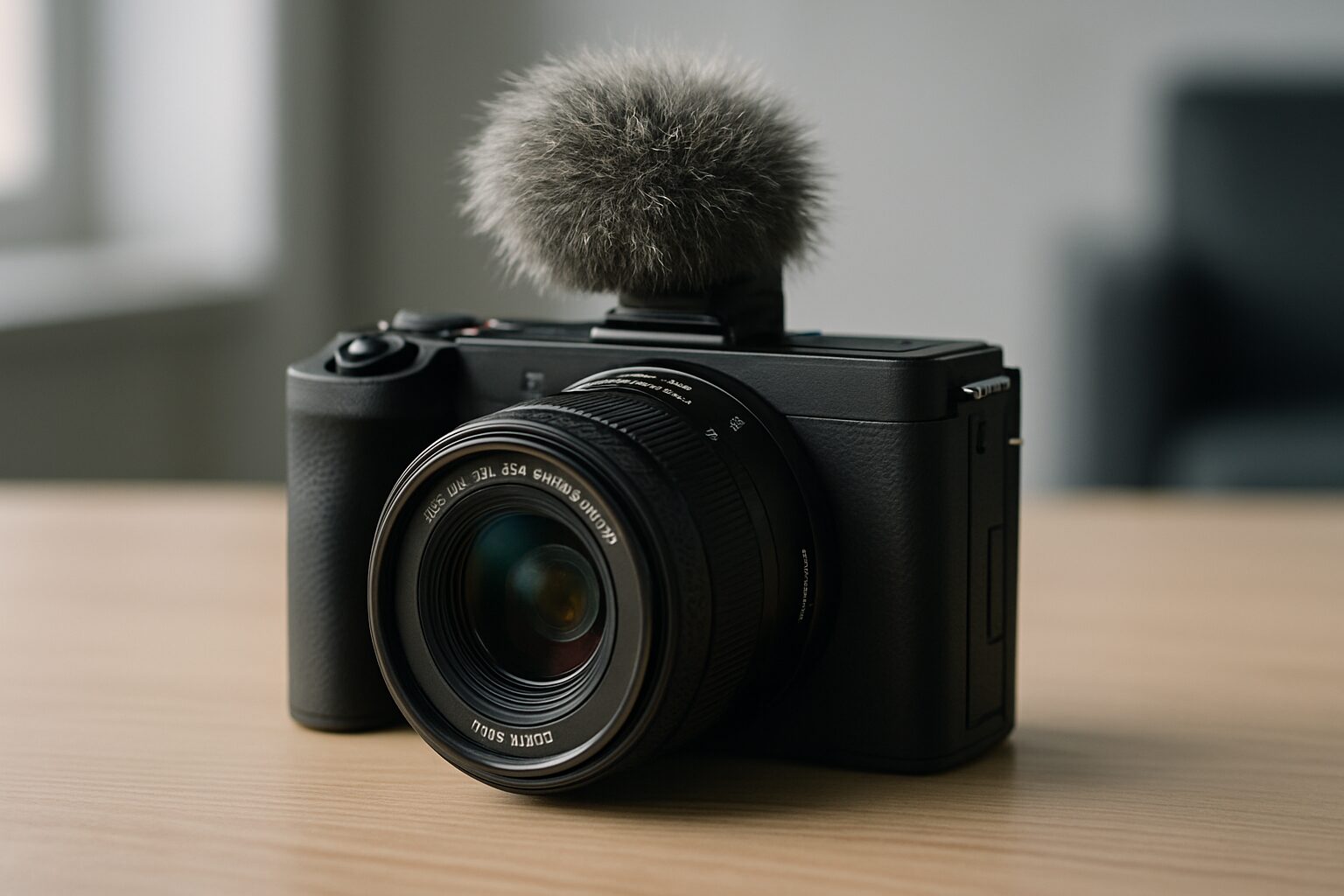
The best cheap video recording camera is any body under $1000 that delivers 4K resolution, reliable autofocus, and genuine creative control. From mirrorless miracles to pre-owned workhorses, capable options exist at every price point in 2026.
Key Takeaways
- Sub-$1000 gems exist: Mirrorless cameras like the Sony ZV-E10 II ($998) and Fujifilm X-M5 ($799–$899) deliver professional 10-bit 4K video.
- Used markets cut costs by 40–60%: Platforms like MPB and KEH offer warranties on pre-owned Panasonic GH5 and Canon DSLRs.
- Phones can rival dedicated cameras: iPhone 15 Pro’s Action mode and ProRes beat many entry-level camcorders for stabilized, cinematic footage.
- Audio and stabilization matter more than you think: A $100 external microphone and a gimbal often improve production value more than a sensor upgrade.
- Open-gate recording future-proofs content: Cameras like the Fujifilm X-M5 capture 6.2K full-height frames, letting you crop vertical and horizontal from a single clip.
- Accessories complete the kit: Budget 30–40% of your total spend for lenses, audio, and stabilization gear.
What Defines the Best Cheap Video Recording Camera?
The recording camera delivers high video quality, reliable autofocus, and essential creative controls for under $1000 new, or even less used. Whether you’re a vlogger, aspiring filmmaker, or event shooter, the right budget camera should capture sharp 4K footage, offer interchangeable lenses or a versatile zoom, and include ports for external microphones.
According to Pascal Basel’s 2026 camera guide, price alone isn’t the deciding factor. Sensor size, bit depth, and stabilization often separate a toy from a tool. In-body image stabilization (IBIS) is a system that mechanically shifts the sensor to counteract hand shake, yielding smooth handheld video without a gimbal. Meanwhile, 10-bit recording captures over 1 billion colors versus 16.7 million in 8-bit, giving you far more flexibility when color grading.
Below, we break down the key ingredients that turn an affordable camera into a powerful video tool.
Sensor Size and Low-Light Performance
A larger sensor, whether Micro Four Thirds, APS-C, or full-frame, gathers more light, producing cleaner images in dim environments and shallower depth of field for cinematic blur. Budget cameras with Micro Four Thirds sensors, such as the Panasonic G85 (sold as the G80 in Europe), offer a sweet spot: a sensor area roughly 1.6x larger than a typical camcorder’s 1/2.3-inch chip, yet lenses remain compact and affordable. The G85’s 16-megapixel sensor, combined with its f/3.5–5.6 kit lens, can capture usable footage at ISO 3200, far outperforming the tiny sensors in $100 camcorders.
Video Resolution, Frame Rates, and Bit Depth
As of 2026, 4K is the baseline for any serious this type of camera. Beyond resolution, higher frame rates (60p, 120p) unlock smooth slow motion. The Sony ZV-E10 II, priced at $998, records 4K 60p with 10-bit 4:2:2 color, enabling professional-grade grading and keying. 10-bit 4:2:2 means the camera samples color information from every two pixels horizontally and vertically, preserving detail in gradients and green-screen work. More affordable options like the Nikon Z30 ($600) cap at 8-bit 4K 30p, which is fine for straight-to-web content but limits post-production flexibility.
Essential Ports and Ergonomics
A headphone jack and microphone input separate serious video cameras from casual ones. The Canon R50 ($579 body) includes a 3.5mm mic port but lacks a headphone socket. The Sony ZV-E10 II and Panasonic GH5 II both offer full monitoring ports, allowing you to check audio in real time. Camera size matters too: the lightweight Nikon Z30 (405 g) fits a gimbal easily, whereas a bulkier DSLR might require a heavier rig. Choose a body that matches your shooting style.
Top Budget Video Cameras for Every Need
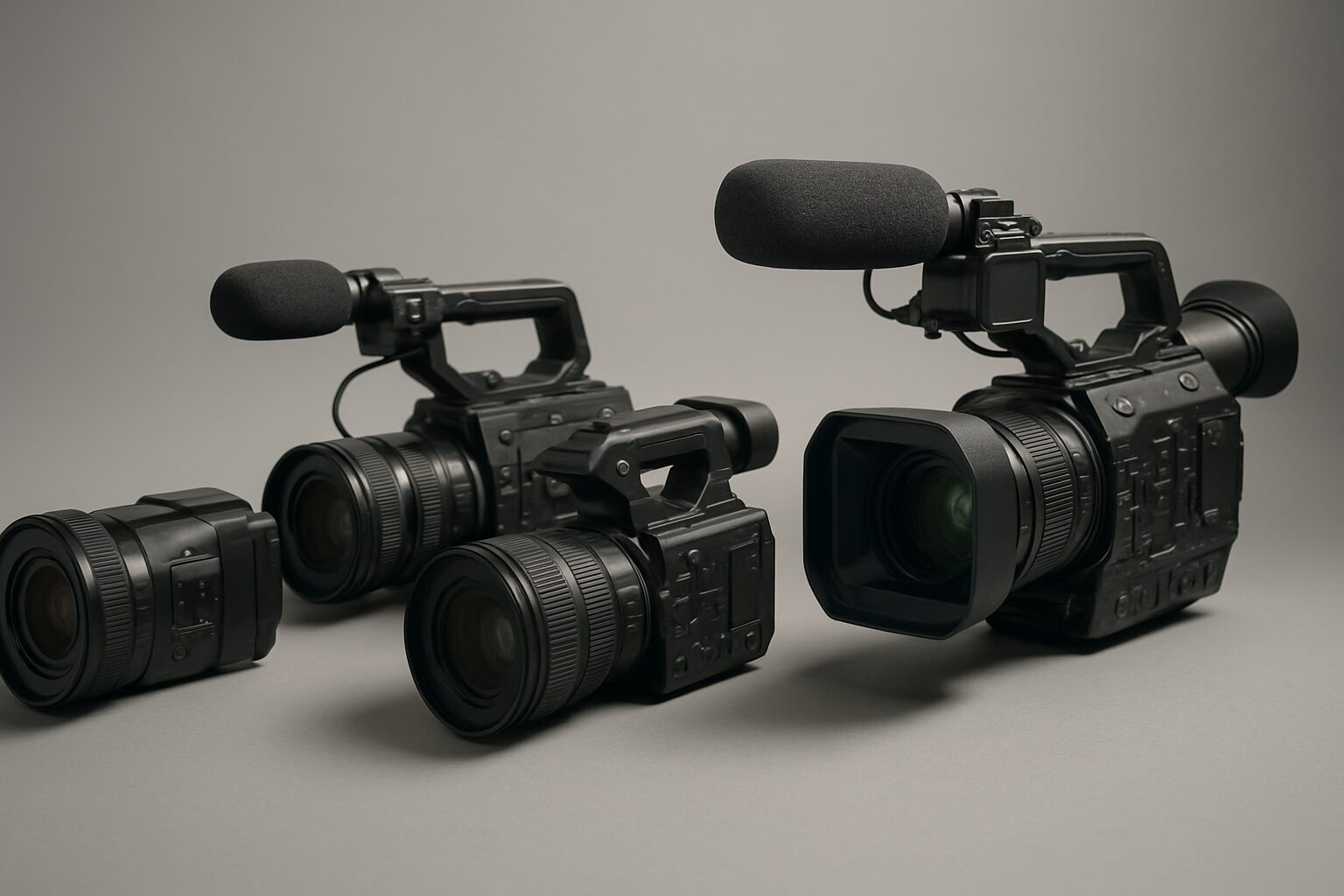
Whether you’re hunting the best cheap video recording camera for YouTube, filmmaking, or casual family clips, these picks span new and used markets. We’ve focused on cameras under $1000 that deliver genuine production value.
Comparison Table: Key Specs at a Glance
| Camera | Price (body or kit) | Resolution / Frame Rate | IBIS | Bit Depth | Best For |
|---|---|---|---|---|---|
| Sony ZV-E10 II | $998 (body) | 4K 60p, FHD 120p | No (digital only) | 10-bit 4:2:2 | Vlogging, streaming, run-and-gun |
| Fujifilm X-M5 | $799–$899 (body) | 6.2K open gate, 4K 60p (crop) | No | 10-bit 4:2:2 | Cinematic social content, travel |
| Panasonic G85 (used) | ~$500–$600 w/ lens | 4K 30p, FHD 60p | Yes (5-axis) | 8-bit | Beginner filmmaking, handheld shooting |
| Canon R50 | $579 (body) | 4K 30p, FHD 120p | No | 8-bit (CLOG3) | Entry-level content, live streaming |
| DJI Osmo Pocket 3 | $419 (Creator Combo $539) | 4K 120p | Yes (3-axis gimbal) | 10-bit (D-Log M) | Ultra-portable vlogging, travel |
| iPhone 15 Pro (256GB) | $999+ (phone cost) | 4K 60p ProRes, Action mode | Yes (optical + electronic) | 10-bit (Apple Log) | Hybrid shooters who already own the phone |
Sources: Sony, Fujifilm, Panasonic, Canon, DJI. Prices as of 2026.
Mirrorless Marvels Under $1000
The new-camera market shines brightest in the mirrorless segment. The Sony ZV-E10 II (released in 2025) addresses every gripe about its predecessor: rolling shutter is drastically reduced, 4K 60p is added, and S-Log3 support with LUT import makes grading a breeze. It still lacks in-body stabilization, so pair it with optically stabilized Sony lenses like the 16–55mm f/2.8 OSS for the smoothest results.
The Fujifilm X-M5 offers a different advantage: 6.2K open-gate recording in a 350-gram body. Its film simulations, including Velvia, Eterna, and Classic Chrome, deliver striking colors straight out of camera, saving hours of editing. Autofocus, while improved, isn’t as sticky as Sony’s. Pascal Basel notes that turning off eye-tracking while keeping face detection on yields smoother results for video work.
“The Fujifilm X-M5 is one of the most compelling small-body video cameras at this price point. Its film simulations alone justify the purchase for creators who want a distinctive look without spending hours in a color suite.” – Pascal Basel, camera reviewer and filmmaker
Camcorder and All-in-One Options
For those who never want to swap lenses, modern bridge cameras and camcorders pack a real punch. The Canon PowerShot V1 ($849) marries a 1-inch sensor with a built-in 16–50mm f/2.8–4.5 lens, optical stabilization, and a built-in ND filter, a rare combo that simplifies exposure control in bright light. The Minolta MN4KP1 ($99.99) records 4K and comes with a waterproof housing, making it a cheap throw-in-the-bag option for beach vacations. Its tiny sensor and fixed-aperture lens limit creative control, but at that price, it’s hard to argue.
Used Gems: GH5, DSLRs, and More
Buying used slashes the price of pro-level features. The Panasonic GH5 (original) now sells for $600–$800 on platforms like MPB and KEH, including a 6-month warranty. It still boasts 4K 60p 10-bit output via Atomos recorders, 5-axis IBIS, and a weather-sealed magnesium body. Tom Barrance of Learn About Film calls the GH5 “a great value used buy,” noting that V-Log is often a paid upgrade, so verify it’s installed before purchase.
Even older Canon DSLRs like the Rebel T4i (650D) or 70D can shoot lovely 1080p with Canon’s pleasing color science. At $200–$300 with a kit lens, they’re a strong starting point for learning manual exposure and lens selection.
“Don’t underestimate older DSLRs. A Canon 70D with a fast prime lens still produces footage that looks professional on YouTube. The best cheap video recording camera is often the one that’s already been paid for by someone else.” – Tom Barrance, Learn About Film
BlackMagic Pocket Cinema Camera 4K: The Filmmaker’s Wild Card
The Blackmagic Pocket Cinema Camera 4K (BMPCC 4K) deserves a mention for serious filmmakers on a budget. Available used for $500–$700, it records in Blackmagic RAW (BRAW) to a Micro Four Thirds sensor, giving you color science that rivals cameras costing three times as much. The trade-off: battery life is short (roughly 45–60 minutes per charge), and the body has no IBIS. Pair it with a quality cage and a V-mount battery plate, and you have a cinema-grade best cheap video recording camera that punches well above its price class. According to Blackmagic Design, the BMPCC 4K supports 4K 60p in windowed crop mode and full 4K 30p from the complete sensor.
Smartphone vs. Dedicated Camera: When to Upgrade
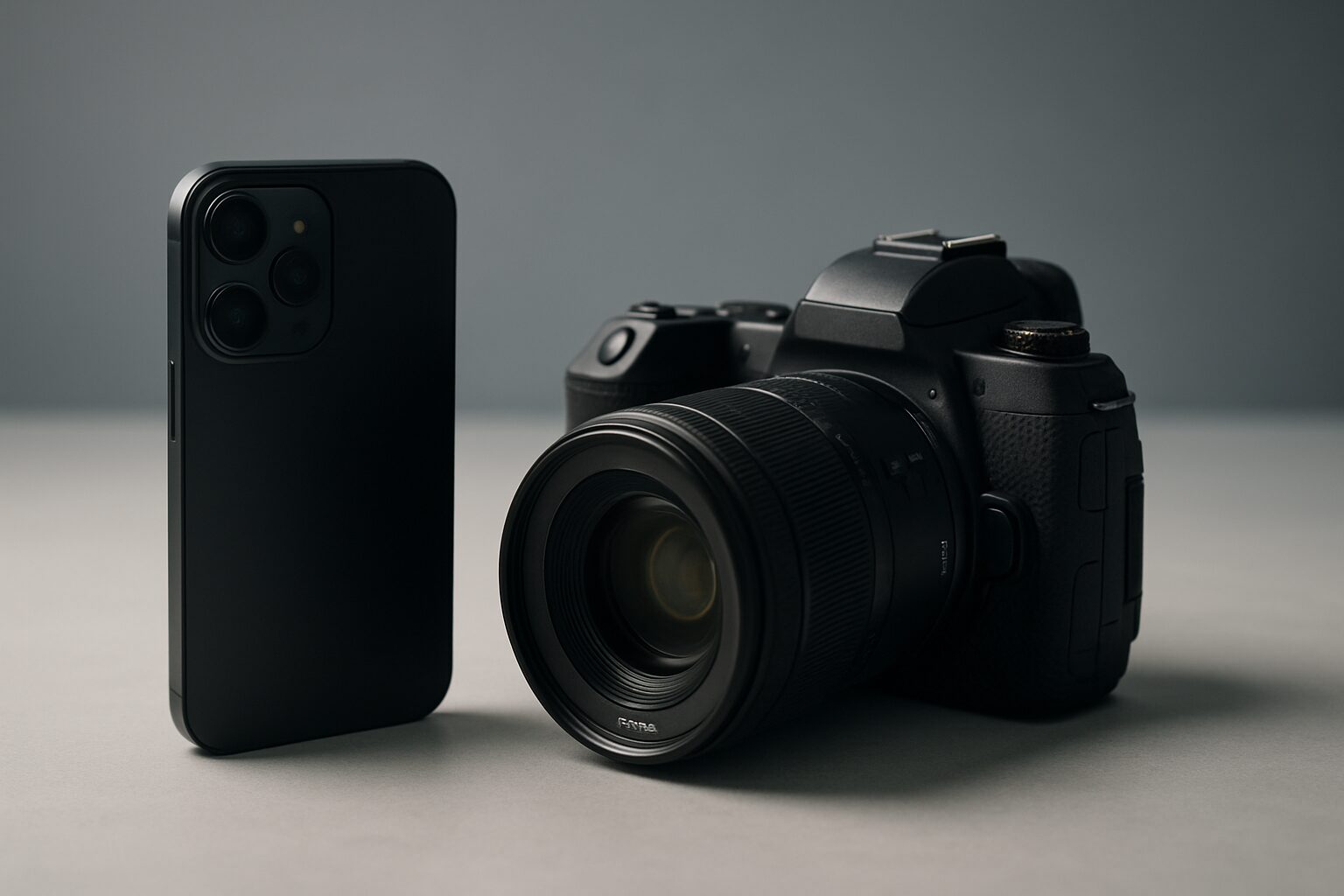
It’s 2026, and the gap has never been narrower. But there are still clear reasons to invest in a separate video camera rather than relying on your phone.
What Phones Do Better
Modern flagship smartphones, particularly iPhone 15/16 Pro models, offer computational video features that dedicated cameras can’t match. Apple’s Action mode applies aggressive electronic stabilization and sensor-shift to mimic a gimbal, even in 2.8K. Cinematic mode records depth data so you can change focus points after shooting. With USB-C, an external SSD like the Samsung T7 lets you capture 4K 60p ProRes directly, storage that would cost $100 or more in fast SD cards. For YouTube talking-heads, casual vlogs, and behind-the-scenes clips, an iPhone 15 Pro (256GB) plus a $20 lav mic often gets the job done.
Where Dedicated Cameras Still Win
Dedicated cameras offer three advantages that phones simply can’t replicate:
- Lens ecosystem: A fast f/1.4 prime lens on an APS-C sensor creates background blur that no phone’s portrait mode can replicate organically.
- Extended recording: Phones overheat after 20–30 minutes of 4K 60p. A mirrorless camera with a dummy battery can record for hours, crucial for events and interviews.
- Audio flexibility: Multiple 3.5mm or XLR inputs let you connect professional shotgun or wireless mics without dongles or adapters.
If filmmaking or long-form content is your goal, a dedicated best cheap video recording camera remains the smarter investment.
Navigating the Used Camera Market
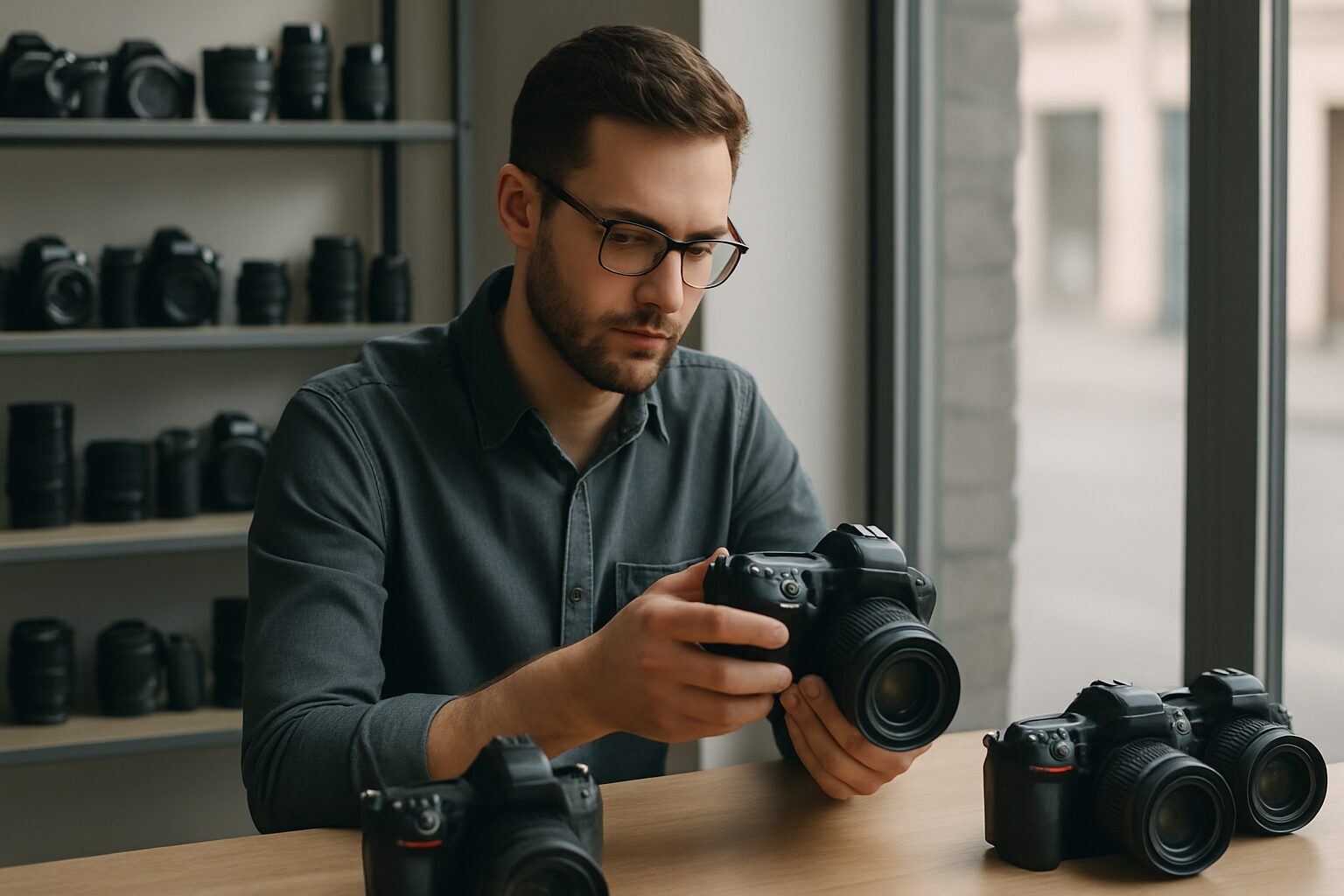
Cost-conscious shoppers can stretch their dollar dramatically by buying pre-owned. A few precautions turn a gamble into a smart investment.
Where to Hunt: MPB, KEH, and Local Listings
MPB and KEH are the gold standard for used gear in the US. Both grade items from “Like New” to “Ugly” and include a 6-month warranty. Prices typically run 10–15% higher than private sales, but the return policy is worth every cent. For steeper savings, scour Facebook Marketplace or Craigslist. You can often negotiate a used Panasonic G85 with the 12–60mm kit lens down to $400–$450, roughly 40% less than a refurbished MPB copy.
Red Flags and Shutter Counts
When inspecting a used camera, check the mechanical shutter count (for DSLRs) or electrical contacts (for mirrorless). Shutter count measures the number of photos taken and indicates wear on the shutter mechanism. Entry-level bodies are typically rated for 50,000–100,000 actuations, while pro-grade models like the Canon 5D Mark II can exceed 200,000. Bring an SD card to test autofocus, record video for at least 5 minutes to spot overheating, and examine the sensor by shooting a white wall at f/22. Any dark spots suggest dust or damage.
- Step 1: Ask for the shutter count (Canon: EOS-MSG tool; Sony: ExifTool).
- Step 2: Record a 5-minute 4K clip to check for overheating shutdowns.
- Step 3: Play back the clip on the camera to verify the LCD and speaker work.
- Step 4: Mount a lens and focus on a high-contrast edge. The camera should lock on quickly.
- Step 5: Take a photo of a plain surface at f/16–f/22 and examine it on a computer for dust spots.
Warranties and Return Policies
Even a 90-day warranty from a reputable reseller saves you from a $300 paperweight. Alex Armitage’s budget camera guide emphasizes that MPB and KEH often list shutter counts and include 6-month policies, making them the safest bet for first-time buyers shopping for a best cheap video recording camera on the secondary market.
Essential Gear for Budget Filmmaking
A camera body is just the start. These accessories elevate your production without blowing your budget.
Lenses That Punch Above Their Price
For Micro Four Thirds shooters, the Panasonic 25mm f/1.7 ($150 new) delivers beautiful bokeh and stays sharp wide open. Sony E-mount users should consider the Viltrox 13mm f/1.4 ($300) for wide, bright footage. And if you’re adapting vintage glass, a $20 Canon FD-to-EF adapter opens up decades of affordable manual-focus lenses with genuine character.
Stabilization: Gimbals, Tripods, and IBIS
Built-in IBIS can only go so far. The DJI RS 3 Mini ($369) stabilizes mirrorless rigs up to 2 kg, perfect for walking shots. For static interviews, the Manfrotto 190 tripod ($170) offers rock-solid support. A $15 mini ball head turns any table into a low-angle platform. Stabilization gear often improves your footage more visibly than upgrading the camera body itself.
Audio and Lighting: The Real MVPs
Viewers will forgive soft video long before they forgive bad sound. The RØDE VideoMicro is a compact on-camera shotgun mic that dramatically improves audio over built-in mics at an accessible price point. For sit-down interviews, a Zoom H1n recorder ($120) and lav mic deliver broadcast-quality voice. On the lighting front, a Godox SL60W ($139) and a 5-in-1 reflector ($30) control contrast for a fraction of the cost of professional fixtures.
Fujifilm Film Simulations: Free Color Grading Built In
Fujifilm’s film simulations are one of the most underrated features on any best cheap video recording camera. Profiles like Eterna (flat, cinematic), Classic Chrome (muted, documentary), and Velvia (punchy, saturated) are baked into the camera’s processing engine. You can shoot with them applied directly to your footage or use them as a reference while shooting in F-Log2. For creators who want a distinctive visual identity without spending hours in DaVinci Resolve, this is a genuine advantage. According to Fujifilm’s own documentation, the X-M5 includes 20 film simulation modes, more than any competitor at this price point.
Step-by-Step Buyer’s Checklist
Use this numbered workflow to pinpoint the best cheap video recording camera for your specific needs.
- Define your primary use: Vlogging (lightweight, flip screen), filmmaking (log profiles, IBIS), events (long battery, XLR inputs).
- Set a total budget: Allocate 30–40% for accessories like lenses, mics, and tripods. A $600 camera often needs $200–$300 in extras.
- Choose sensor size: Micro Four Thirds for compact lenses, APS-C for shallow depth-of-field on a budget, or full-frame if low-light is critical (used Sony a7S II runs around $800).
- Prioritize 10-bit 4:2:2: It future-proofs your footage for HDR and heavy grading. Compromise on frame rate before you compromise on bit depth.
- Check the used market: Search MPB, KEH, and eBay for models like the Panasonic GH5, Sony a6300, Blackmagic Pocket Cinema Camera 4K, or Canon C100 (1080p but a superb codec).
- Test before you buy: If local, follow the 5-step inspection list above. If online, buy from a seller with a generous return policy.
- Factor in media costs: UHS-II V60 SD cards ($30 for 128GB) are a must for 4K 10-bit recording. Cheap cards drop frames. Budget an extra $30–$60 for storage.
Pros and Cons of Buying a Budget Video Camera
Pros
- Accessible price points: Quality best cheap video recording camera options start under $500 used, making professional-looking footage achievable for almost any budget.
- 10-bit color at entry-level prices: Cameras like the Sony ZV-E10 II ($998) and Fujifilm X-M5 ($799–$899) deliver 10-bit 4:2:2 that was reserved for $3,000+ cameras just five years ago.
- Interchangeable lenses: Mirrorless systems give you access to wide lens ecosystems, letting you grow your kit over time without replacing the body.
- Used market depth: Platforms like MPB and KEH offer hundreds of verified, warrantied options, so you’re not locked into new retail pricing.
- Open-gate and multi-format recording: Features like the X-M5’s 6.2K open gate let you produce content for multiple aspect ratios from a single shoot.
Cons
- Accessories add up fast: A $600 body can easily become a $900 kit once you add a lens, mic, and memory card. Budget accordingly.
- No IBIS on many affordable mirrorless bodies: The Sony ZV-E10 II and Fujifilm X-M5 both lack in-body stabilization, meaning you’ll need stabilized lenses or a gimbal for smooth handheld footage.
- Overheating limits: Budget mirrorless cameras often cap continuous recording at 20–30 minutes in 4K, which can disrupt long interviews or event coverage.
- Autofocus inconsistency: Entry-level cameras from Fujifilm and Panasonic don’t always match Sony’s subject-tracking reliability, especially in fast-moving scenarios.
- Used gear carries risk: Without proper inspection, a pre-owned camera can arrive with hidden sensor dust, shutter wear, or firmware issues.
Start Creating with the Best Cheap Video Recording Camera
The best cheap video recording camera is the one that gets you shooting today, not the one you save up for next year. As of 2026, you can land a capable rig for under $500 used or just under $1000 new. If you already own a recent iPhone Pro, a lens kit and mic might be all you need. If you crave cinematic control, a pre-owned Panasonic GH5 or Blackmagic Pocket Cinema Camera 4K with a fast prime lens delivers image quality that rivals setups costing two to three times as much. Stop researching and start filming. Even the most modest gear can tell a powerful story.
Ready to build a video setup that actually fits your budget and your vision? Contact Emin Media for a free brand consultation and let’s figure out exactly what gear and strategy will move your content forward. Explore our full range of creative services or check out our guide on brand storytelling and video production to see how we help creators and brands show up with confidence.
Frequently Asked Questions
What is the cheapest video camera that shoots 4K?
The Minolta MN4KP1 camcorder retails for $99.99 and includes waterproof housing, but expect a tiny sensor and limited dynamic range. For quality 4K under $500 used, a Panasonic G7 with a kit lens often sells for $300–$350 on MPB.
Can I use an action camera for filmmaking?
Action cameras like the GoPro Hero 12 Black ($399) offer HyperSmooth stabilization and 5.3K resolution but have fixed wide-angle lenses and poor low-light performance. They’re best for POV shots and adventure content, not narrative filmmaking.
Do I need a 10-bit camera for YouTube?
No. Most viewers watch on 8-bit screens. But 10-bit recording gives you flexibility to fix exposure and color in editing, reducing the need for perfect in-camera settings every single shot.
Is the Sony ZV-E10 II worth the extra cost over the original ZV-E10?
Yes. For roughly $200 more, you get 4K 60p, drastically reduced rolling shutter, 10-bit 4:2:2, and S-Log3 support, making it a genuine production tool rather than a point-and-shoot. The upgrade is worth it for anyone serious about video quality.
What’s the best lens for a budget video camera?
A standard zoom like the Sony 16–55mm f/2.8 OSS ($350 used) covers wide to portrait lengths with optical stabilization. For prime lovers, the Sigma 16mm f/1.4 ($320) offers exceptional speed and sharpness on APS-C bodies.
Should I buy a camcorder or a mirrorless camera for video?
Mirrorless cameras offer larger sensors, interchangeable lenses, and shallower depth of field for a more cinematic look. Camcorders provide longer record times, power zoom, and built-in ND filters for run-and-gun convenience. Choose based on whether you prioritize image quality or operational simplicity.
Enjoyed this article?
Contact Emin Media for a free brand consultation and let's create something amazing together.
Get in Touch