Best Budget Digital SLR Camera: Top Picks 2026
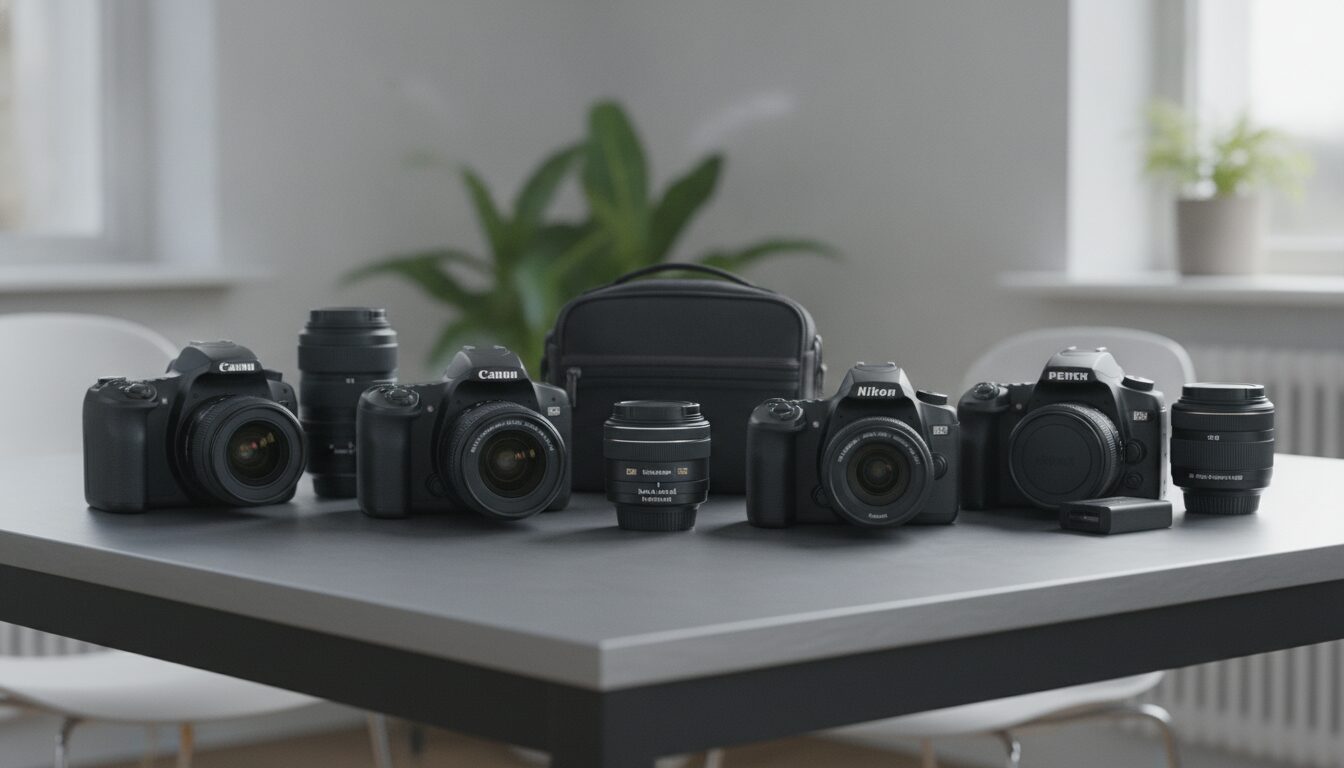
The best budget digital SLR camera is a used Nikon D3500 or Canon EOS Rebel T5i, available for $200–$300 with a kit lens, delivering image quality that rivals modern mirrorless cameras costing twice as much.
Key Takeaways
- The slr camera for beginners is a used Nikon D3500 or Canon EOS Rebel T5i, both available for $200–$300 with a kit lens.
- DSLRs offer tremendous value in 2026 because the mirrorless shift has flooded the used market with cheap, high-quality bodies and lenses.
- Always check shutter count, sensor condition, and lens compatibility before purchasing a used DSLR.
- Pairing a budget DSLR with an inexpensive 50mm f/1.8 prime lens can produce professional-grade images for under $200 total.
- Buying used reduces e-waste and stretches your photography budget further.
- Pentax is the only major manufacturer still actively developing new DSLR bodies as of 2026.
What Defines a Budget DSLR in Today’s Market?
Media” class=”wp-image-10247″ loading=”lazy” width=”1792″ height=”1024″ />The Mirrorless Shift Creates a Buyer’s Market
A budget digital SLR camera is any DSLR body-and-lens combination acquired for under $500, with the sweet spot falling between $100 and $300. As of 2026, the camera industry has almost completely pivoted to mirrorless systems. Canon, Nikon, and Sony now devote their R&D budgets to mirrorless, and Pentax is the only manufacturer still actively developing new DSLRs. This shift has, paradoxically, made DSLRs the ultimate budget option. As professionals and enthusiasts sell off their DSLR kits to fund mirrorless upgrades, the second-hand market is awash with lightly used bodies and lenses at prices we haven’t seen before. According to Photography Life, which ranks ten entry-level DSLRs in its buying guide, an entry-level DSLR today is the best way to get high-quality imagery for a rock-bottom price.
How DSLR Technology Holds Up in 2026
A DSLR may lack the latest eye-tracking autofocus or 8K video. But its core imaging technology – the sensor – has plateaued over the last decade. An 18- or 24-megapixel APS-C sensor from 2015 still captures stunning, publication-ready photographs. Many of the cameras in this guide produce image quality nearly indistinguishable from today’s entry-level mirrorless offerings, especially in controlled lighting. The optical viewfinder also remains a distinct advantage: it shows the scene in real, unfiltered light, consumes zero battery power, and provides a direct connection that many photographers still prefer over an electronic display.
The Resale Equation: Why Prices Keep Falling
Depreciation works in the budget buyer’s favor. A camera that cost $600 new in 2014 might now sell for $150 on the used market. As Alex Armitage’s budget camera guide notes, the least expensive new camera-and-lens kit released in the last five years – the Canon R100 – still costs over $600. Meanwhile, a capable used DSLR like the Canon 60D can be found for under $200 on eBay or MPB. The economic argument for the this type of camera is overwhelming, and it only gets stronger every year.
Pros and Cons of Buying a Budget DSLR
Pros
- Exceptional value: Used bodies with kit lenses start at $150–$200, making the this kind of slr camera the most affordable path to interchangeable-lens photography.
- Massive lens ecosystem: Canon EF/EF-S and Nikon F-mount lenses span decades of production, giving you hundreds of affordable options from first-party and third-party makers.
- Optical viewfinder: Real-light, zero-battery-drain viewing that many photographers prefer for composition and tracking.
- Long battery life: Entry-level DSLRs routinely deliver 500–1,550 shots per charge, far exceeding most mirrorless alternatives.
- Tactile learning: Physical dials and a mechanical shutter build genuine photographic muscle memory faster than touchscreen-driven cameras.
- Sustainable choice: Buying used keeps quality gear out of landfills and supports the circular economy.
Cons
- No longer in production: Most entry-level DSLR models were discontinued years ago, so you’re limited to the used market.
- Limited video autofocus: Contrast-detection AF during video recording is slow and unreliable compared to modern mirrorless systems.
- Bulkier form factor: The mirror box makes DSLRs physically larger and heavier than equivalent mirrorless bodies.
- No Wi-Fi on older models: Many budget DSLRs from 2012–2016 lack built-in wireless connectivity, requiring a separate adapter for image transfer.
- Fewer software updates: Manufacturers have stopped issuing firmware improvements for discontinued DSLR lines.
Top Budget DSLR Picks for 2026
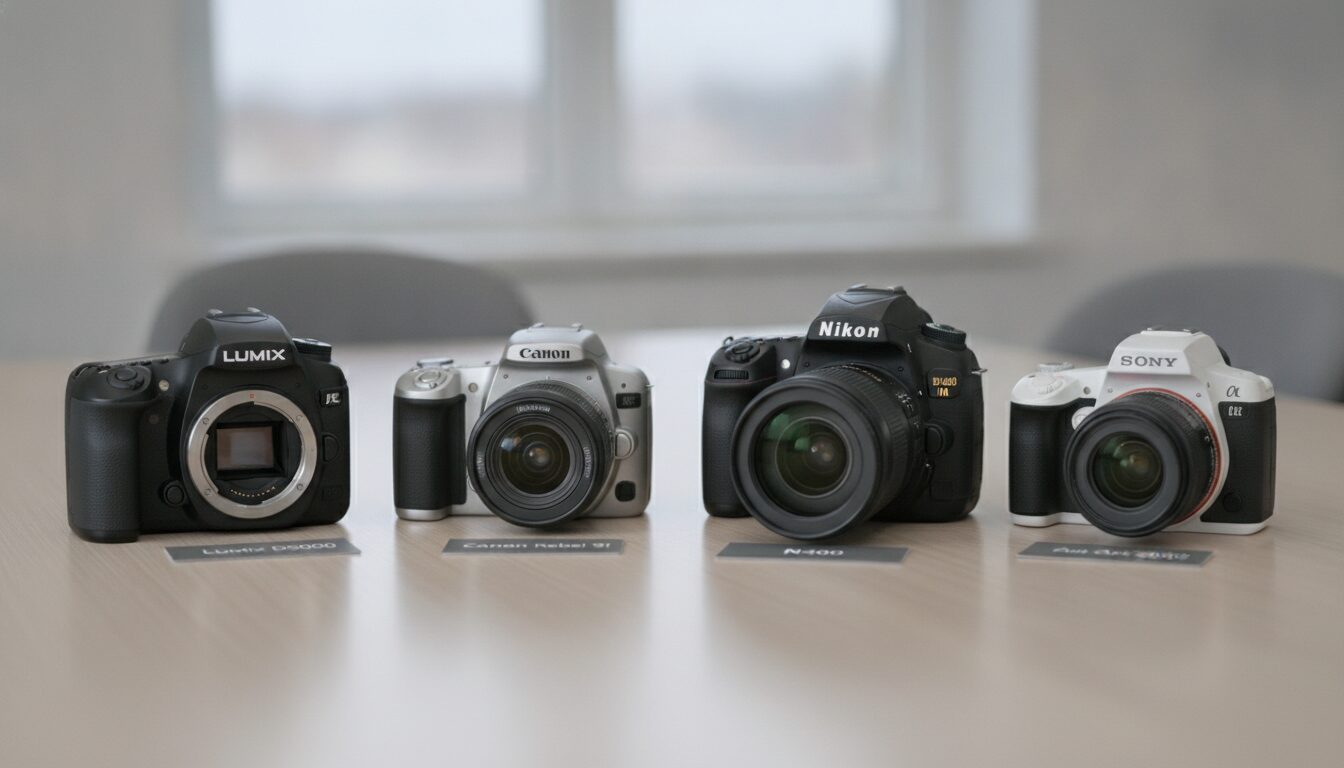
Nikon D3500: The Best Budget Digital SLR Camera for Beginners
If you read only one recommendation, make it this: the Nikon D3500 is the the budget digital slr camera for the vast majority of beginners. It features a 24.2-megapixel APS-C sensor (the same one found in much more expensive Nikon bodies), a reliable 11-point autofocus system, and a battery life rated at approximately 1,550 shots per charge. Its Guide Mode walks first-time users through the fundamentals of photography, making it one of the most approachable DSLRs ever produced. According to Amateur Photographer, the D3500 remains the best beginner DSLR in 2026. Prices on the used market typically range from $200 to $350 with the 18–55mm kit lens – exceptional value by any measure.
Canon EOS Rebel T5i (700D): A Flip-Screen Powerhouse
For those who lean toward the Canon ecosystem, the Canon EOS Rebel T5i (sold as the 700D outside North America) is the perfect budget entry. It packs an 18-megapixel sensor, a 9-point all-cross-type AF system, and a fully articulated touchscreen – a feature still missing on many cameras at two or three times the price. The T5i is also compatible with Canon’s massive EF and EF-S lens lineup. On the used market, a T5i body can be found for $150–$200, and the kit lens bundle rarely exceeds $250. For a camera with a vari-angle screen, the T5i is the one to beat.
Pentax K-50: The Weather-Sealed Wildcard
Pentax may be a niche player, but the K-50 offers three features unheard of in this price bracket: a weather-sealed body, an optical viewfinder with 100% frame coverage, and in-body image stabilization (IBIS) that works with every lens you mount. Its 16-megapixel sensor is a step down from the D3500, but the ability to shoot in rain or dust without worry – and the freedom to use cheap, unstabilized manual lenses – makes it the best budget for outdoor adventures. K-50 bodies routinely sell for $180–$220. Pentax remains the only major brand still developing new DSLR hardware, so its ecosystem isn’t going anywhere.
Canon 60D: The Semi-Pro Bargain
The Canon 60D sits a tier above true entry-level, but at under $200 on the used market it qualifies as a slr camera for anyone who wants more physical controls and a sturdier build. It shoots 1080p video at 30fps, offers a top LCD panel, and features a magnesium-alloy frame that feels genuinely professional. Burst speed reaches 5.3 frames per second – fast enough for youth sports and casual wildlife. If you want a body that won’t feel limiting as your skills grow, the 60D is the smart step up.
Used vs. New: Hunting for the Best Budget Digital SLR Camera
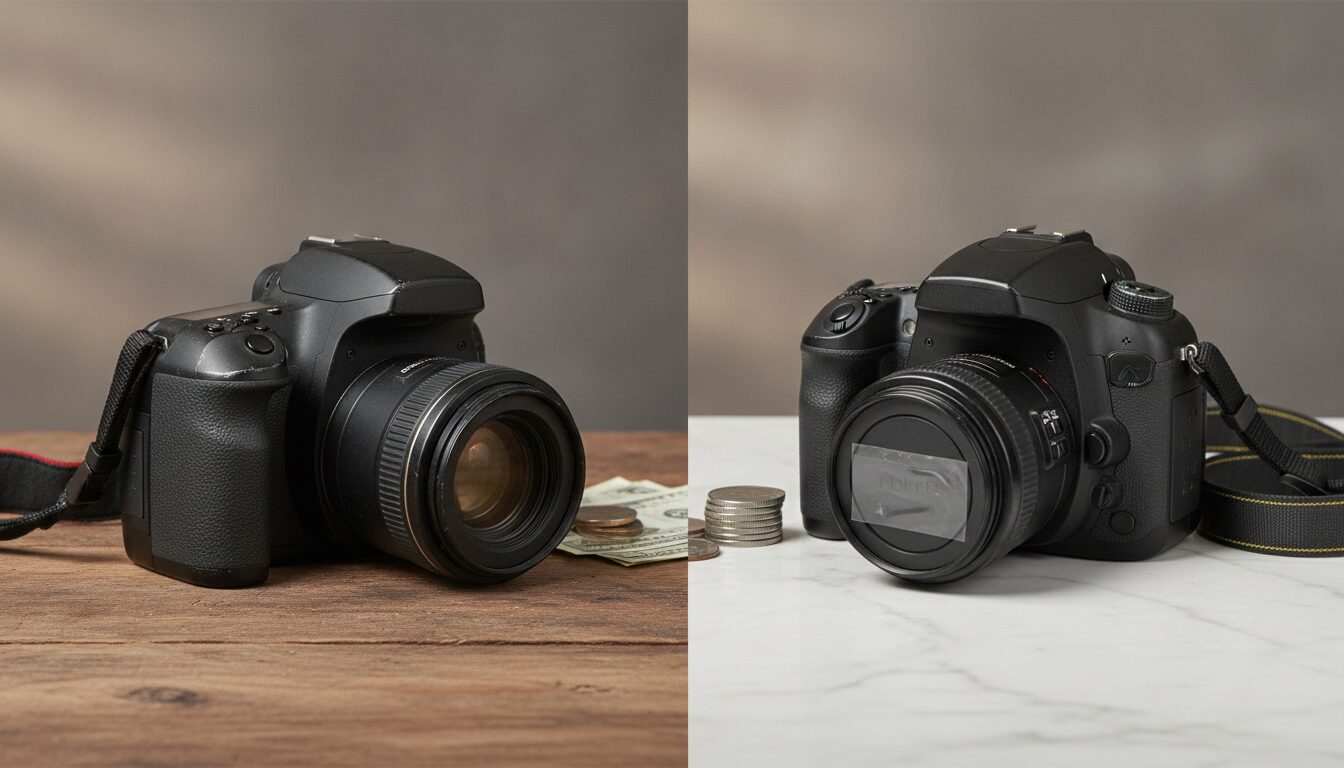
Why New DSLRs Are Nearly Impossible to Find
Walk into any mainstream electronics retailer in 2026 and you will not find a new Nikon D3500 or Canon Rebel T5i. Both companies ended production of their entry-level DSLRs years ago. Canon now focuses on the EOS R mirrorless line; Nikon’s Z-mount has replaced the F-mount. The only new DSLRs you might encounter are remaining Pentax K-70 kits or residual stock of high-end models like the Nikon D780, which starts at $1,500 – hardly budget territory. For anyone seeking the best budget digital SLR camera, used is not just an option; it’s the only practical route.
How to Avoid Common Pitfalls When Buying Used
Buying used gear requires due diligence. First, always request the shutter count – the number of times the camera’s shutter has fired. As Alex Armitage’s guide explains, entry-level DSLRs are often rated for 50,000 to 100,000 actuations, while professional bodies can exceed 200,000. A count under 20,000 is ideal; be cautious about anything above 50,000 on an entry-level body. Second, inspect the sensor by shooting a plain white surface at f/22 to reveal dust spots. Third, verify lens compatibility – some older lenses may not autofocus on entry-level Nikon bodies without firmware updates. Finally, buy from a reputable platform that offers returns, such as MPB, KEH, or B&H Photo Video. These retailers test and grade their gear, giving you real peace of mind.
Wi-Fi, Bluetooth, and Connectivity: What Budget DSLRs Lack
Wireless connectivity is one area where older budget DSLRs show their age. Most models released before 2016 – including the Canon T5i and Canon 60D – have no built-in Wi-Fi or Bluetooth. The Nikon D3500 added Bluetooth for image transfer via the SnapBridge app, but it lacks Wi-Fi entirely. If wireless transfer matters to you, the Nikon D5600 (typically $250–$350 used) adds both Wi-Fi and Bluetooth, plus a tilting touchscreen. Alternatively, a Canon Eye-Fi SD card or a third-party wireless adapter can retrofit older bodies for around $20–$40. This is a genuine limitation worth knowing before you buy, but it’s rarely a dealbreaker for photographers focused on image quality over instant sharing.
“The best camera is the one that teaches you to see. A used DSLR with manual controls does that better than any smartphone or automatic compact – and it costs less than a month of streaming subscriptions.” – Photography Life editorial team
Key Features That Make a Budget DSLR Worth It
Sensor Size and Megapixel Count
All the cameras in this guide use APS-C sensors, also called crop sensors. An APS-C sensor measures roughly 23.6 × 15.7mm – larger than the 1-inch chips in premium compacts and far larger than any smartphone sensor. Size matters: a bigger sensor gathers more light, yields shallower depth of field, and delivers better low-light performance. Megapixel count is less critical; anything between 16 and 24 MP produces sharp 13×19-inch prints. The Nikon D3500’s 24.2 MP sensor resolves fine detail comparable to cameras costing twice as much.
Autofocus Performance and Burst Rate
Even entry-level DSLRs pack competent autofocus systems. The Canon T5i’s 9-point all-cross-type AF performs reliably in daylight and decent indoor light, while the Nikon D3500’s 11-point system is slightly snappier. Continuous shooting speeds hover around 3–5 frames per second – more than enough for kids’ sports or casual wildlife. If you need serious action tracking, look at older semi-pro bodies like the Canon 7D (8 fps) or Nikon D7000 (6 fps), both of which fall into the $200–$300 range on the used market.
Build Quality and Ergonomics
The best budget digital SLR camera doesn’t have to feel like a toy. The Pentax K-50 boasts a magnesium-alloy chassis and weather sealing; the Canon 60D offers a solid top LCD and a deep handgrip that stays comfortable all day. Even the plastic-bodied Nikon D3500 feels robust, with textured rubber on the front and back. When shopping used, pay attention to the condition of the grip rubber, the battery door, and the hot shoe – these are the parts that show wear first.
How to Evaluate a Used DSLR: A Step-by-Step Guide
Step 1: Check the Shutter Count
Ask the seller to provide a shutter count reading. Tools like ShutterCount for Canon or the free Nikon Shutter Count website work for most models. A count below 20,000 is excellent; anything over 50,000 on an entry-level body should give you pause. This number is the most reliable indicator of mechanical wear.
Step 2: Inspect the Sensor and Mirror
Remove the lens and carefully examine the sensor and reflex mirror. The sensor should be free of oil spots, scratches, or excessive dust. A few dust particles are normal and cleanable, but deep scratches require professional repair. Look through the viewfinder – if the mirror is clean, the image should be bright and clear.
Step 3: Test All Buttons, Dials, and Menus
Cycle through every button and dial. Pay special attention to the shutter button (it should have a crisp half-press feel), the mode dial, and the LCD screen (no dead pixels). Navigate the menu system and confirm the camera firmware is current.
Step 4: Mount a Lens and Test Autofocus
Bring a known-good lens and test autofocus in both good light and dim conditions. Listen for grinding noises – silent, smooth movement is the goal. Also check manual focus override and the aperture mechanism by shooting at different f-stops.
Step 5: Verify the Battery and Charger
Ask the seller to charge the battery fully before you meet, then turn the camera on and check the battery level. A degraded battery that drops rapidly from 100% after a few shots may need replacement. Third-party replacement batteries are widely available for under $20, so this is a minor issue rather than a dealbreaker.
Building a Budget Lens Kit for Your DSLR
The Magic of the 50mm f/1.8 Prime Lens
The single fastest way to elevate the image quality of any best budget digital SLR camera is to ditch the kit zoom and pick up a 50mm f/1.8 prime lens. Both Canon and Nikon offer versions for under $100 used. The wide f/1.8 aperture creates beautiful background blur (bokeh) and lets in dramatically more light than the typical f/3.5–5.6 kit zoom, enabling low-light handheld shots that would otherwise be impossible. On a crop-sensor body, the 50mm behaves like a short telephoto (roughly 75–80mm equivalent), making it ideal for portraits. For street and travel, consider a Canon 24mm f/2.8 STM or Nikon 35mm f/1.8 DX, both available for around $80–$120 used.
Affordable Zoom Options for Versatility
If you need a zoom range, don’t overlook older third-party lenses from Tamron and Sigma. A used Tamron 18–200mm f/3.5–6.3 or Sigma 70–300mm f/4–5.6 can be had for under $80 and will cover everything from wide landscapes to telephoto wildlife. These lenses aren’t optically perfect, but stopped down to f/8 they produce sharp images that easily meet the needs of hobbyists and beginners. When paired with the best budget digital SLR camera, they create a capable all-in-one travel kit for under $350 total.
Third-Party Lens Compatibility: What You Need to Know
Tamron and Sigma have produced Canon EF-mount and Nikon F-mount lenses for decades, and the vast majority work reliably on budget DSLR bodies. The key watch-out: some very old Sigma lenses (pre-2012) may need a paid firmware update from Sigma’s service centers to communicate correctly with newer camera bodies. Tamron’s SP series lenses generally work without issue. For Pentax shooters, the K-mount has been stable since 1975, meaning a huge range of vintage and modern lenses – including Tokina and Rokinon options – mount and meter correctly on the K-50. Budget-conscious photographers can build a 3-lens kit (wide, standard, telephoto) for well under $300 by mixing first-party and third-party glass.
The Environmental and Economic Sense of Buying Used DSLRs
Reducing E-Waste One Camera at a Time
Photography gear has a long usable life – often 10 to 15 years for a well-maintained body and much longer for lenses. By purchasing a used DSLR, you’re directly diverting electronics from landfills and lowering the carbon footprint associated with manufacturing new cameras. The United Nations University has documented that tens of millions of metric tons of e-waste are generated globally each year, and consumer electronics represent a growing fraction of that total. Choosing the best budget digital SLR camera from the second-hand market is a small but meaningful step toward sustainability.
How the Circular Economy Benefits Photographers
The used camera market is a textbook example of the circular economy: instead of a linear buy-use-dispose model, gear circulates among multiple owners over decades. Platforms like MPB and KEH have made trading gear frictionless, often offering trade-in credit toward future purchases. This ecosystem keeps prices low, encourages experimentation (you can buy and sell lenses with minimal financial loss), and ensures that high-quality equipment stays accessible to newcomers without draining natural resources. The best budget digital SLR camera isn’t just a cost-saving device – it’s a responsible, sustainable choice.
“Used camera platforms like MPB and KEH have professionalized the second-hand market, offering graded gear with return policies that rival new-product warranties. For budget photographers, this is the single biggest quality-of-life improvement in the last decade.” – Amateur Photographer, 2025 buying guide
Comparison Table: Best Budget Digital SLR Cameras at a Glance
| Model | Sensor (MP) | Max ISO | Video | Typical Used Price (Body) | Standout Feature |
|---|---|---|---|---|---|
| Nikon D3500 | 24.2 APS-C | 25600 | 1080p 60fps | $200–$250 | ~1,550-shot battery life, Guide Mode |
| Canon Rebel T5i / 700D | 18.0 APS-C | 12800 | 1080p 30fps | $150–$200 | Fully articulated touchscreen |
| Canon 60D | 18.0 APS-C | 6400 (ext. 12800) | 1080p 30fps | $180–$230 | Top LCD, durable magnesium frame |
| Pentax K-50 | 16.3 APS-C | 25600 | 1080p 30fps | $180–$220 | Weather-sealed, in-body stabilization |
| Nikon D5600 | 24.2 APS-C | 25600 | 1080p 60fps | $250–$350 | Wi-Fi + Bluetooth, tilting touchscreen |
Why the Best Budget Digital SLR Camera Delivers Long-Term Value
Future-Proofing Your Passion Without Breaking the Bank
The beauty of starting with the best budget digital SLR camera is that the glass you acquire will likely outlast the body. Canon EF and Nikon F-mount lenses have been in production for decades, and even if you eventually move to a mirrorless system, many can be adapted with an inexpensive adapter. Lenses like the Canon 50mm f/1.8 STM or the Nikon AF-S 35mm f/1.8G will serve you for years, regardless of which camera sits behind them. Your initial $250 investment becomes part of a long-term, flexible system rather than a disposable purchase.
Starting Your Photography Journey Right
A used DSLR forces you to learn the fundamentals – exposure triangle, focus methods, optical viewfinder composition – in a way that a point-and-shoot or smartphone simply cannot. Manual controls are front and center, and the tactile feedback of a mechanical shutter and physical dials builds real muscle memory. According to The Photo Method, manual control capability is the most important feature for a beginner photographer, and the best budget digital SLR camera provides that without compromise. Once you’ve mastered these basics, any future camera upgrade will feel natural and intuitive. There has never been a cheaper, better time to start shooting.
Frequently Asked Questions
What is the best digital SLR camera for beginners?
The Nikon D3500 is widely regarded as the best option for beginners. It offers a 24.2-megapixel sensor, an intuitive Guide Mode, and stellar battery life, all for around $200–$300 used with a kit lens. The Canon EOS Rebel T5i is the top alternative for anyone who wants a fully articulated touchscreen.
Is it better to buy a used or new DSLR in 2026?
Used is almost always the better choice. New entry-level DSLRs are essentially extinct, and used models are abundant, reliable, and often available at a fraction of their original retail price. Reputable sellers like MPB and KEH offer graded gear with return policies, making the used market safer than ever.
How many shutter actuations is too many on a used DSLR?
Entry-level bodies are rated for roughly 50,000–100,000 actuations. Look for a count under 20,000 for peace of mind. Semi-pro models like the Canon 7D are rated for 150,000 or more, so a count of 50,000 is still acceptable on those bodies.
Can I use modern lenses on an old budget DSLR?
Yes, as long as the lens mount is compatible. Canon EF/EF-S and Nikon F-mount lenses have remained virtually unchanged for decades, giving you access to a huge range of first-party and third-party glass. Mirrorless lenses cannot be directly mounted on a DSLR body, but older DSLR lenses can be adapted forward when you eventually upgrade.
Do budget DSLRs shoot good video?
Most can record 1080p Full HD video, which is sufficient for casual use and basic content creation. Autofocus during video is usually slow and contrast-based, so they’re not ideal for vlogging or fast-moving subjects. For serious video work, a newer mirrorless camera or a dedicated camcorder will serve you better.
Where can I buy a cheap DSLR today?
The best deals are on local platforms like Facebook Marketplace and Craigslist, but for buyer protection, online retailers such as MPB, KEH, and B&H Photo Video are the recommended starting points. eBay also offers a wide selection with buyer guarantees, and a renewed Nikon D3100 can be found on Amazon for around $179.
Ready to build something bold with your brand’s visual story? The same principles that make a great photograph – clarity, intention, and the right tools – apply to every piece of creative work we produce at Emin Media. Contact Emin Media for a free brand consultation and let’s create visuals that actually move people.
Enjoyed this article?
Contact Emin Media for a free brand consultation and let's create something amazing together.
Get in Touch